
What are the symptoms of perimenopause?
Perimenopause is the transition leading up to your final period, when estrogen and progesterone swing and then fall. That hormonal turbulence can produce more than 30 recognized symptoms across your cycle, sleep, mood, thinking, and body. The NHS and The Menopause Society list mood changes, hot flashes, sleep problems, brain fog, and irregular periods among the core ones. Most women have a handful, not all of them, and they come and go as hormones fluctuate.
The symptoms, grouped
Cycle changes (often the first sign)
Periods that get shorter, longer, heavier, lighter, or simply less predictable are usually the earliest clue. See irregular periods and what is normal and how to track your cycle.
Sleep
Waking at 3am, lighter sleep, and night sweats are classic. See why you cannot sleep and perimenopause sleep problems.
Mood
Irritability, sudden anger, anxiety, low mood, and feeling unlike yourself. See why you are so angry, why you are anxious out of nowhere, why you feel like you are going crazy, and how it lands on your relationship. If a doctor brushed you off, read it is not in your head.
Thinking and energy
Brain fog, word-finding slips, and a bone-deep tiredness sleep does not fix. See perimenopause brain fog and why you are so tired.
Body
New weight, especially around the middle, joint aches, and changes in skin and hair. See why you are gaining weight, perimenopause weight gain, and exercises for menopause belly. Joints can ache and some women feel their heart race; see perimenopause joint pain and heart palpitations.
Why there is no single test
There is no one blood test that confirms perimenopause, because hormone levels swing day to day, so a snapshot can look normal even when you feel awful. Diagnosis is based on your age, your symptoms, and the pattern of change over time. That is exactly why tracking matters more here than at any other life stage: the trend is the evidence.
What helps across the board
- Protect sleep first. It is the single biggest lever on mood, energy, and appetite.
- Lift heavy, and keep lifting. The most evidence-backed defense for bone and muscle as estrogen drops. See a perimenopause workout plan.
- Move, but recover. Recoverable movement steadies mood; grinding makes symptoms worse.
- Ask a clinician about MHT (HRT). A first-line option for many women, often improving mood and sleep within weeks. See training and MHT.
See a doctor sooner for very heavy or very frequent bleeding, bleeding between periods or after sex, or a low mood that will not lift. These are not simply perimenopause and deserve checking. Phaes is informational, not medical advice.
How Phaes helps
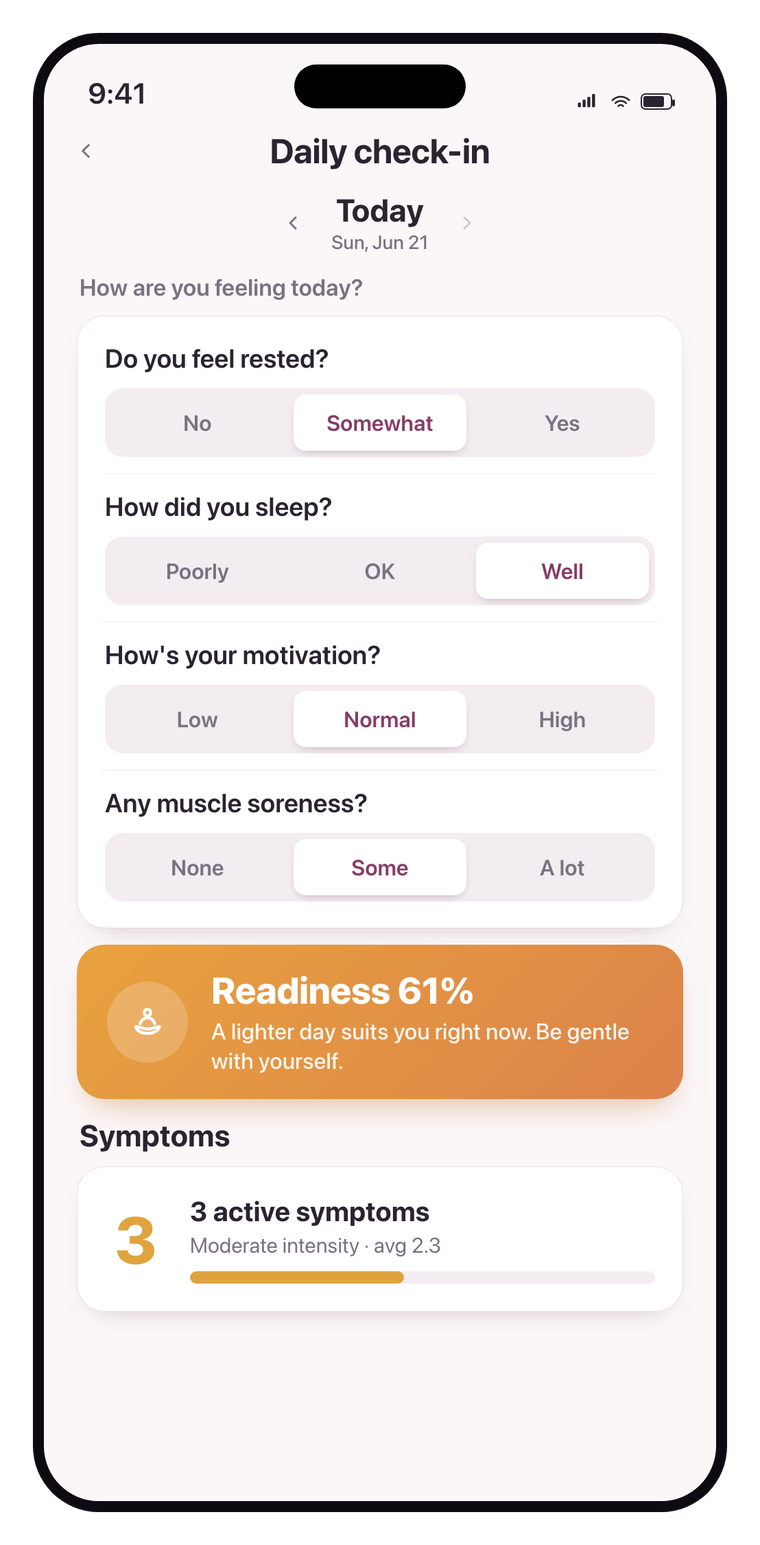
In the moment, every symptom feels random. Over weeks, they cluster. Phaes anchors to your real cycle and reads a short daily check-in, so your symptoms, sleep, and mood become a pattern you can see and act on, then it adapts your training around it instead of demanding the same of you on your worst days. Not sure if this is you? Take the 2-minute perimenopause quiz, see how hormone intelligence works, or the perimenopause app.
Keep reading
- Free 21-day perimenopause challenge
- What is perimenopause?
- Perimenopause at 40
- Take the perimenopause quiz