
Is brain fog a symptom of perimenopause?
Yes. Difficulty concentrating, word-finding problems, and a foggy, forgetful feeling are among the most commonly reported perimenopause symptoms, and research suggests many women notice real, measurable dips in verbal memory and processing during the transition. Bodies like The Menopause Society recognize cognitive changes as a genuine feature of perimenopause. You are not imagining it.
Why falling estrogen fogs your thinking
Estrogen is active throughout the brain, including the regions that handle memory and verbal recall, so when it swings and falls, those systems run less smoothly. Two things make it worse: broken sleep, which wrecks memory consolidation, and the anxiety and mental overload that often arrive at the same stage of life. The fog is usually a combination, not a single cause.
Brain fog, or something worse?
This is the fear under the symptom, so let us be clear. Perimenopausal brain fog typically affects word-finding and concentration, fluctuates, and tends to stabilize or improve as hormones settle. Dementia, by contrast, progresses steadily, and crucially the person affected often does not notice it themselves, while those around them do. Forgetting a word mid-sentence and then recalling it is the fog. If a loved one is worried about changes you cannot see, or daily function is genuinely declining, that is worth a doctor's visit. Bodies like Johns Hopkins and the Cleveland Clinic draw the same distinction.
What actually helps brain fog
- Protect sleep. Memory is consolidated overnight, so this is the biggest lever. See why you cannot sleep.
- Move your body. Aerobic exercise and strength training both support cognition and mood. See a perimenopause workout plan.
- Lower the load where you can. The fog is worse when you are juggling everything. Externalize: lists, calendars, one task at a time.
- Ask about MHT (HRT). Many women report clearer thinking on hormone therapy, often alongside better sleep. See training and MHT.
See a doctor if memory problems are getting steadily worse, are noticed more by others than by you, or are interfering with work and daily life. Thyroid issues, low B12, depression, and some medications can also cause fog and are worth ruling out. Phaes is informational, not medical advice.
How Phaes helps
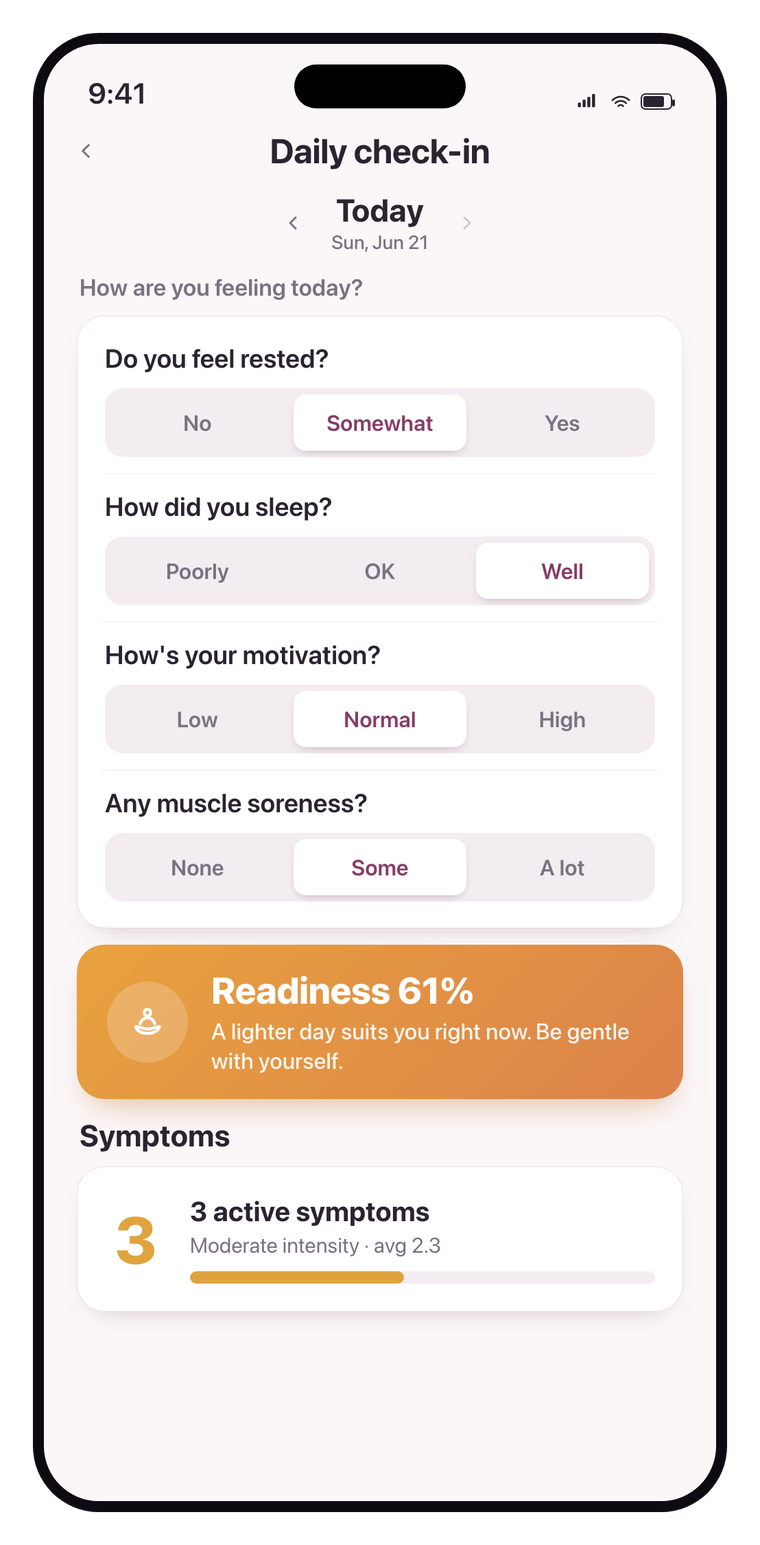
The fog feels worse when it seems random. Phaes reads a short daily check-in alongside your cycle and your sleep, so you can see that your foggiest days cluster with poor sleep and certain points in your cycle, which is both reassuring and useful. The training side then eases on the days you are depleted rather than asking you to push through. See why you are so tired, the full symptom list, or take the 2-minute quiz.