
Why does exercise trigger hot flashes now?
Falling, fluctuating estrogen narrows your thermoneutral zone, the small temperature band in which your body stays comfortable without sweating or shivering. With that window squeezed, even the normal heat your muscles produce when you move can tip you past the threshold, and your brain responds with a flush, a sweat, and a sudden sense of overheating. The exertion itself did not break anything. Your tolerance for heat shrank. The Menopause Society describes this narrowed comfort range as central to why hot flashes happen in the first place.
Why does effort feel so much harder when you flush?
When you overheat, your body diverts blood to the skin to shed heat, which leaves less for your working muscles. Your heart rate climbs to compensate, so a steady pace suddenly costs more. Add a flush of adrenaline and the flustered, slightly panicky feeling many women describe, and a run that should sit in the easy zone starts to read like a hard effort. The pace on your watch has not changed. The internal cost has. That mismatch is exactly why heart-rate or pace targets set a year ago can feel impossible now.
Does exercise make hot flashes worse?
A single session can trigger a flash, yes. But over weeks and months, women who exercise regularly tend to report a lower overall hot-flash burden than those who do not. The reassuring framing matters: the workout that flushes you today is part of what calms the flushes across your week. Research summarized by the National Library of Medicine suggests regular moderate activity is associated with better thermoregulation and quality of life through the menopause transition. Aerobic fitness widens the margin before you overheat, so the fitter you stay, the more heat you can absorb before a flash arrives. Quitting because of flashes tends to make the baseline worse, not better.
How do you cool down fast mid-session?
Your hands, face, and the back of your neck dump heat quickly because the blood vessels there sit close to the surface. Aggressive, targeted cooling can cut a flash short and let you keep going.
- Cool your pulse points. Cold water over your wrists and the back of your neck, or holding something cold in your palms, pulls core heat down faster than cooling your torso.
- Carry a cooling towel. A damp, evaporative towel around your neck buys you several minutes of relief without stopping.
- Pre-cool and rinse. A cold drink before you start, and a splash of water on your face when the flush hits, both blunt the spike.
- Use a fan indoors. On a treadmill or in a gym, moving air over your skin does most of the cooling work for you.
How should you dress and time your workouts?
- Layer so you can shed. Light, loose, moisture-wicking fabric in layers you can strip off the moment heat builds beats one warm top you are stuck in.
- Train in the cool of the day. Early morning or evening, when the ambient temperature is lowest, gives your narrowed comfort zone the most room. A midday summer run stacks external heat on top of the heat you are already fighting.
- Choose shade and air. A shaded loop, a breezy route, or air conditioning indoors all lower the starting temperature your body has to work from.
- Hydrate ahead. Dehydration impairs how well you sweat and cool, so going in already topped up, and sipping through longer efforts, protects your thermoregulation.
How do you pace and when do you back off?
Hard, sustained intensity generates the most internal heat, so it is the most likely to set off a flash. That does not mean never going hard. It means being deliberate about it.
- Go by feel, not last year's numbers. Use effort and breathing as your guide on hot or flush-prone days, and let pace fall where it falls.
- Break up the intensity. Intervals with real recovery let heat dissipate between hard bouts, which is often more tolerable than one long tempo grind.
- Walk the flash, then resume. A flush is not a reason to abandon the session. Slow down, cool down, let it pass, and pick the effort back up.
- Know the real stop signs. Dizziness, nausea, a pounding headache, or confusion are heat illness, not a hot flash. Stop, cool down, and rehydrate.
Hot flashes during exercise are normal in perimenopause, but feeling faint, sick, or genuinely unable to cool down is not. If overheating is severe, comes with chest pain or a racing heart that does not settle, or you suspect heat illness, stop and seek medical advice. Phaes is informational, not medical advice.
How Phaes helps
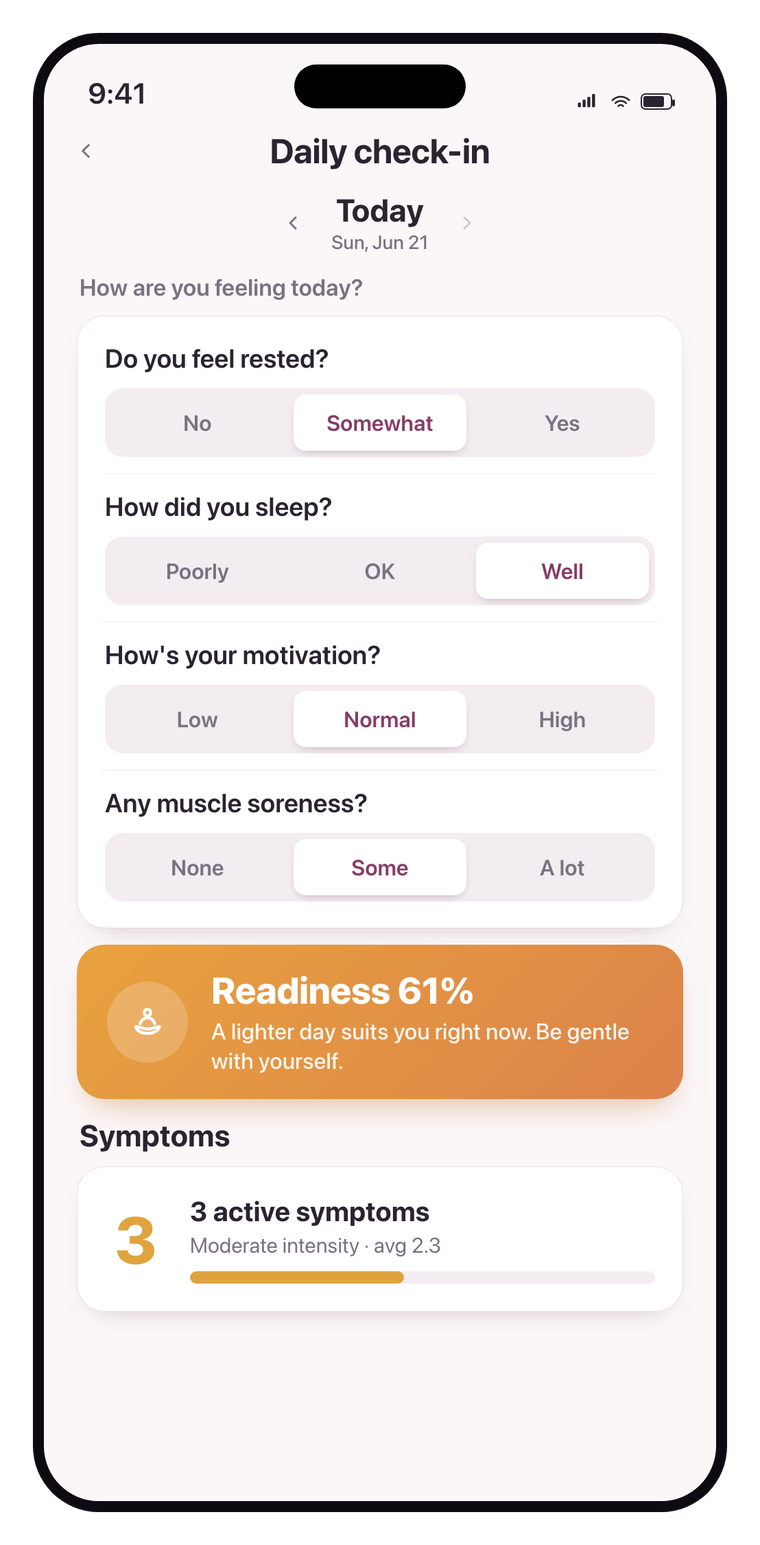
Most fitness apps hand you the same pace and heart-rate targets they always have, then act surprised when a flush-soaked run blows past them. Phaes does not just log that you overheated. It reads your daily check-in, including how hot, drained, or wrecked you feel, against your cycle and your training, then dials the prescribed intensity to match. On a day your symptom score says you are running hot, it pulls the effort back so a flush does not turn an easy run into a struggle, and it builds your aerobic base steadily over time, the kind of fitness that widens your margin before the heat hits. It works the same way through running through perimenopause, whether you train on the road or in the gym. See how to exercise during perimenopause.