
Why is my running pace slower in perimenopause?
Falling and wildly swinging estrogen changes how you recover, regulate heat, and sleep, and all three slow you down before any real fitness is lost. You recover more slowly between hard sessions, your heart rate drifts higher for the same effort, broken sleep blunts adaptation, and low iron can quietly sap endurance. The pace drop is mostly your body asking for a different kind of training, not proof that you are finished. The Menopause Society describes perimenopause as years of fluctuating hormones, and your running feels every swing.
Is this permanent decline, or can I get my pace back?
For most women it is not permanent. A large share of the slowdown comes from under-recovery, poor sleep, heat sensitivity, and sometimes low iron, all of which respond to changes in how you train and fuel. Women run fast marathons and PRs well into their 40s and 50s. The runners who keep their pace are rarely training harder, they are training smarter: more recovery, more genuinely easy miles, and heavy strength to defend the power that estrogen used to protect.
What is actually slowing you down
It helps to know which lever is pulling on your pace, because the fix is different for each. Usually it is several at once.
- Slower recovery. Lower estrogen blunts how quickly muscle repairs and refuels, so the hard session that used to take two days to bounce back from now takes four. Stack sessions too close and you race tired every time.
- Heart-rate and heat drift. Estrogen helps regulate body temperature and blood vessel response. As it falls, your heart rate runs higher for the same pace, especially in heat, so an honest easy run can read as a tempo effort.
- Broken sleep. Night sweats and 3am wake-ups wreck the deep sleep where most training adaptation happens. You can do the work and still not absorb it. See why you cannot sleep.
- Possible low iron. Heavy or erratic perimenopausal periods can drop ferritin, and low iron quietly steals endurance and leaves you breathless on hills. It is worth a blood test rather than a guess.
- Under-fuelling. Eating less to manage a changing body, while training the same, leaves you running on empty. Perimenopause is the wrong time to diet and train hard at once.
The plan to hold and regain your pace
You do not get faster in perimenopause by gritting your teeth and grinding harder. You get faster by recovering enough to actually run your hard days hard, and by protecting muscle and power. Here is the concrete shape of it.
- Train recovery-led, not effort-led. Build the week around how recovered you are, not a fixed plan on the fridge. Two genuinely hard sessions a week with real recovery beats five mediocre ones. This is the core of a perimenopause running approach.
- Keep most running truly easy. If your easy runs are creeping into a hard heart rate, slow down further, even if the pace embarrasses you. Easy days exist to let hard days be hard. Run by effort, not by the old paces on your watch.
- Lift heavy, twice a week. Heavy, low-rep strength training is the single best defence against the muscle, power, and bone loss that come with falling estrogen, and it directly protects your speed. See how to exercise during perimenopause.
- Fuel properly, especially protein and carbs. Eat enough to support the training, prioritise protein across the day, and take carbohydrate around hard sessions. This is the era to fuel runs, not restrict.
- Train with your symptoms, not against them. On a flat, sweaty, poorly slept day, swap the interval session for an easy run and bank the hard work when you are recovered. Working around the bad days is how you keep the good ones fast.
- Rule out iron and ask about MHT (HRT). Get ferritin checked, and ask a clinician whether hormone therapy fits your picture. For some women it improves sleep and energy enough to train normally again. See running and MHT.
A sudden, dramatic drop in performance, breathlessness, chest pain, or unusual fatigue is worth a doctor's visit, not a training tweak, and low iron, thyroid issues, and heart conditions can all mimic perimenopause. Phaes is informational, not medical advice.
How Phaes helps
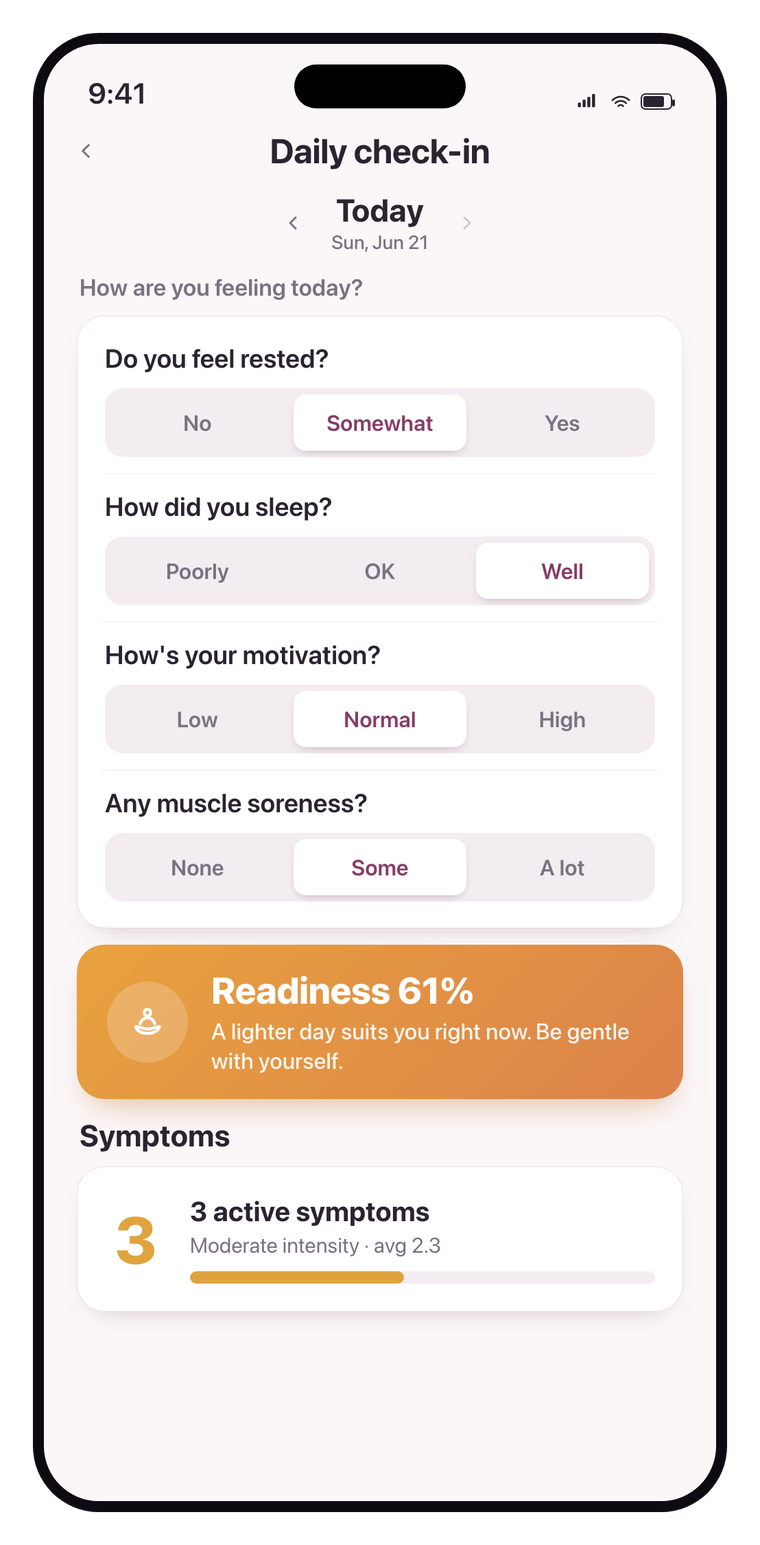
We get it. Watching paces you used to hit easily slip away is its own kind of grief, and most plans just tell you to push harder. We built Phaes to take the other side. It does not just track your cycle and symptoms, it adapts your running and strength to them. A short daily check-in feeds a plan that backs off when you are wrecked, keeps your easy days actually easy, programmes the heavy strength that defends your speed, and pulls the hard sessions to the days you can do them justice. Slower for a season does not have to mean slower for good. See the perimenopause app.