
What is the best exercise for perimenopause?
The single highest-return change for most women in perimenopause is adding heavy strength training. As estrogen falls, the loss of bone density and muscle mass accelerates, and resistance training is the most evidence-backed way to protect both. From there the picture fills in: an easy aerobic base, a little hard work used sparingly, mobility, and real recovery. No single workout fixes perimenopause. The mix does.
General guidance from sources like the NHS still holds as a floor: aim for roughly 150 minutes of moderate aerobic activity a week plus strength work on two or more days. The change in perimenopause is not the headline numbers, it is the emphasis. Strength moves to the front, and recovery stops being optional.
Why does the same workout feel harder now?
Because real, physical things have changed. As estrogen and progesterone swing and then decline, recovery between hard sessions takes longer, sleep gets lighter so you wake up less rebuilt, you run hotter, and perceived effort climbs for the same pace. The plan that worked at 32 was built for a body that recovered faster. Pushing through with that plan is exactly how fatigue compounds and progress stalls.
The fix is not to train harder. It is to train smarter, in a way that respects slower recovery and a wandering cycle. If your symptoms feel bigger than a workout problem, start with it is not in your head and the perimenopause quiz.
How much strength training should I do?
For most women, two to three meaningful strength sessions a week, progressed over time, is a strong target. The protective effect for bone and muscle comes from genuine, progressive load, not endless light circuits. The The Menopause Society and research indexed on PubMed consistently point to resistance training as a cornerstone of healthy aging through the menopause transition.
- Lift heavy, progress slowly. Compound moves (squat, hinge, press, row, carry) loaded enough that the last reps are genuinely hard.
- Strength is the priority, not the add-on. If something has to give in a busy week, it is usually a junk-mile run, not the lifting.
- Heavy work needs recovery too. Two to three quality sessions you recover from beat five rushed ones.
Go deeper on the how in lifting weights in perimenopause, building muscle in menopause, and strength training for menopausal women.
Should I do more cardio or less?
Less of the wrong kind, more of the right kind. The trap in perimenopause is grinding out medium-hard miles every day, which raises stress without building much. Instead, most of your aerobic work should be genuinely easy zone 2: conversational, nose-breathing, almost boringly steady. That builds your aerobic base and metabolic health while keeping the stress cost low, so it does not eat into your recovery the way relentless tempo work does.
- Easy should feel easy. If you cannot hold a conversation, slow down. Most runs live here.
- Quality over quantity. One or two harder sessions, placed where you can absorb them, beat a week of grey-zone slog.
Do I still need hard, intense work?
Yes, but sparingly and on purpose. Short, hard efforts and sprints preserve power, fast-twitch muscle, and bone, which all decline faster as estrogen drops. The key word is sparingly. A small dose of true high intensity is potent. Doing hard work most days raises cortisol, blunts recovery, and tips you toward overtraining, which is the opposite of what you want now. Think one short, fully-recovered session of sprints or hill repeats per week, not daily smashfests.
This is why fixed plans struggle in perimenopause: they prescribe the same intensity regardless of how recovered you are. The right amount of hard depends on your sleep, your symptoms, and where you are in your cycle that week.
Does mobility matter, or is that filler?
It matters, and it is not filler. As tissue gets a little less forgiving in midlife, regular mobility and a short dynamic warm-up protect the heavy lifting and sprinting that do the real work. You do not need an hour of yoga. You need a few minutes of focused movement that keeps hips, ankles, and shoulders working through full range, plus enough easy walking that you stay generally active. Mobility is the cheap insurance that lets the hard work keep happening.
Why is more not better in perimenopause?
Because recovery is the limiter now, not effort. Training is a stress; you get stronger when you recover from it. In perimenopause that recovery window is longer, and lighter sleep and higher baseline stress mean you arrive at workouts less rebuilt. Stack hard day on hard day and you raise cortisol, disrupt sleep further, and slide into overtraining, where you feel flat, hold weight, and stop improving despite working hard.
- Build rest in, do not earn it. Plan genuine recovery days the way you plan workouts.
- Fuel the work. Underfueling, especially low protein, sabotages muscle and recovery. Protein-forward eating supports the strength you are trying to build.
- Watch the signals. Persistent fatigue, sleep getting worse, mood dropping, and stalled progress mean pull back, not push harder.
Phaes is informational and not medical advice. New symptoms, a changing cycle, or anything that worries you are worth raising with a clinician, especially before big changes to training.
Why adapt week to week instead of a fixed plan?
Because perimenopause does not hold still. Cycles shorten, lengthen, and skip, symptoms come in waves, and recovery varies week to week. A fixed twelve-week plan cannot know that you slept badly for five nights or that a bad symptom stretch just landed. So it prescribes the same load anyway, and you either push through and dig a hole or quit and feel like you failed. Training that adapts to where you actually are is what keeps you consistent, and consistency is what builds strength over years.
How Phaes helps
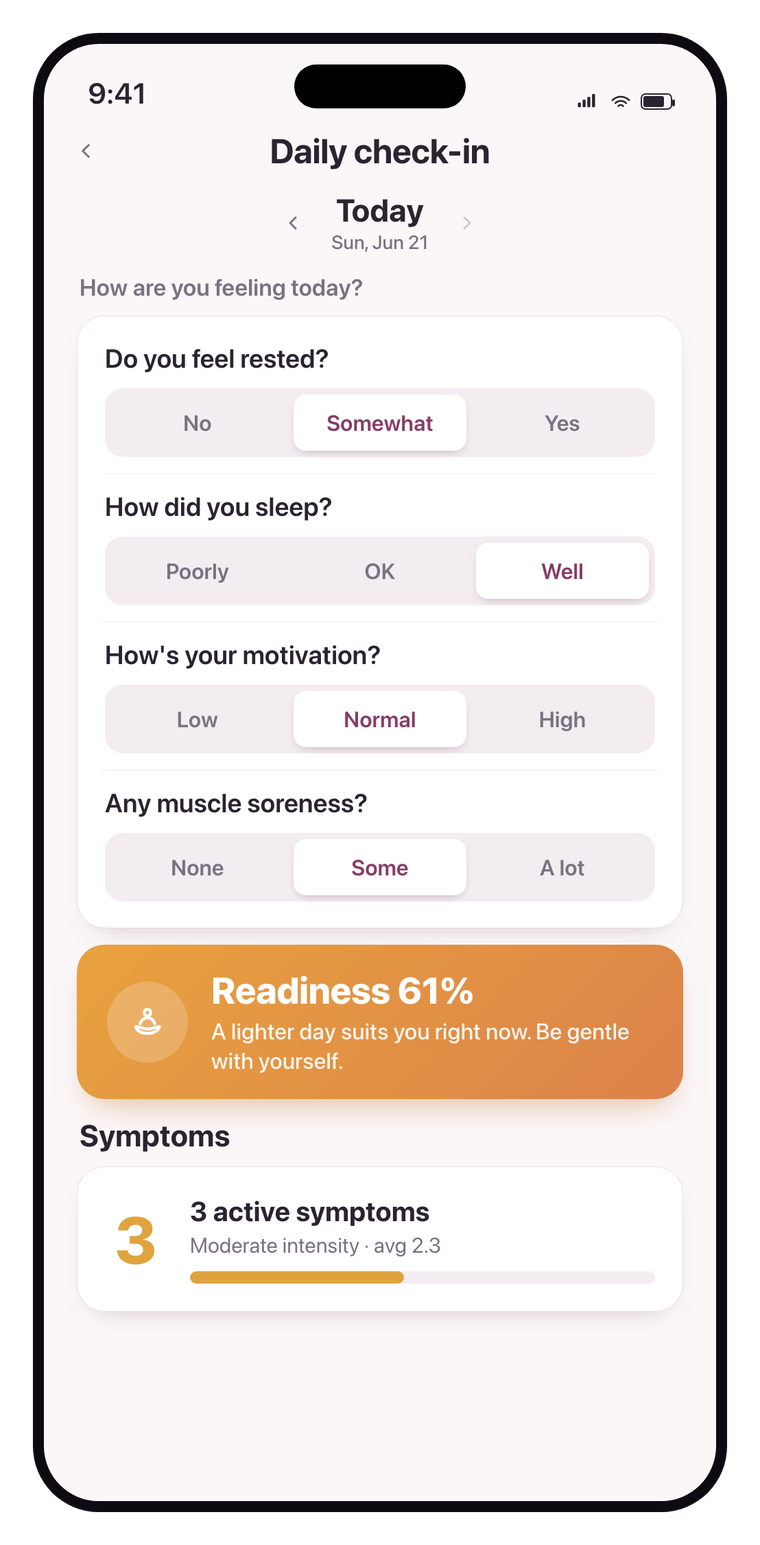
Phaes does not just tell you which phase you are in. It turns that into a week-to-week running and strength plan that adapts to your symptoms and recovery. A daily check-in for sleep, energy, and soreness reshapes the week, a conservative load guard keeps the build honest, and heavy strength is programmed in the same plan as your runs so neither gets quietly dropped. Cycle phase layers in while you still have one, and the same recovery-first approach carries straight through to menopause.
If you want this laid out as an actual schedule, see the perimenopause workout plan and the perimenopause app. To put it to work for your runs, look at running and MHT (HRT) and exercises for menopause belly.