
How perimenopause is staged
Perimenopause is usually described in stages defined by how regular your cycle still is, an approach based on the STRAW staging system clinicians use. The simple version is early, mid, and late, ending at menopause itself, 12 months with no period. The stages are a guide, not a strict timetable, and symptoms can appear at any point.
Early perimenopause
Your cycle is still fairly regular, but its length starts to vary, often by a week or so from month to month. This is where symptoms quietly begin: lighter or heavier periods, the first broken nights, more PMS, a shorter fuse, occasional brain fog. It is the stage most often mistaken for stress, because the cycle still looks roughly normal. See perimenopause at 40.
Mid perimenopause
Cycles become noticeably irregular, with skipped periods and bigger gaps. Estrogen swings more dramatically, so symptoms often intensify: hot flashes, night sweats, sleep disruption, mood changes, and weight changes become more common. See irregular periods and the full symptom list.
Late perimenopause
Periods become infrequent, with gaps of 60 days or more, as you approach your final one. Vasomotor symptoms like hot flashes often peak around this time. Once you reach 12 consecutive months with no period, you have crossed into menopause and are postmenopausal.
What helps at every stage
The fundamentals do not change as you move through: protect sleep, train for strength to defend bone and muscle, fuel well, and discuss options like MHT (HRT) with a clinician. What changes is the emphasis, and that is where tracking your own pattern beats a generic stage label. See a perimenopause workout plan built to flex with you.
Stages are descriptive, not predictive. You cannot tell exactly how long each will last, and very heavy bleeding or bleeding between periods is worth checking regardless of stage. Phaes is informational, not medical advice.
How Phaes helps
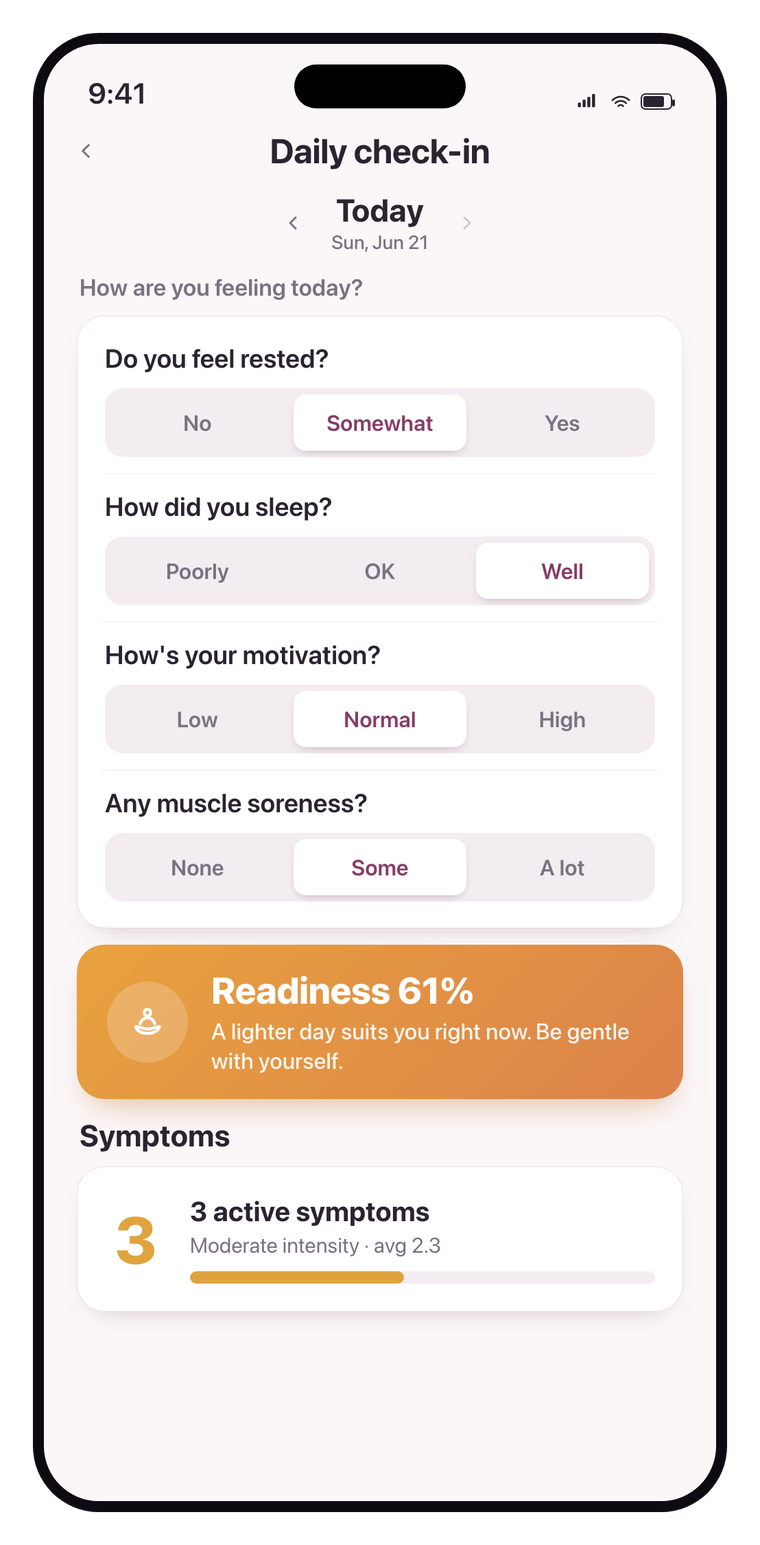
Because Phaes anchors to your real cycle and reads a daily check-in, it keeps adapting as you move from early to late perimenopause, no matter how much your cycle wanders. You do not have to self-diagnose a stage for the plan to keep making sense. See what perimenopause is or take the 2-minute quiz.