
Can you really be in perimenopause at 40?
Yes, and it is common. Perimenopause, the transition leading up to your final period, most often begins in the mid-40s, but starting in the early 40s, and sometimes the late 30s, is well within the normal range. The average age of menopause itself is around 51, and perimenopause can run for several years to a decade before it. Both the NHS and ACOG describe perimenopause as typically starting in the 40s, with symptoms that can begin years before periods become obviously irregular. So at 40, you are not too young.
Early signs of perimenopause at 40
The earliest signs are usually subtle and easy to blame on a busy life. The most telling ones cluster together:
- Cycle changes. Periods that are shorter, longer, heavier, lighter, or simply less predictable than your 30s baseline. Often the first real clue.
- Sleep that breaks. Waking at 3am, sometimes with heat. See why you cannot sleep.
- Mood and a shorter fuse. More irritability and anxiety than usual. See why you are so angry.
- Brain fog. Word-finding slips, a foggier head, lower energy.
- Body changes. New weight, especially around the middle. See why you are gaining weight.
Is it perimenopause, or just stress?
This is the hard part: early perimenopause and ordinary 40s stress share almost every symptom. The distinguishing signal is usually your cycle. Stress does not typically change the length and character of your periods the way fluctuating hormones do, so a cycle that is drifting from its long-standing pattern, alongside the symptoms above, points toward perimenopause. Worth knowing: there is no single blood test that reliably confirms perimenopause, because hormone levels swing day to day, so the pattern over months matters far more than one snapshot.
What to do about it at 40
Track the pattern
Because the diagnosis is about change over time, the most useful thing you can do is log your cycle and symptoms now, so the trend is visible to you and to your doctor. Guesswork in the moment is exactly what this stage defeats.
Build the habits that pay off now
The things that protect you through the next decade work best when you start early: regular strength training to defend bone and muscle as estrogen falls, enough protein, real sleep, and easy cardio for your heart and mood. See a perimenopause workout plan built around that.
Talk to a clinician
Bring your tracked pattern to a doctor. They can discuss options including hormone therapy, and rule out other causes such as thyroid issues that can mimic these symptoms. Phaes is informational and not medical advice.
See a doctor sooner if you have very heavy or very frequent bleeding, bleeding between periods, or bleeding after sex. These are not simply perimenopause and deserve checking.
How Phaes fits
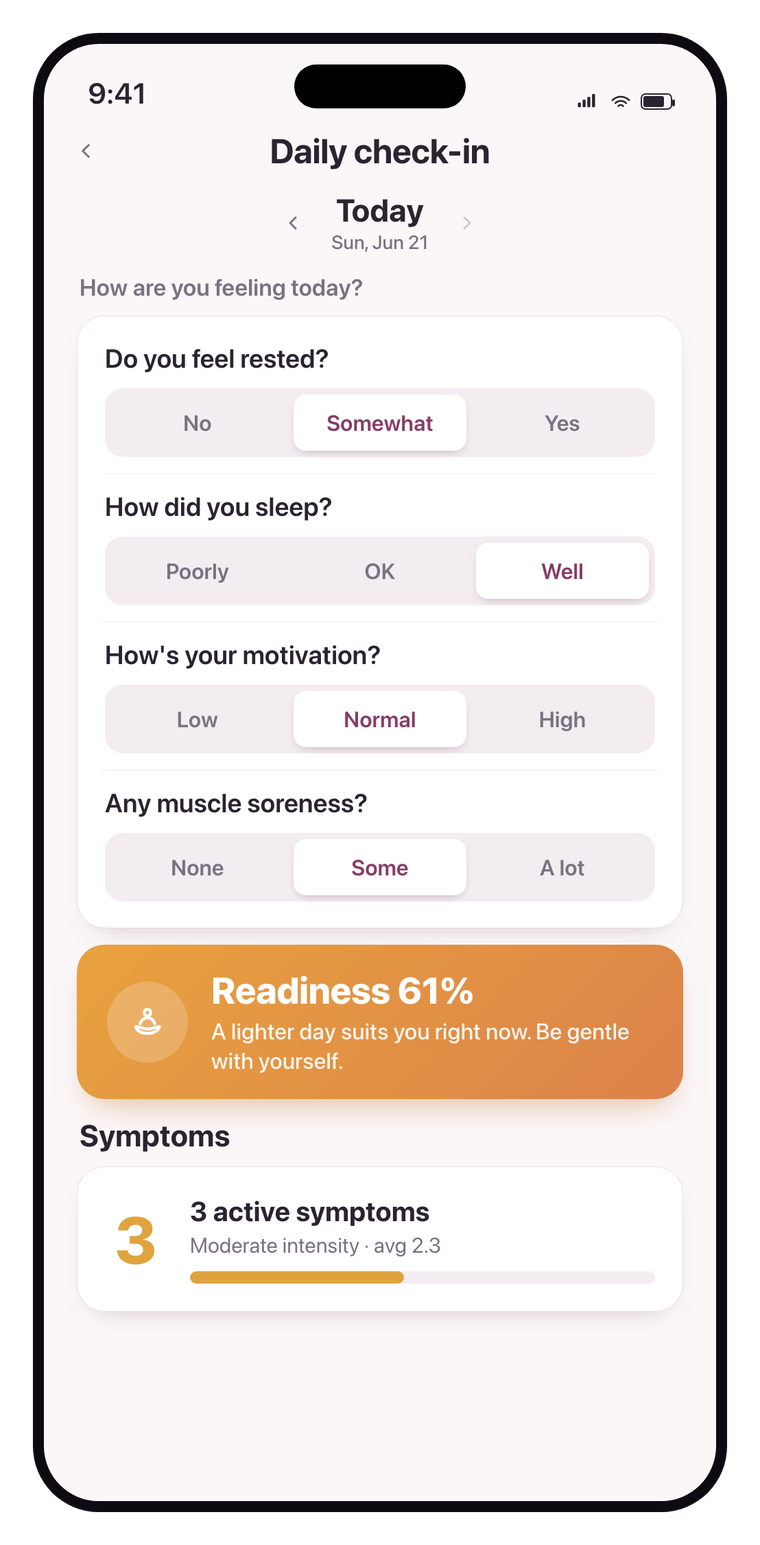
Phaes is built for exactly this uncertainty. It anchors to your real cycle rather than a textbook 28-day calendar, so a wandering cycle is read as data, not error, and a daily read connects your symptoms into the picture you need to make sense of what is happening. See how hormone intelligence works, or the perimenopause app.
Keep reading
- Free 21-day perimenopause challenge
- The perimenopause app
- Why can I not sleep?
- Perimenopause workout plan
- Perimenopause symptoms: the full list