
What makes a fertility app worth opening every day?
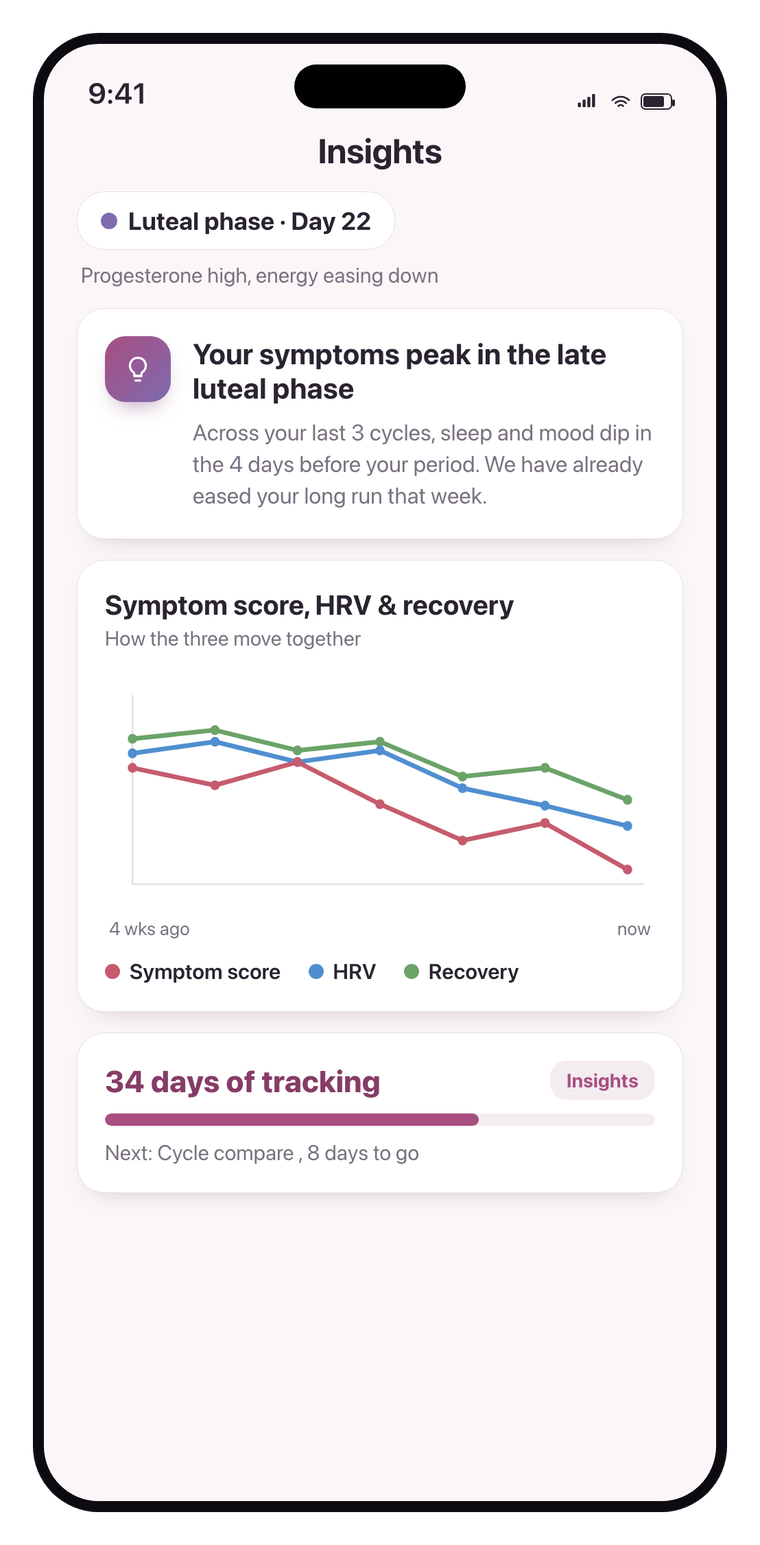
Not the logging. The reading-back. A tracker that only stores LH tests, basal body temperature, and cycle dates leaves you to interpret it alone. Phaes does the interpreting: it turns those same signals into an ovulation confidence read and a cycle-predictability read, each in plain language and each compared only against your own history, never a population average.
What Phaes tracks for trying to conceive
- Ovulation signs. LH (OPK) results, basal body temperature, cervical mucus, and confirmed ovulation, in one quick daily log.
- Fertility labs. AMH, FSH, LH, estradiol, progesterone, TSH, charted over time so a trend is obvious.
- Your fertile window. Derived from your real cycle history, not a generic 28-day assumption.
- How sure we are. A data-completeness read that tells you exactly what to add to sharpen your predictions.
Phaes shows you confidence and consistency, never a number for your odds of conceiving. No app can tell you your chance of pregnancy, and any that implies it is selling you something. Phaes is informational, not medical advice. Your clinician is the place for clinical questions.
How Phaes helps
Trying to conceive is a month-long process that most apps reduce to a single fertile-window banner. Phaes treats the whole arc: it learns your cycle, reads your signs the way a good coach would, and pairs the data with a short daily reflection so the waiting feels a little less alone. If you move from timed cycles into IVF, the same app follows you there. See tracking an IVF cycle without the spreadsheet.