
Is fatigue a symptom of perimenopause?
Yes, and it is one of the most common. Persistent tiredness and low energy are widely reported in perimenopause, driven by hormonal change and the broken sleep that comes with it. The NHS lists tiredness and difficulty sleeping among the symptoms of the transition. The frustrating part is that it often does not lift with rest the way ordinary tiredness does.
Why perimenopause drains your energy
Several things stack up at once:
- Broken sleep. Night sweats and 3am wake-ups mean you rebuild less overnight, even if you are in bed for eight hours. See why you cannot sleep.
- Hormone swings. Falling estrogen and progesterone affect energy, mood, and how restorative your sleep feels.
- Low iron. Heavier perimenopausal periods can quietly drop iron, and low iron shows up first as flat, heavy fatigue. Worth a blood test.
- The "tired but wired" loop. Cortisol and anxiety can leave you exhausted and unable to switch off at the same time.
What actually helps perimenopause fatigue
Treat sleep as the foundation
No amount of pushing through replaces sleep. Cooler rooms, a real wind-down, and treating night sweats do more for your energy than caffeine ever will.
Move to make energy, but do not grind
It feels backwards, but the right amount of movement creates energy, while the wrong amount drains it. In perimenopause recovery is slower, so endless hard sessions dig a hole. Strength training and easy aerobic work, dosed so you recover, are the sweet spot. See a perimenopause workout plan built around recovery, and how to exercise during perimenopause.
Fuel enough, and check your iron
Under-fueling and low iron are two of the most common, most fixable causes of flat energy in active women. Eat enough, prioritize protein, and ask your doctor to check ferritin if the fatigue is stubborn.
Ask a clinician about MHT (HRT) and other causes
Many women report more energy on hormone therapy. A doctor can also rule out thyroid problems, anemia, and other causes that mimic perimenopausal fatigue. See training and MHT (HRT).
Fatigue has many causes beyond hormones. See a doctor if it is severe, sudden, or comes with other symptoms, so thyroid issues, anemia, sleep apnea, and low mood can be checked. Phaes is informational, not medical advice.
How Phaes helps
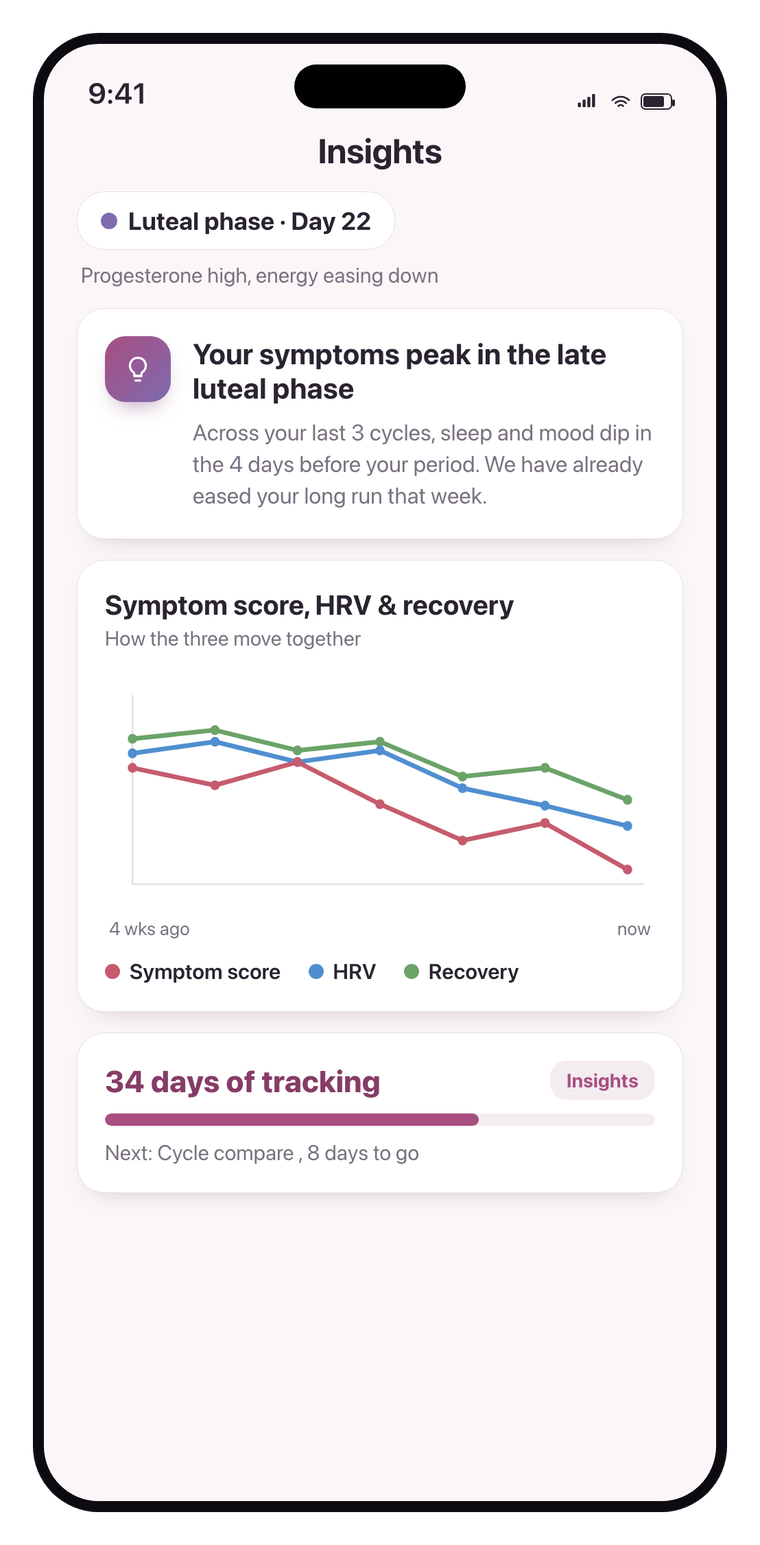
Phaes reads a short daily check-in for sleep, energy, and soreness alongside your cycle, so your tiredness stops looking random and starts showing its pattern: the days, the phase, the poor nights it tracks with. Then the plan adapts, easing the load when you are depleted instead of adding to the hole. See perimenopause brain fog, the full symptom list, or take the 2-minute quiz.