
Is anxiety a symptom of perimenopause?
Yes. New or intensified anxiety is one of the most frequently reported changes in the years before periods stop, and it can arrive with no external trigger at all. The NHS lists anxiety and low mood among the core symptoms of perimenopause, and it often shows up alongside broken sleep and a shorter fuse. You are not imagining it, and you are not suddenly an anxious person.
Why falling estrogen makes you anxious
Estrogen helps regulate serotonin and the calming neurotransmitter GABA, so when it swings and drops unpredictably in perimenopause, your nervous system has less to steady itself with. Add two things that travel with it, broken sleep and surges of cortisol and adrenaline that can hit in the small hours, and you get anxiety that feels physical and untethered from any real worry.
- Hormone swings. Each estrogen drop can pull mood and calm down with it.
- Lost sleep. The fastest route to a jumpy nervous system. See why you cannot sleep.
- Morning cortisol. Many women describe waking at 3 to 5am with a jolt of dread. It is a recognized pattern, not a character flaw.
What actually helps perimenopause anxiety
Name it as hormonal
Knowing the anxiety has a physiological driver, and that it tends to track with your cycle and your sleep, takes some of its power away. It is a symptom you can get ahead of, not a verdict on your life.
Protect sleep and steady your fuel
Sleep is the biggest single lever, and blood-sugar swings and excess caffeine or alcohol amplify the jittery feeling. Steadier sleep and steadier fuel calm the baseline more than willpower can.
Move, but do not overcook it
Regular, recoverable exercise is one of the most reliable anxiety regulators there is. The catch in perimenopause is dose: grinding hard sessions every day raises stress hormones and can feed the anxiety. The aim is consistent movement you recover from. See a perimenopause workout plan built around that balance.
Talk to a clinician about MHT (HRT)
For many women, hormone therapy steadies the mood swings driving the anxiety, and it is recognized as a first-line option for perimenopausal symptoms for those without contraindications. It is a conversation worth having. See training and MHT (HRT).
Get help sooner if anxiety is constant, you are having panic attacks that frighten you, or your mood is sinking and will not lift. Hormonal anxiety is real, and so is anxiety that needs its own treatment: the two can coexist. A doctor can help you tell them apart. Phaes is informational, not medical advice.
How Phaes helps
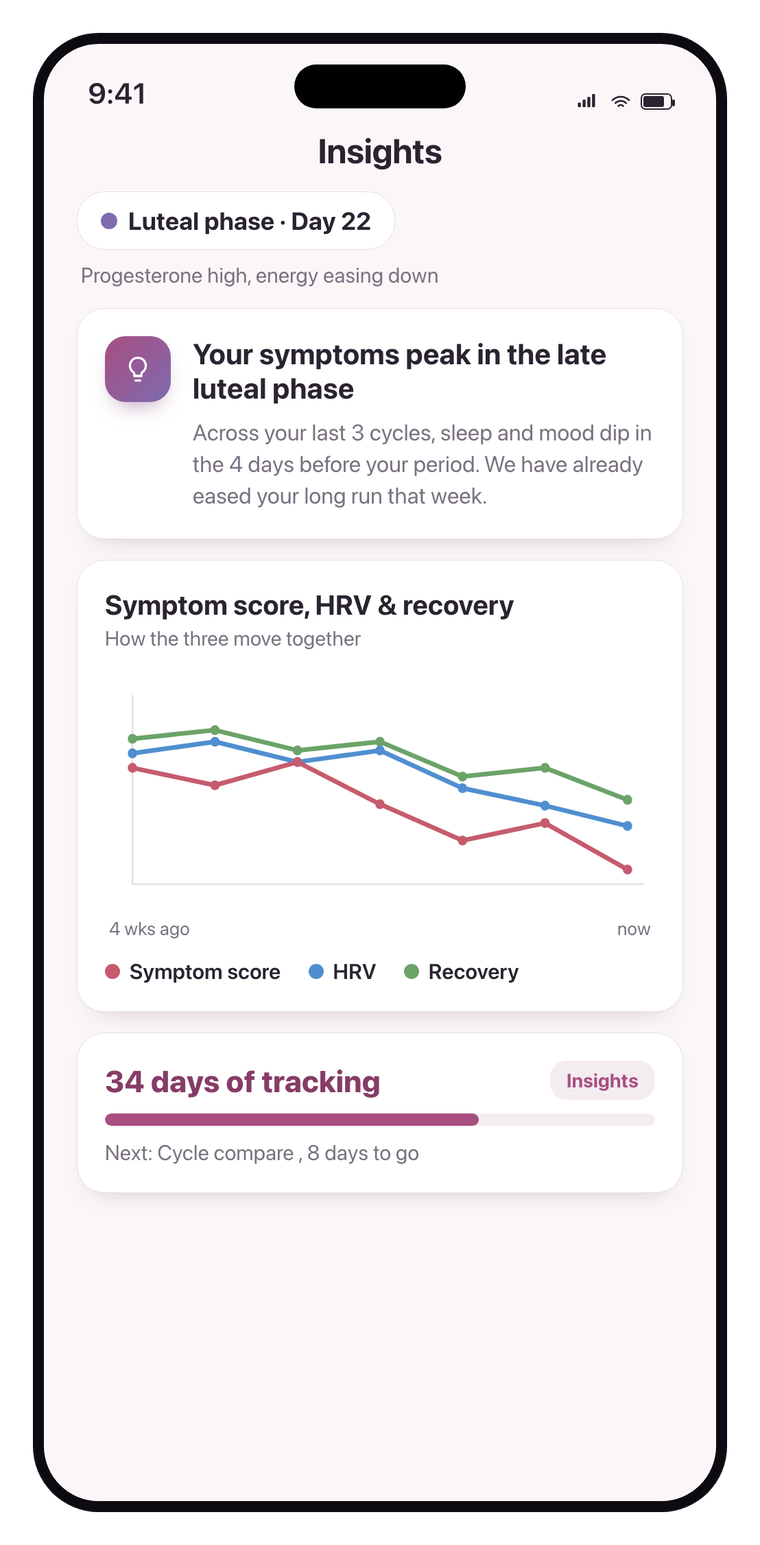
Anxiety feels random in the moment, but over weeks it has a shape. Phaes reads a short daily check-in that tracks mood alongside your sleep, your cycle, and your symptoms, so you can see when anxiety clusters and connect it to what your hormones are doing. The training side then eases off on the days you are running hot, instead of demanding the same of you. See why you are so angry, the full symptom list, or take the 2-minute quiz.