
What are the common side effects of MHT (HRT)?
When you start MHT (HRT), the most common early side effects come from your body adjusting to the hormones. They include breast tenderness, bloating, mild nausea, headaches, and irregular spotting or bleeding in the first months. The NHS notes that these are usually temporary and often settle within about three months as your body adapts.
How long do MHT (HRT) side effects last?
For most women, the early side effects ease within the first one to three months. If they persist beyond that, it is often a sign the type, dose, or delivery method needs adjusting rather than a reason to stop altogether. A review with your clinician usually sorts it: a different progestogen, switching from tablet to patch, or a dose change can make a real difference.
What helps with MHT (HRT) side effects
- Give it a little time. Many settle within the first few months. Note them rather than abandoning treatment on week one.
- Ask about adjusting type or dose. Most persistent side effects are fixable with a tweak. See types of MHT (HRT).
- Keep up the basics. Sleep, movement, and steady fuel help your body adjust and ease symptoms like bloating and mood.
- Track and review. Bring a record to your review so changes are based on evidence, not memory.
Contact a doctor promptly for unusual or heavy vaginal bleeding that does not settle, and seek urgent care for signs of a blood clot such as severe pain or swelling in one leg, chest pain, or sudden breathlessness. These are uncommon but important. This is general information, not medical advice.
How Phaes helps
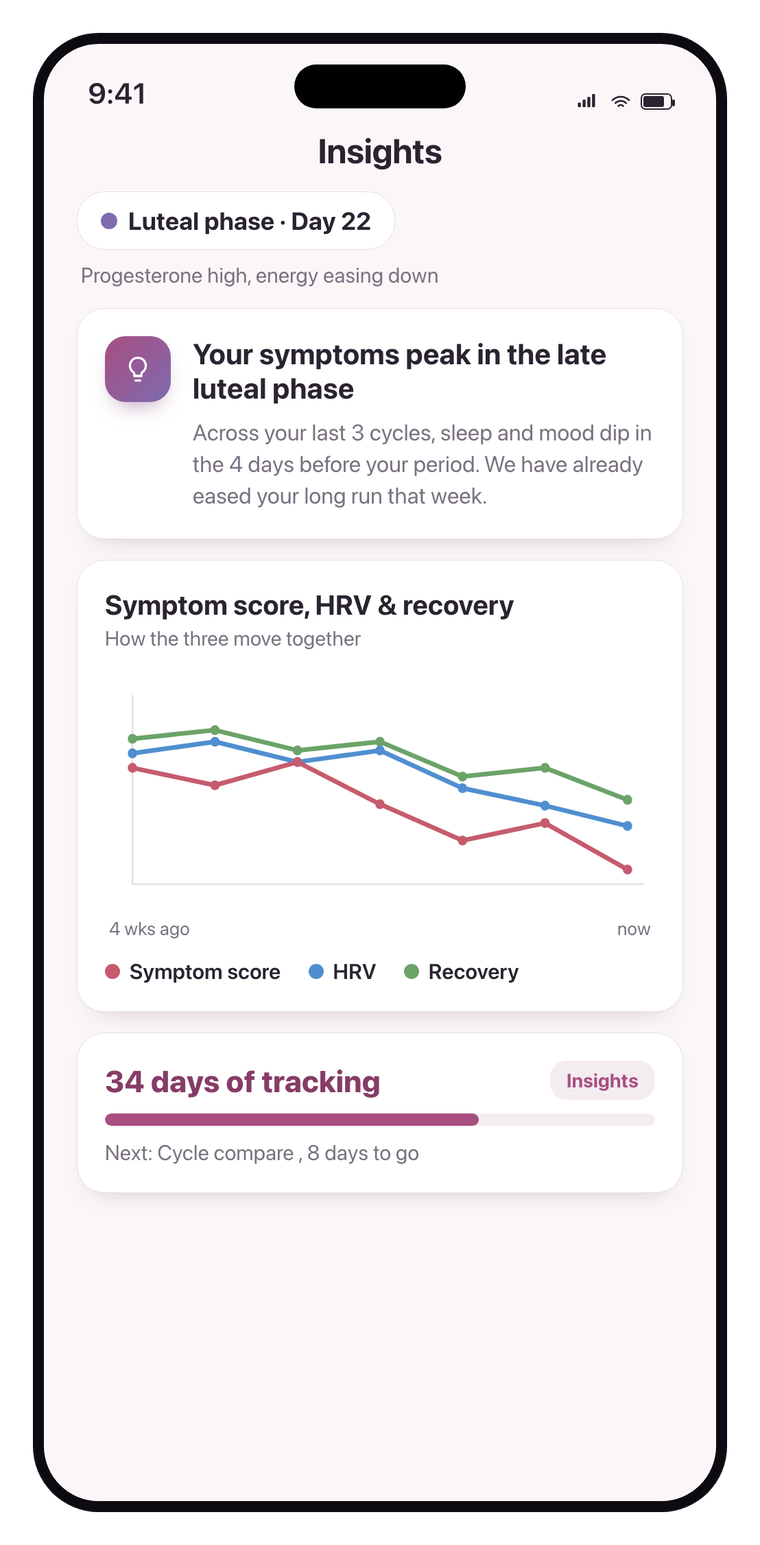
Phaes lets you log how you feel on a short, regular check-in, so when you start or adjust MHT (HRT) you can see whether side effects are settling and whether your symptom score is improving, a clear picture to bring to your review instead of trying to remember. See when to start MHT, types of MHT, and training and MHT.