
What perimenopause actually is
Perimenopause is the transition leading up to menopause, the years when your ovaries gradually wind down and estrogen and progesterone begin to swing and fall. It ends at menopause itself, which is defined as 12 months with no period. The NHS describes it as the time when you have symptoms of menopause but your periods have not yet stopped. In short: menopause is a single day, and perimenopause is the long, bumpy run-up to it.
When does perimenopause start?
Most often in the mid-40s, but the early 40s and even the late 30s are within the normal range. The average age of menopause is around 51, so perimenopause commonly spans your 40s. Symptoms can begin years before your cycle looks obviously irregular, which is why so many women feel something change long before anyone connects it to hormones. See perimenopause at 40.
How long does perimenopause last?
It varies widely. For many women it runs about four years, but it can be shorter, or last closer to a decade. It officially ends once you have gone 12 consecutive months without a period, at which point you are postmenopausal. See the stages of perimenopause for how it tends to unfold.
How do I know if I am in perimenopause?
There is no single blood test, because hormones swing day to day. The clearest signal is a change in your cycle, its length, flow, or predictability, alongside symptoms like broken sleep, mood changes, brain fog, and new weight. Because the diagnosis is about change over time, tracking the pattern is the most useful thing you can do. See the full perimenopause symptoms list, or take the 2-minute quiz.
Perimenopause is not the same as menopause
The terms get used interchangeably, but they are different stages, and it matters for what helps. See perimenopause vs menopause for the distinction.
Perimenopause is a normal life stage, not an illness, but you do not have to white-knuckle through it. Treatments including MHT (HRT) exist, and they work best when you understand what is happening. Phaes is informational, not medical advice.
How Phaes fits
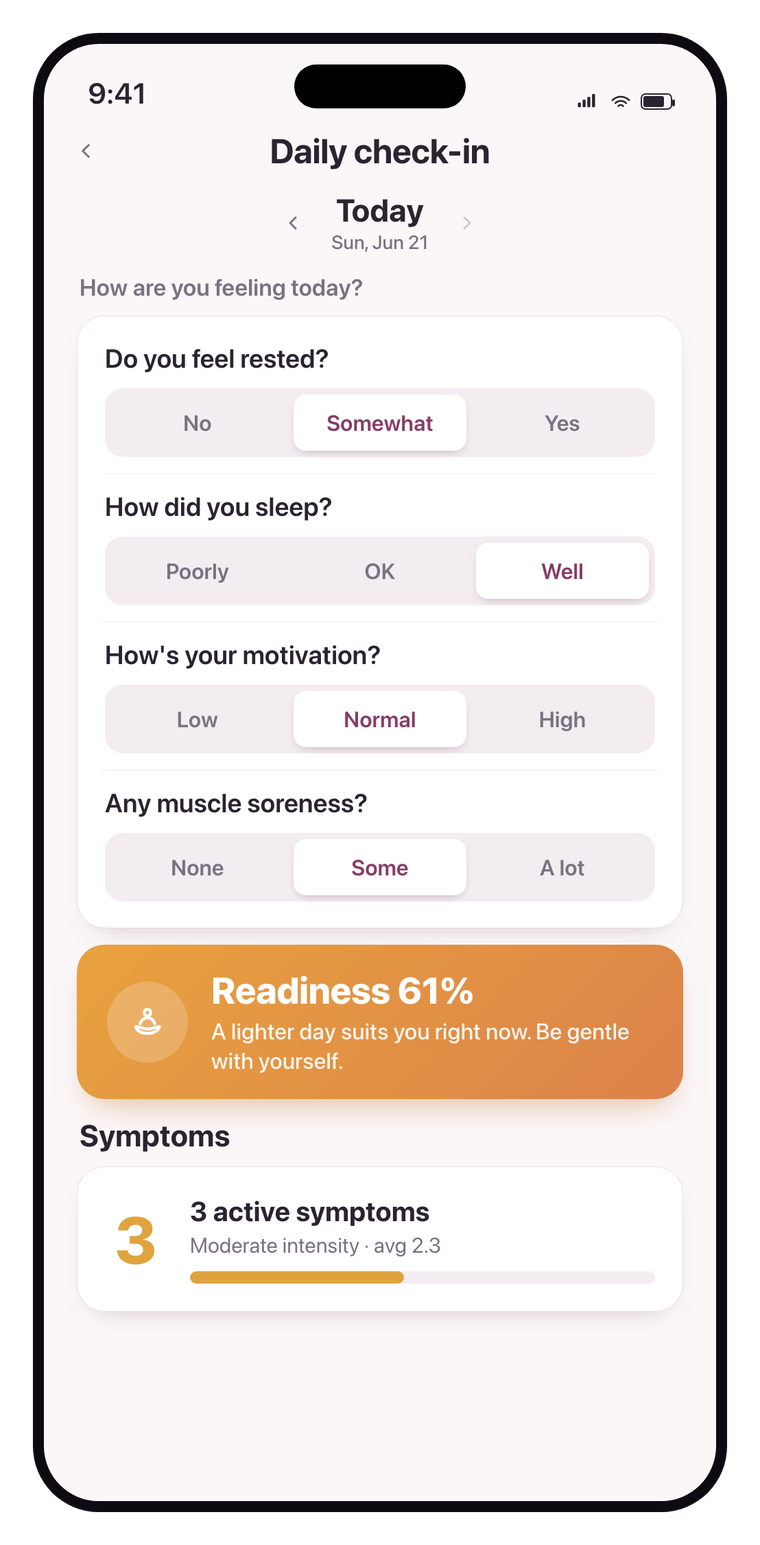
Phaes is built for exactly this uncertainty. It anchors to your real cycle rather than a textbook calendar, so a wandering cycle is read as data, not error, and a daily check-in connects your symptoms into a picture you can actually use, and then adapts your training to the body you have today. See how hormone intelligence works, or the perimenopause app.
Keep reading
- Free 21-day perimenopause challenge
- Perimenopause symptoms
- The stages of perimenopause
- Perimenopause vs menopause