
Are heart palpitations a symptom of perimenopause?
Yes. Palpitations, the sensation of your heart pounding, fluttering, racing, or skipping a beat, are a recognized perimenopause symptom. They often arrive with hot flashes or anxiety and can be brief. The British NHS lists heart palpitations among menopause and perimenopause symptoms. They are common, but they should never simply be assumed to be hormonal without a check.
Why falling estrogen makes your heart race
Estrogen influences your autonomic nervous system and your blood vessels, so as it swings and falls, your heart rate and rhythm can become more reactive. Palpitations frequently travel with hot flashes, as the same surge that drives the flush can speed the heart, and with the anxiety and broken sleep of this stage, which raise adrenaline. See perimenopause anxiety.
Get urgent medical help if palpitations come with chest pain or pressure, shortness of breath, fainting or near-fainting, or if they are sustained, very fast, or irregular. See your doctor about any new palpitations so they can check your heart and rule out causes such as thyroid problems and anemia. This is the one symptom not to wait on. Phaes is informational, not medical advice.
What helps once your heart is checked
- Cut the triggers. Caffeine, alcohol, nicotine, and dehydration all provoke palpitations. Easing them often helps quickly.
- Protect sleep and manage stress. Less adrenaline means a calmer rhythm. See why you cannot sleep.
- Keep moving. Regular, recoverable exercise supports a healthy heart, while overtraining and stress can aggravate palpitations.
- Ask about MHT (HRT). By steadying hormones and reducing hot flashes, MHT can reduce palpitations for some women. See training and MHT.
How Phaes helps
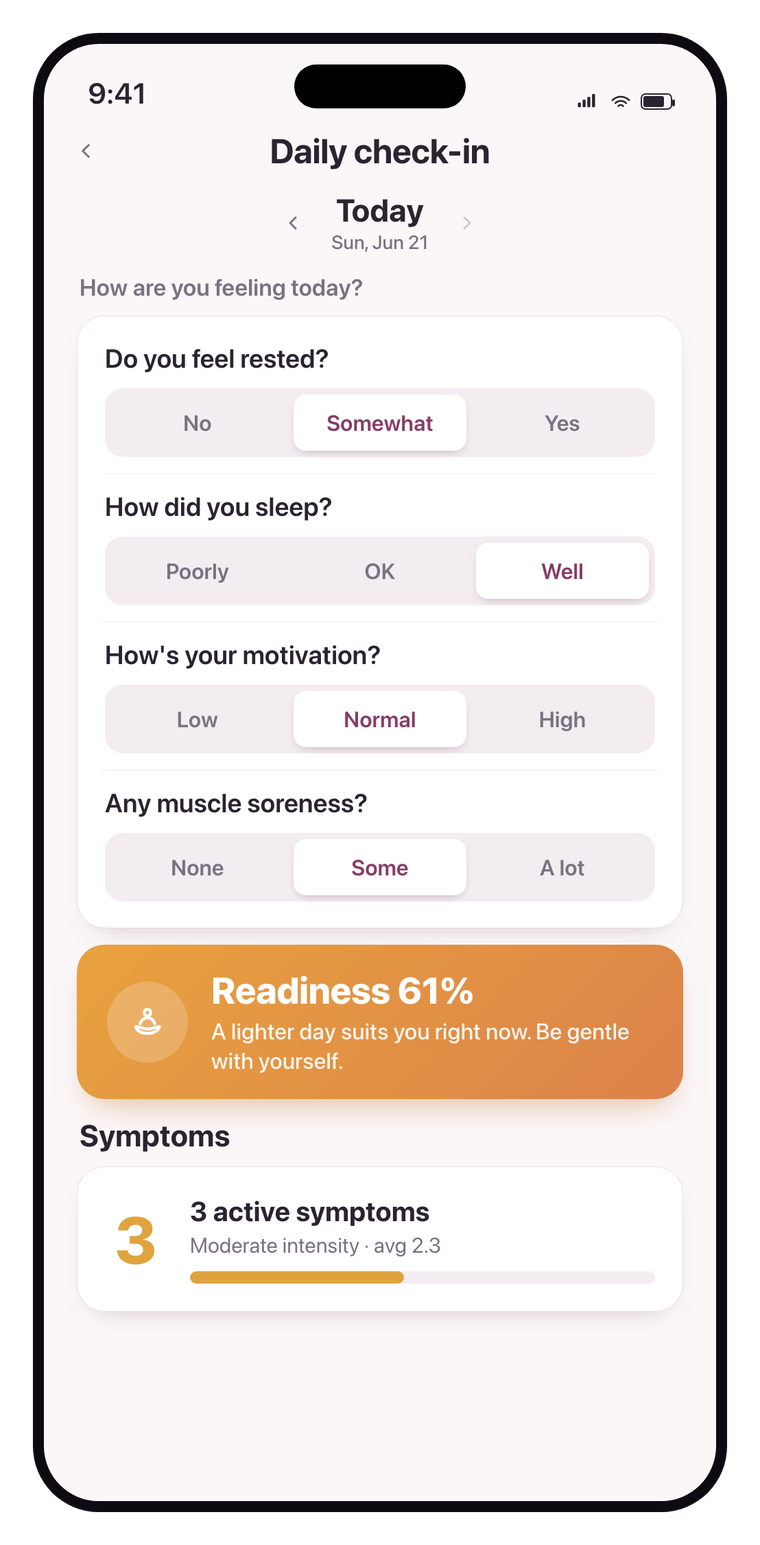
Once a clinician has cleared your heart, Phaes helps you see the pattern: a short daily check-in tracks palpitations alongside your cycle, sleep, and symptoms, so you can spot what sets them off and bring a clear record to your doctor. See the full symptom list, what perimenopause is, or take the 2-minute quiz.