
Why perimenopause breaks your sleep
Progesterone has a calming, sleep-supporting effect, and as it falls through perimenopause that buffer thins out. Add night sweats and hot flashes that spike body temperature, plus a cortisol rhythm that can tip you awake in the early hours, and you get the classic pattern: asleep by eleven, wide awake at three. Over weeks that sleep debt piles up into fatigue, brain fog, low mood, and a body that recovers slowly.
Why this matters for training
Sleep is when training adaptation actually happens. A hard session is only a stimulus; you get fitter while you recover from it, and most of that repair happens overnight. String together broken nights and the same workout that used to build you starts to break you down instead. Pushing your usual intensity through a week of bad sleep is how niggles, illness, and burnout creep in.
On a poorly slept week the strong move is not to grind. It is to keep moving at an intensity you can absorb, and let the hard work wait two days until you can use it.
How Phaes handles it
Sleep drives the day
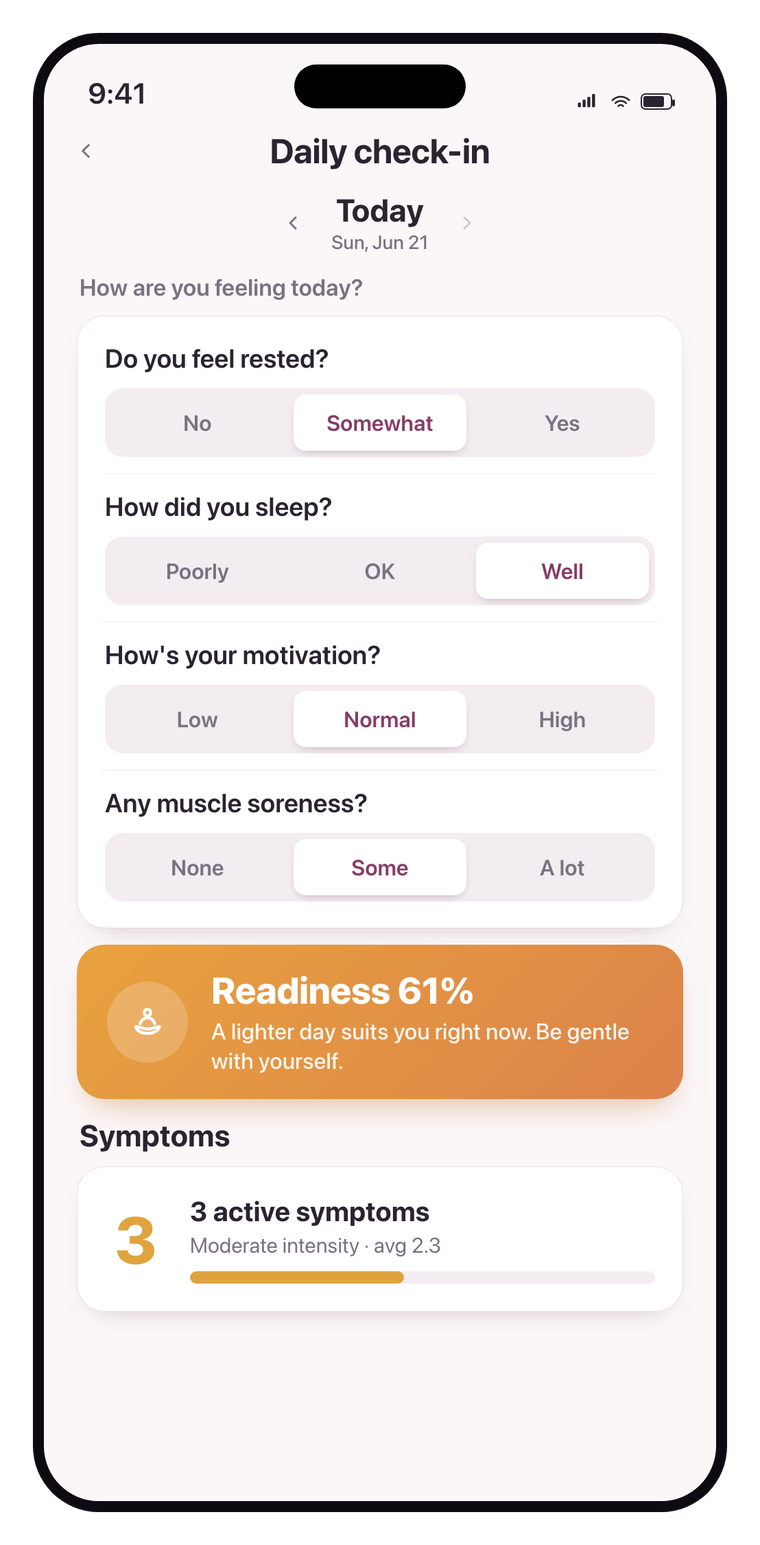
Sleep is part of the short daily check-in, and it feeds straight into your daily read. After a rough night the plan leans toward easy aerobic work or steady strength, and it holds the hard intervals back until you have recovered enough to benefit from them.
It protects you over a bad stretch
A conservative load guard means a run of broken nights reshapes the week instead of stacking fatigue on top of fatigue. See how this fits into running recovery during menopause.
It helps you see the pattern
Logging sleep next to your symptoms and cycle reveals which weeks reliably fall apart, so you can plan around them rather than be ambushed. For the wider picture, see running through perimenopause.
Phaes is a coaching app, not medical care. If sleep problems are persistent or severe, it is worth talking to your doctor, since options including MHT (HRT) help many women.
Keep reading
- Running recovery during menopause
- Perimenopause weight gain: why nothing works
- Perimenopause symptoms: the full list