Is perimenopause rage at your partner real?
Yes. Irritability is the number one mood complaint in perimenopause, reported by up to 70% of women, and it tends to land hardest on the people closest to you. Clinicians and bodies like The Menopause Society are clear: this is a hormonal symptom, not a character flaw, and not proof your marriage is broken.
It is also one of the most common reasons marriages wobble in midlife. In a 2022 UK survey of about a thousand divorced women, 73% said menopause played a part in their marriage breaking down. That is what women reported, not proof of cause, but it is a good reason to understand your hormones before you make a big call. If the feeling has gone past anger into wanting out altogether, read why you want to run away from everything.
Why it hits the people you love
Falling, swinging estrogen thins your tolerance for friction, and home is where the friction lives. Your partner and your kids are the safe place to unload, so they get the version of you the world does not see. Add broken sleep and the rage has even less to push against. None of it means you have stopped loving them.
What actually helps
- Name it out loud. Telling your partner "this is hormonal, it is not about you" changes the fight before it starts.
- Protect sleep. The single biggest lever on your temper. See why you cannot sleep.
- Move, the right amount. Regular, recoverable exercise blunts irritability. A perimenopause workout plan is built for that.
- Ask a clinician about MHT (HRT). For many women, mood improves within 4 to 8 weeks of starting hormone therapy. See training and MHT.
Hormones explain the rage, they do not excuse everything, and they are not a substitute for real support. If there is contempt, fear, or a low mood that will not lift, a couples or individual therapist is worth as much as any hormone. Phaes is informational, not medical advice.
How Phaes helps
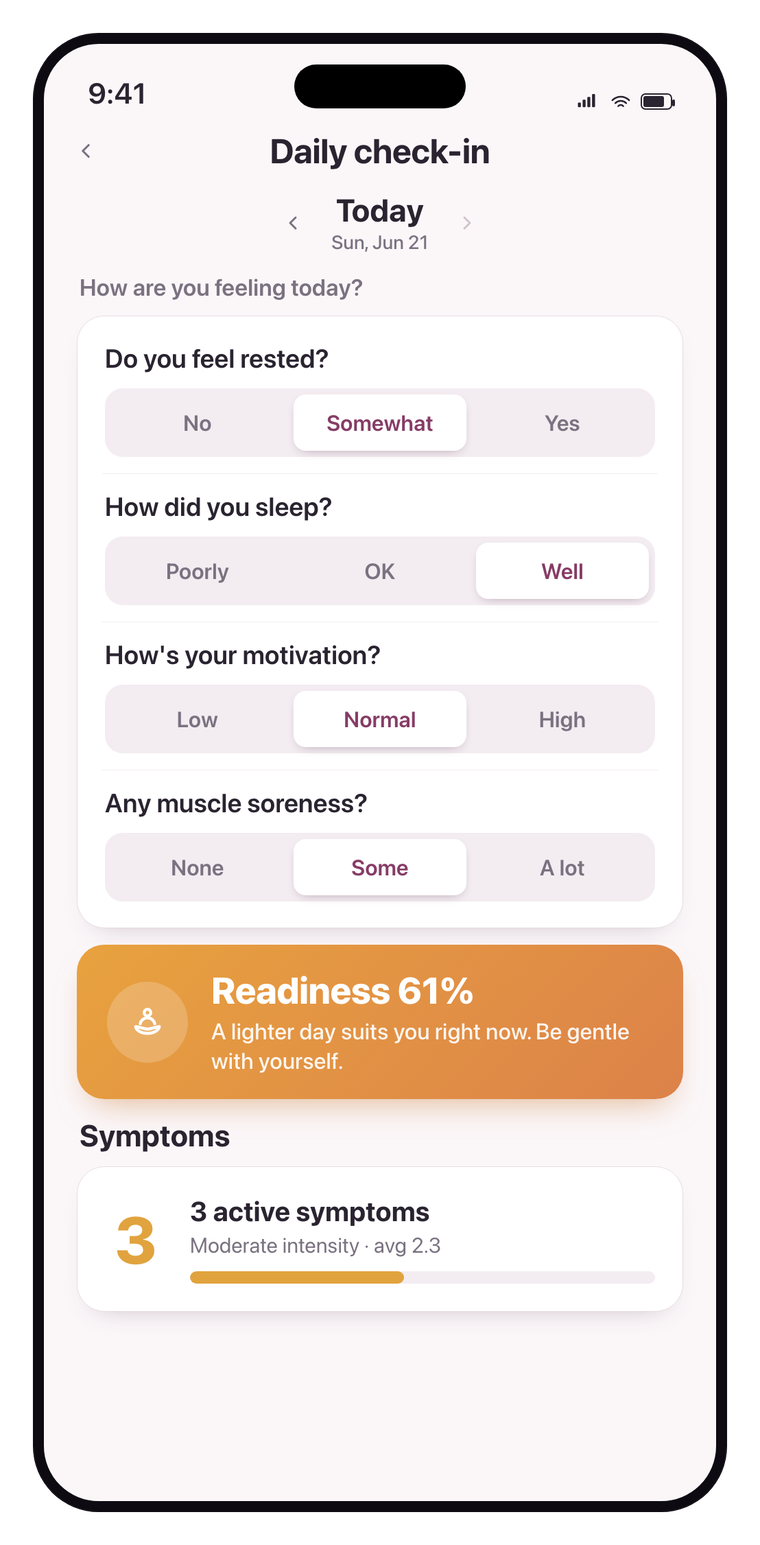
We get it. The rage is exhausting, it scares you, and you are tired of apologising for a body you did not choose. We built Phaes to take your side: it turns "why do I keep blowing up" into a pattern you can see. A short daily check-in tracks your mood alongside your cycle and your sleep, so the rage stops feeling random and starts looking like what it is, hormonal and predictable enough to get ahead of. See the perimenopause app.
Frequently asked questions
Is it normal to feel rage at my husband in perimenopause?
Yes. Irritability is the most common mood symptom of perimenopause, reported by up to 70% of women, and it often lands hardest on partners and family. It is driven by fluctuating estrogen and broken sleep, not a sign that your marriage is failing.
Will perimenopause rage go away?
For most women it eases as hormones settle, and it often improves sooner with treatment. Many women see mood improve within 4 to 8 weeks of starting hormone therapy. Sleep, regular movement, and naming it with your partner all help in the meantime.
How does Phaes help with perimenopause and my relationship?
Phaes tracks your mood alongside your cycle and sleep so the pattern becomes visible. Seeing that the rage is hormonal and predictable, rather than random, helps you and your partner respond to it instead of being blindsided.
Keep reading
- Why am I so angry?
- Why do I want to run away?
- Why can I not sleep?
- The perimenopause app
- Perimenopause symptoms: the full list