
The short answer
Perimenopause is the transition leading up to your last period, when hormones swing and symptoms begin but you still have periods. Menopause is a single point in time, defined as 12 months after your final period. Everything after that is postmenopause. So you spend years in perimenopause, reach menopause on one day in retrospect, and live the rest of your life postmenopausal.
| Stage | What it means | Periods |
|---|---|---|
| Perimenopause | The transition, hormones swinging and falling | Still present, increasingly irregular |
| Menopause | A single point: 12 months with no period | Stopped for a full year |
| Postmenopause | All the years after menopause | None |
Why most symptoms happen in perimenopause, not menopause
This surprises people: the hot flashes, mood changes, brain fog, and broken sleep that everyone calls menopause mostly happen during perimenopause, when hormones are swinging hardest. By the time you are postmenopausal, levels are low but stable, and many symptoms ease, though some, like changes to bone, muscle, and vaginal tissue, continue because estrogen stays low.
Why the difference changes what helps
In perimenopause, you may still have a cycle to work with, so cycle-aware training and tracking apply, and contraception can still matter. Postmenopause, cycle-phase timing no longer applies, but the strength-first, recovery-led approach matters even more for protecting bone and muscle. See running through perimenopause and the menopause running plan.
One practical note: because perimenopause means you can still ovulate, pregnancy is still possible until you reach menopause. Talk to a clinician about contraception and about MHT (HRT), which is an option in both stages. Phaes is informational, not medical advice.
How Phaes helps in both stages
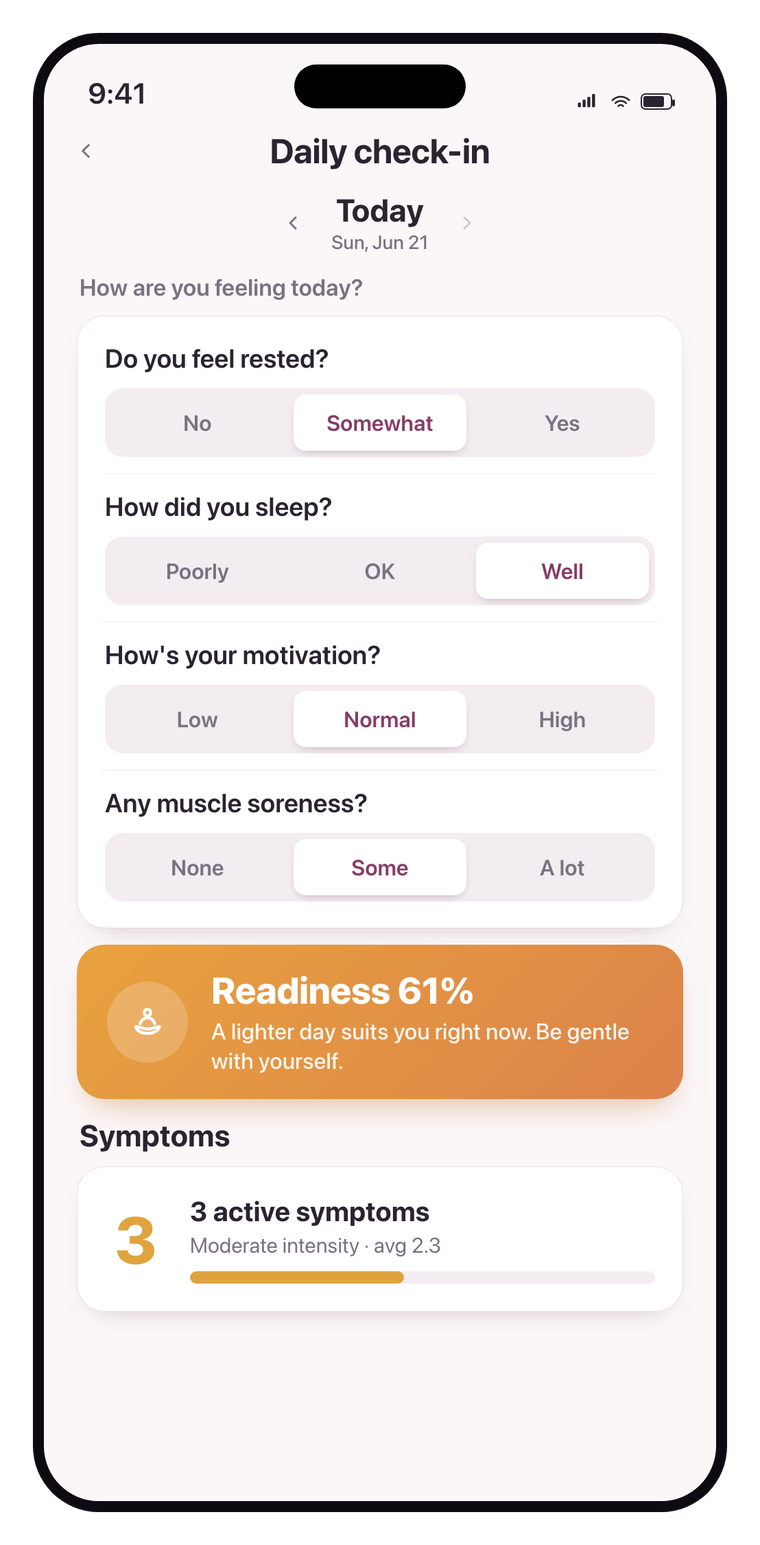
Phaes adapts as you cross from one stage to the next. While you still have a cycle, it anchors to it and layers cycle-phase guidance on top of your daily check-in. Once periods stop, it drops the cycle layer and keeps the same recovery-first, strength-led coaching going. See what perimenopause is, the menopause app, or the perimenopause app.