
Is joint pain a symptom of perimenopause?
Yes. Aching, stiff, or sore joints are a common and under-recognized part of perimenopause, common enough that clinicians use the term arthralgia of menopause. It often shows up in the hands, knees, hips, shoulders, and neck, and tends to be worst in the morning. The The Menopause Society recognizes joint and muscle aches as a genuine feature of the transition.
Why falling estrogen makes your joints ache
Estrogen has an anti-inflammatory effect and helps keep the tissue in and around your joints healthy and lubricated. As it swings and falls, inflammation can rise and joints can feel stiffer and more painful. Two things that travel with perimenopause make it worse: broken sleep, which lowers your pain threshold, and weight changes that add load to the joints.
What actually helps perimenopause joint pain
- Keep moving. It feels backward, but motion lubricates joints and rest stiffens them. Gentle daily movement usually helps more than rest.
- Lift, sensibly. Strength training builds the muscle that supports and offloads your joints. Start light and progress. See lifting weights in perimenopause and strength training for this stage.
- Protein and overall load. Enough protein supports muscle and tissue repair, and managing weight reduces joint load.
- Ask a clinician about MHT (HRT). Many women report that joint aches ease on hormone therapy. See training and MHT.
See a doctor if a single joint is hot, red, or swollen, if pain is severe or stops you using the joint, or if you have other symptoms like a rash or fever. Conditions such as rheumatoid arthritis can begin around this age and deserve checking, not assuming. Phaes is informational, not medical advice.
How Phaes helps
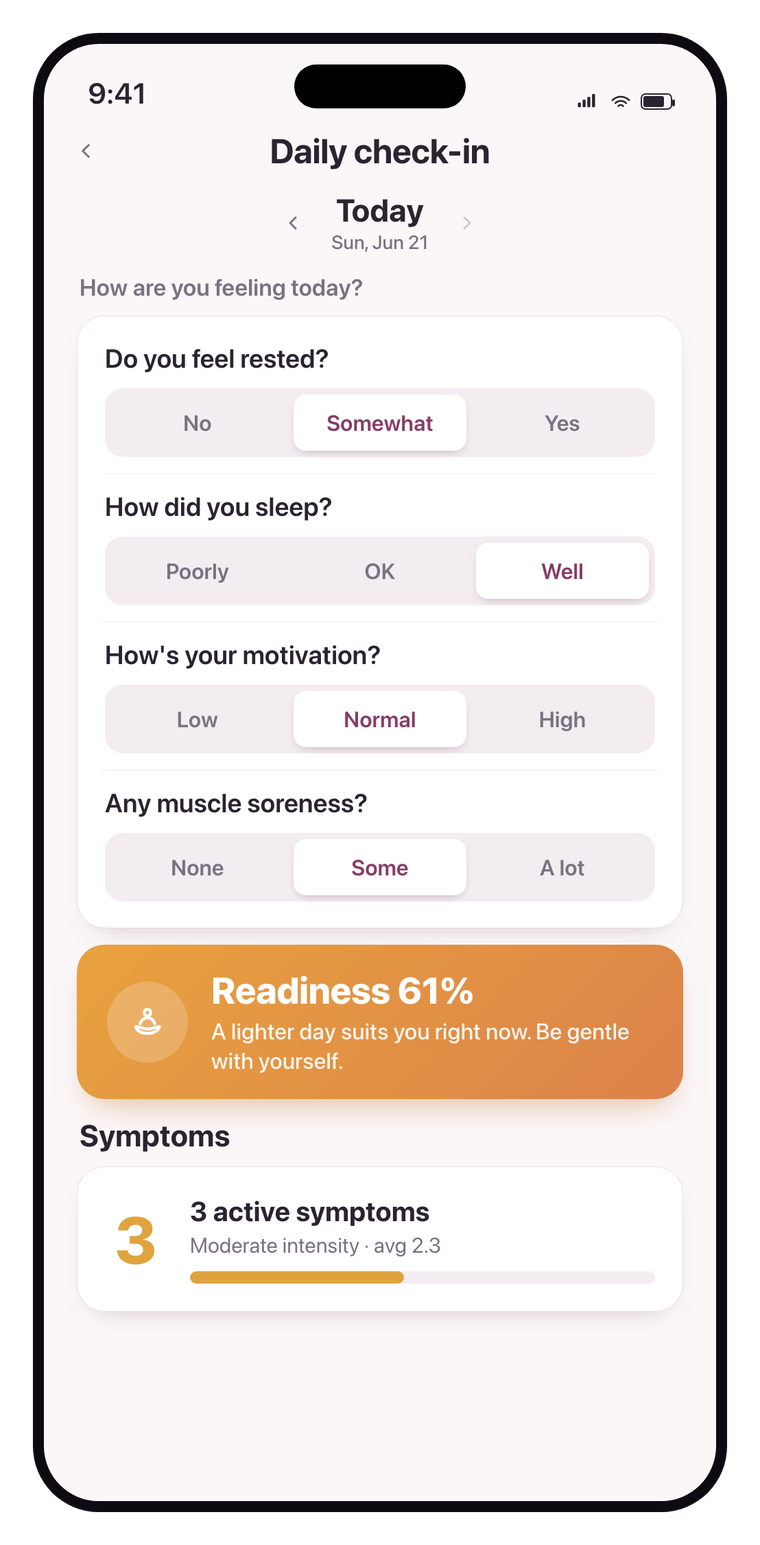
Phaes leans on progressive strength to protect your joints rather than grinding cardio that aggravates them, and a short daily check-in lets you see when stiffness clusters with poor sleep or a point in your cycle. The plan then eases on your sorest days instead of demanding the same of you. See the full symptom list, a perimenopause workout plan, or take the 2-minute quiz.