
Is it normal to be this tired in perimenopause?
Yes. Fatigue is one of the most common and most underrated symptoms of the menopause transition. The Menopause Society and the NHS both list tiredness and low energy as core features of perimenopause. It is not laziness, it is not weakness, and it is not all in your head. Your body is riding hormonal swings that genuinely sap energy, and the exhaustion deserves to be taken seriously.
Why perimenopause makes you so tired
The fatigue is rarely one thing. It is usually several at once, stacked on top of each other, which is why it feels so heavy and so hard to shake.
- Broken sleep. Night sweats, 3am wakeups, and a racing mind fragment your sleep, so you start every day in deficit. This is often the single biggest driver. See why you cannot sleep.
- Swinging estrogen. Estrogen does not just decline, it lurches up and down. Those swings drag your mood, your sleep, and your energy along with them, often unpredictably from week to week.
- Possible low iron. Heavy or erratic perimenopausal periods are a common cause of low iron and anaemia, which leaves you breathless, foggy, and exhausted. This is checkable with a simple blood test.
- Possible thyroid changes. Thyroid problems become more common in midlife and look a lot like perimenopause: fatigue, low mood, weight changes. They are also easy to miss if no one looks.
- Doing too much. Counterintuitively, grinding through long, hard workouts when you are already depleted digs the hole deeper. Under-recovery feeds the fatigue rather than fixing it.
So why is exercise still the answer?
Because the right dose of the right movement is one of the few things shown to lift perimenopausal energy, mood, and sleep all at once. Strength training in particular helps maintain muscle, supports bone, steadies mood, and improves sleep quality. The catch is dose. Exercise is medicine, and like any medicine, too much of the wrong kind makes things worse. The goal when you are wiped is not to skip movement, it is to choose the version that gives energy back instead of taking more.
How do I train when I am exhausted?
Shift from grinding to topping up. When the tank is low, you want short, purposeful sessions that leave you a little better than you started, not flattened for two days. Here is what that looks like in practice.
- Favor short, heavy strength over long cardio grinds. Two or three brief strength sessions a week, with real load and long rests, build muscle and energy without the deep fatigue of a 60-minute cardio slog. Quality over volume. See how to exercise during perimenopause.
- Use gentle movement and walking. A 20-minute walk is real exercise. On the worst days, easy movement clears your head and lifts your mood without draining the little energy you have. It counts.
- Do not add daily HIIT when you are depleted. High-intensity intervals every day is the classic mistake. When you are already under-recovered, daily HIIT spikes stress and worsens fatigue. Two short hard sessions a week is plenty, and even that can wait until you are sleeping better.
- Protect recovery like it is part of the training. Rest days, sleep, and easy weeks are not slacking, they are where the benefit lands. If a session feels like wading through mud, that is information, not a test to pass.
- Fuel enough. Under-eating, especially under-eating protein and carbohydrate around training, is a hidden cause of fatigue. You cannot train, recover, or build muscle on empty. Eat enough to support the work you are asking your body to do.
When should fatigue be checked by a clinician?
Some tiredness comes with perimenopause. But fatigue that is severe, relentless, or out of proportion is worth a proper look, because it can have causes that have nothing to do with hormones and everything to do with a treatable problem. You should not have to white-knuckle through exhaustion that a blood test could explain.
- Exhaustion that does not budge with rest or better sleep. If you sleep and still wake flattened, that warrants investigation.
- Breathlessness, dizziness, very heavy periods, or looking pale. These can point to low iron or anaemia, which is easily tested and treatable.
- Unexplained weight change, feeling cold, hair thinning, or low mood. These can signal a thyroid issue, which mimics perimenopause closely.
- Fatigue alongside chest pain, fainting, or shortness of breath at rest. Do not wait on these. Seek prompt medical care.
Persistent, heavy fatigue is a reason to see your doctor, not a reason to push harder. Ask them to rule out causes like anaemia (low iron) and thyroid problems with simple blood tests before you assume it is "just hormones". Phaes is informational, not medical advice, and it is no substitute for a clinician who can examine and test you.
How Phaes helps
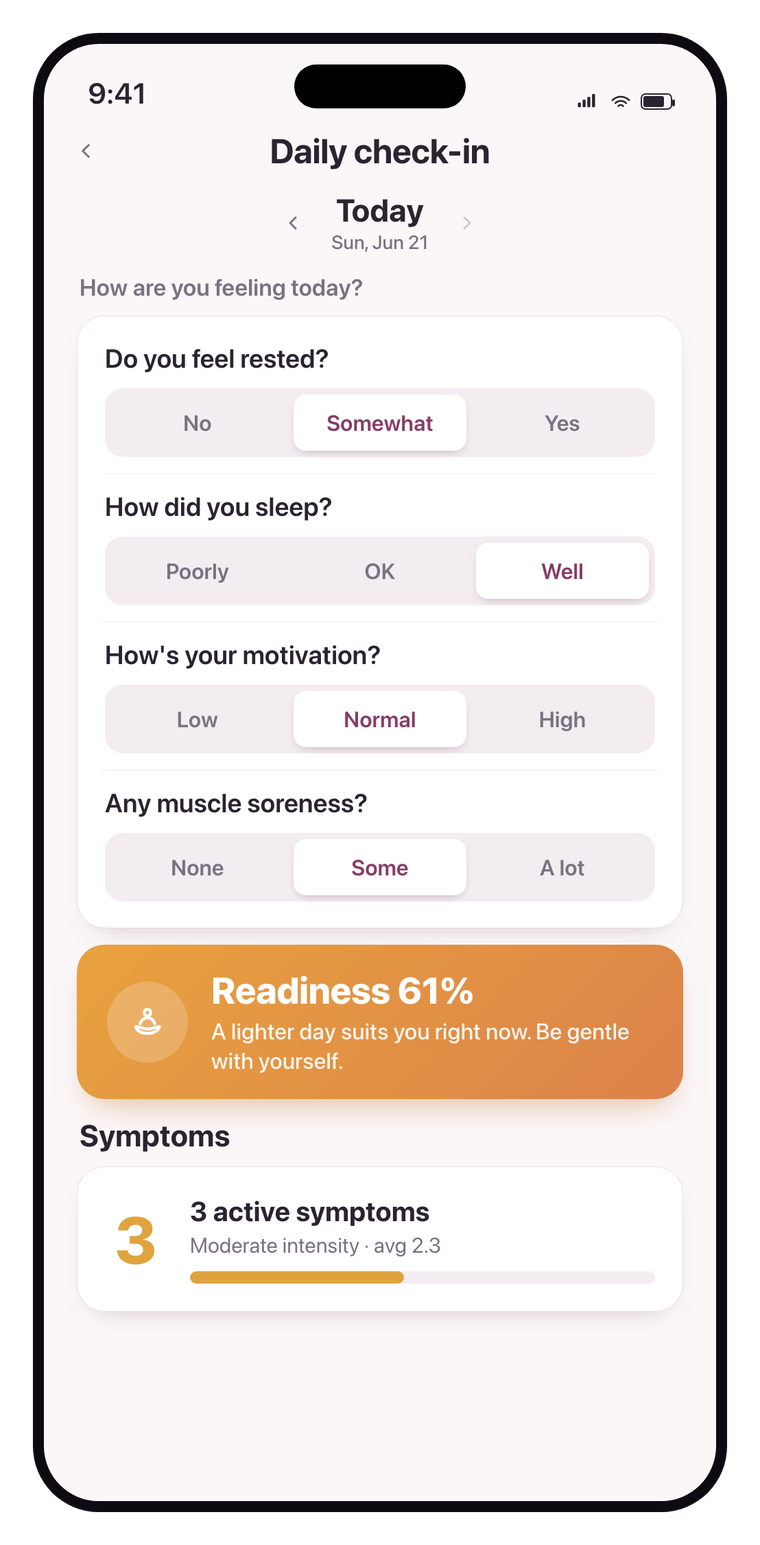
Most apps just log how tired you feel and hand it back to you. Phaes does something different: it eases or pushes your plan based on how you actually feel. A short daily check-in feeds your daily read, so on a wiped-out morning the plan offers a short walk or a brief strength session instead of the long grind, and it pulls back before you dig the hole deeper. It will not stack daily HIIT on top of broken sleep, and it treats recovery as part of the training, not a failure. The result is movement that gives energy back, on the days you have the least to give. See the perimenopause app.