
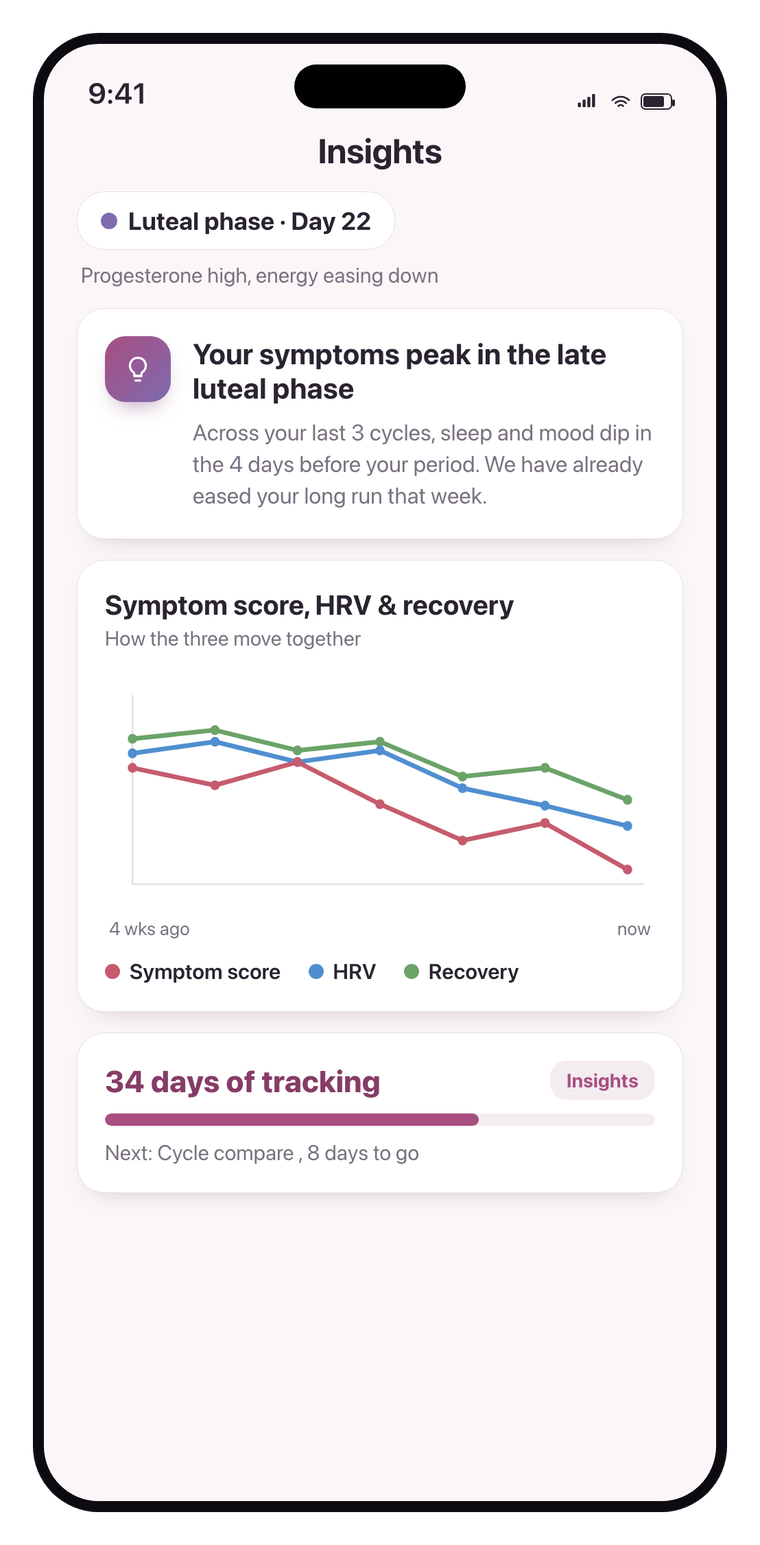
Why timed cycles so often miss
The fertile window is only about six days a cycle, and it ends the day you ovulate, not the day your app guesses you might. Most missed cycles are not a fertility problem at all, they are a timing problem: ovulation came earlier or later than a generic 28-day calendar assumed. Tracking your own ovulation signs, rather than a default calendar, is the single biggest change most people can make.
What to track to find your window
- LH (ovulation) tests. A peak result means ovulation is likely in the next 12 to 36 hours.
- Cervical mucus. Egg-white, stretchy mucus is one of the most reliable fertile-window signs.
- Basal body temperature. A sustained rise confirms, after the fact, that ovulation happened, which tells you your pattern for next month.
- Cycle history. A few logged cycles reveal how regular, or variable, your timing really is.
The American Society for Reproductive Medicine suggests seeing a doctor after 12 months of trying if you are under 35, or after 6 months if you are 35 or older, and sooner if your cycles are very irregular or absent. Tracking does not replace that visit, it makes it more useful. Phaes is informational, not medical advice.
How Phaes helps
Phaes turns "is it me, is it timing, is something wrong" into something you can see. A quick daily log captures your ovulation signs, and Phaes reads them back as an ovulation-confidence and cycle-predictability read, in plain language and compared to your own history. When you bring it to your doctor, you arrive with months of organised data instead of a vague worry. See the fertility app that coaches you.