Does MHT (HRT) make you gain weight?
On average, no. A Cochrane review of randomized trials found no evidence that estrogen, alone or with a progestogen, has a large effect on body weight compared with placebo. The NHS also says there is no evidence that MHT (HRT) causes weight gain. Women on MHT (HRT) and women not on it gain weight at similar rates through midlife, which points to age and the transition rather than the treatment.
Why do women gain weight around menopause?
Several things change at once. Falling estrogen shifts where fat is stored, from hips and thighs toward the belly. Muscle mass declines with age unless you train to keep it, which lowers the energy you burn. Broken sleep from night sweats raises hunger and makes training harder, and many women move less in their late 40s than in their 30s. See why am I gaining weight when nothing changed for the full picture.
Can MHT (HRT) help with belly fat?
It may help a little. Several studies, including analyses from the Women's Health Initiative, found that women on MHT (HRT) tended to gain less fat around the middle than women on placebo. It is not a weight loss treatment and should not be started for weight, but it can make the other levers work better: fewer night sweats means better sleep, and better sleep means more energy to train and less late-night hunger.
Why the scale can go up in the first weeks
Early side effects such as fluid retention and bloating are common when you start MHT (HRT), and some women notice them with certain progestogens. That can add a little weight on the scale that is water, not fat. It usually settles within the first few months. If it does not, a change of progestogen, dose, or delivery method often helps. See MHT (HRT) side effects and how long MHT (HRT) takes to work.
Should I lose weight before starting MHT (HRT)?
You do not need to lose weight before starting. Weight does affect which type is safest, though. The risk of blood clots with tablet (oral) estrogen is higher in women with a higher BMI, so guidelines such as NICE favor estrogen through the skin (a patch, gel, or spray) for women with a BMI over 30, because it does not raise clot risk in the same way. Your clinician will weigh this with your other history. See types of MHT (HRT).
What actually shifts body composition
- Lift heavy, two or three times a week. Muscle is what keeps your metabolism and your shape. MHT (HRT) does not build it for you. See lifting weights in perimenopause.
- Add short, hard efforts. Brief sprint or interval sessions do more in midlife than long, moderate cardio. See exercise for perimenopause weight loss.
- Eat enough protein. Spread it across the day to support the muscle you are training for.
- Do not under-eat. Big deficits cost muscle and make sleep and mood worse. See under-fueling and your hormones.
- Protect sleep. If night sweats are wrecking it, that is worth raising with your clinician.
This is general information, not medical advice. Decisions about MHT (HRT), including which type suits you, should be made with a qualified clinician who knows your history.
How Phaes helps
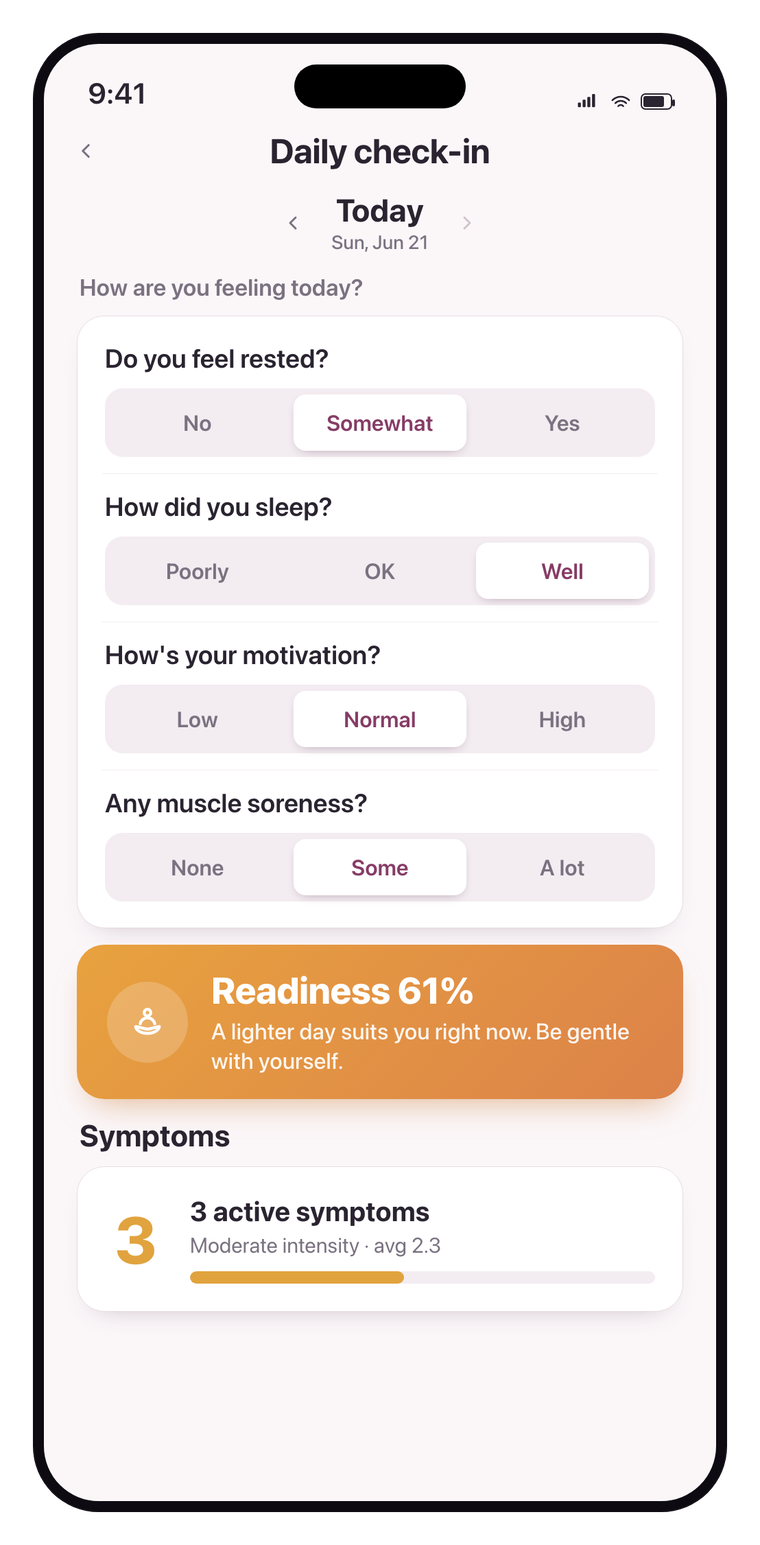
Phaes tracks your MHT (HRT) regimen and dose changes alongside your training, symptoms, and, if you want, body composition, so you can see the trend over months rather than reacting to one weigh-in. MHT (HRT) tracking and body composition tracking are free.
Frequently asked questions
Does MHT (HRT) cause weight gain?
Research has not found that MHT (HRT) causes weight gain on average. A Cochrane review of randomized trials found no large effect on body weight compared with placebo. Weight gain in midlife is common with or without MHT (HRT), and is linked to age, muscle loss, sleep, and activity.
Why have I gained weight since starting MHT (HRT)?
In the first weeks, fluid retention and bloating are common side effects and can show up on the scale as water rather than fat. They usually settle within a few months. If they do not, a different progestogen, dose, or delivery method often helps, so raise it at your review.
Can MHT (HRT) help you lose belly fat?
It is not a weight loss treatment, but some studies found that women on MHT (HRT) gained less fat around the middle than women on placebo. Strength training, enough protein, and good sleep make the bigger difference.
Should I lose weight before starting MHT (HRT)?
No, you do not need to. Weight can affect which type is safest: with a BMI over 30, estrogen through the skin (patch, gel, or spray) is usually preferred over tablets because it does not raise blood clot risk in the same way. Your clinician will advise on what suits you.
Keep reading
- Why am I gaining weight?
- How long MHT (HRT) takes to work
- MHT (HRT) side effects
- Exercises for menopause belly