Why tracking matters in perimenopause
Perimenopause is diagnosed mostly from your symptoms and your age, not a single blood test, because hormone levels swing from day to day. That puts a lot of weight on what you can tell your clinician, and memory is a poor record. By the time of an appointment, two rough months blur into "I just have not felt like myself." A written record turns that into something specific: which symptoms, how often, how bad, and whether they follow your cycle. The NHS lists the common symptoms, and many of them, like anxiety, brain fog and joint pain, are easy to put down to stress unless you see them together.
What to track
- Hot flushes and night sweats, and how often they wake you.
- Sleep: hours, quality, and middle-of-the-night waking.
- Mood: anxiety, low mood, irritability or rage, and how intense it felt.
- Energy and brain fog, including word-finding and focus.
- Aches: joints, muscles, headaches.
- Your cycle: when each period starts, how heavy it is, and any bleeding between periods.
- Treatment: MHT (HRT) or anything else you take, with the date of every change.
Track for at least two or three cycles, or about three months if your periods have become irregular. That is long enough for a pattern to show, and the NHS suggests keeping a symptom diary for at least two cycles before a GP visit about cycle-linked symptoms. For a full walkthrough, see how to track perimenopause symptoms.
What Phaes tracks, free
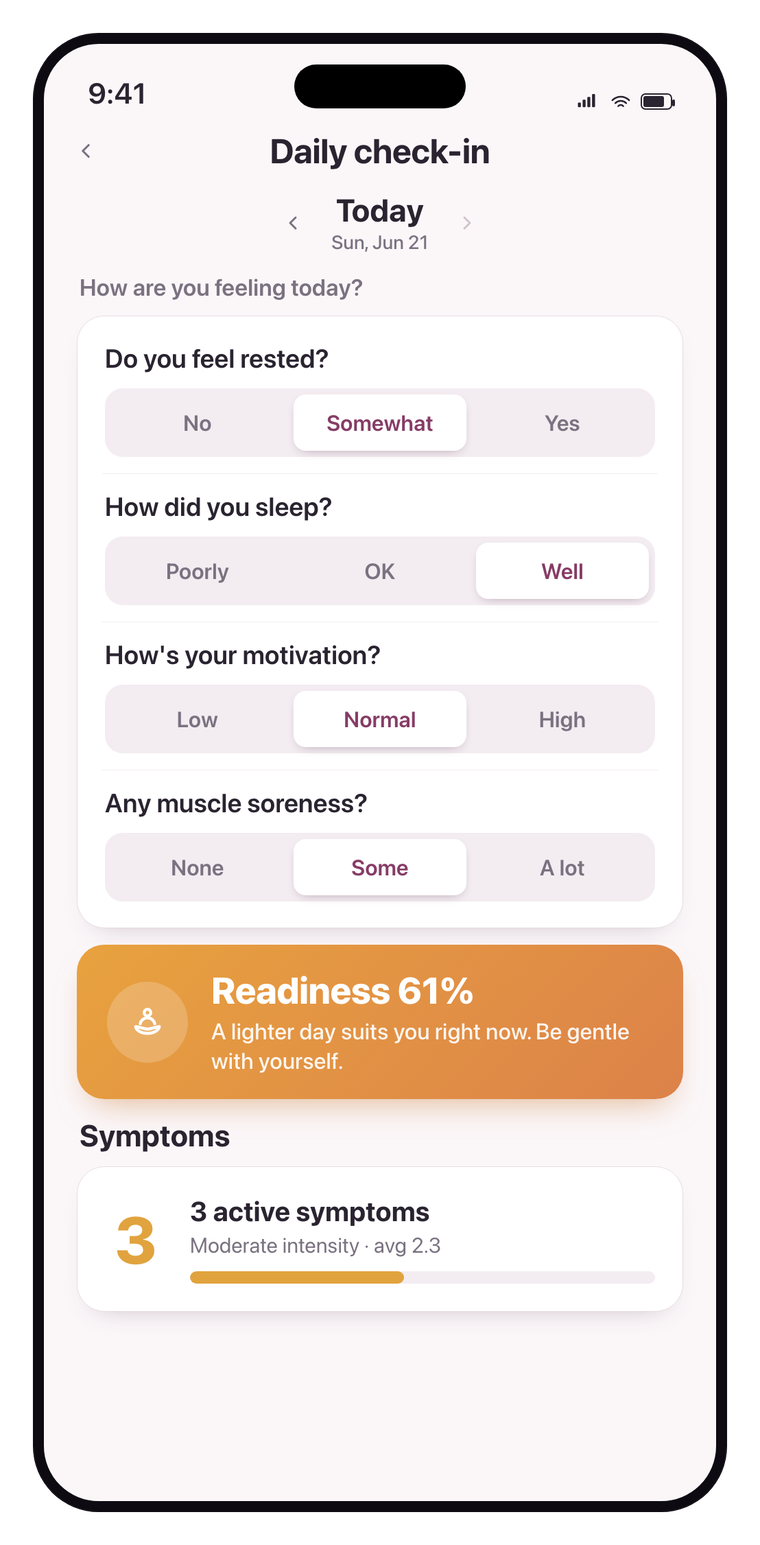
- A one-minute daily check-in on sleep, energy, mood and symptoms. Missed a day? Log it for the right date later.
- Your cycle, however irregular it has become. Phaes counts from the cycle starts you log, not a textbook 28 days.
- MHT (HRT): your regimen, every dose or method change, and a regular check-in on how it is going. See MHT (HRT) trackers compared.
- Bloodwork, entered by hand with a trend chart for each marker.
- Apple Health sleep, heart rate and workouts, next to how you said you felt.
Tracking is free and stays free. Phaes Insights, $3.99 a month, adds a daily read of what your signals mean, your trends over time, and a Doctor Ready Report that gathers your symptoms, cycle and treatment history for an appointment.
Taking it to your doctor
A record is most useful when it answers the questions a clinician will ask: what changed, when, how often, and what you have tried. Bring your last few months, the two or three symptoms that bother you most, and your questions written down. Our guide to the perimenopause doctor appointment covers what to say and what to ask for.
Phaes is informational. It does not diagnose, and it never tells you to start, stop or change a treatment. If you have heavy or unusual bleeding, chest pain, or symptoms that frighten you, see a clinician promptly rather than waiting for a pattern.
Paper diary or app?
Either works if you keep it up. A paper diary is simple and private. An app is faster on a bad day, keeps dates straight, and lines symptoms up against your cycle and treatment without any spreadsheet work. Phaes keeps your data private and does not sell it. Phaes is on iPhone. If you want training built around your symptoms as well, see the Phaes perimenopause app.
Frequently asked questions
Is there a free perimenopause symptom tracker?
Yes. Phaes tracks symptoms, sleep, energy, mood, your cycle, MHT (HRT) and bloodwork free on iPhone. Phaes Insights ($3.99 a month) adds a daily read, trends, and a Doctor Ready Report.
How long should I track perimenopause symptoms before seeing a doctor?
Two or three cycles, or about three months if your periods are irregular, gives a clinician a useful picture. You do not have to wait if symptoms are severe: see a doctor promptly for heavy or unusual bleeding, chest pain, or anything that worries you.
What symptoms should I track in perimenopause?
Hot flushes and night sweats, sleep, mood (including anxiety and irritability), energy and brain fog, aches, your cycle and bleeding, and any treatment such as MHT (HRT) with the date of each change.
Can a symptom tracker tell me if I am in perimenopause?
No app can diagnose perimenopause. A tracker gives you and your clinician a clear record to look at together, which is what diagnosis in your 40s is usually based on, alongside ruling out other causes.
Keep reading
- How to track perimenopause symptoms
- Preparing for a perimenopause appointment
- Perimenopause symptoms
- The best perimenopause apps