The short answer
Expect early changes within 2 to 4 weeks and give it about 3 months before judging it. The NHS says it can take a few weeks to feel the effects of MHT (HRT), and that a doctor will usually suggest trying a treatment for 3 months to see if it helps. That 3-month review is where the type, dose, or delivery method gets adjusted if it needs to be.
A week by week timeline
This is the typical pattern, not a promise. Your starting point, the type of MHT (HRT), the dose, and whether you are in perimenopause or postmenopause all change it.
- Weeks 1 to 2. Often not much yet. Early side effects such as breast tenderness, bloating, or headaches can show up before the benefits do, which is why the first fortnight can feel discouraging.
- Weeks 2 to 4. Hot flashes and night sweats usually start to ease. Fewer night sweats often means better sleep, and better sleep can lift energy and mood on its own.
- Weeks 4 to 8. Sleep, mood, and brain fog tend to improve more noticeably. Joint aches may ease for some women. Irregular spotting is common in this window, especially in perimenopause.
- Around 3 months. Most of the benefit you will get at this dose is usually there, and many early side effects have settled. This is the natural point to review with your clinician.
- 3 to 6 months and beyond. Vaginal and urinary symptoms can keep improving over several months. Testosterone, if it is added for low libido, is usually given 3 to 6 months to show a benefit.
Which symptoms improve first?
Hot flashes and night sweats usually respond fastest, because they are the most directly driven by falling estrogen. Sleep often follows, partly because night sweats stop waking you. Mood, anxiety, and brain fog improve for many women but more gradually, and they also have other causes, so they are worth tracking separately. Vaginal dryness and urinary symptoms can take a few months, and some women need local (vaginal) estrogen as well as or instead of systemic MHT (HRT). See types of MHT (HRT) for the options.
What MHT (HRT) will not do on its own
MHT (HRT) can take the edge off the symptoms that made training and sleep hard, but it does not build muscle or bone by itself in the way training does. Women who keep lifting heavy and doing some hard, short efforts while on MHT (HRT) tend to get more from both. If you train, read training in your first 3 months of MHT (HRT) and MHT (HRT) and endurance training.
What if MHT (HRT) is not working after 3 months?
It does not mean MHT (HRT) is not for you. The common fixes are a dose change, a different delivery method (for example a patch or gel instead of a tablet, which suits some women better), or a different progestogen if side effects are the problem. Your clinician may also look for other causes of symptoms such as thyroid problems or low iron, which overlap with perimenopause. Bring a record of what changed and when, so the review is based on evidence rather than memory.
- Log a baseline before you start. A week or two of symptom scores gives you something to compare against.
- Check in every couple of weeks. Small, regular check-ins show a trend that day to day noise hides.
- Note every dose change. Each change resets the clock, so date it.
- Write down side effects too. When they started and whether they are settling. See MHT (HRT) side effects.
This is general information, not medical advice. Timing varies from person to person, and changes to your MHT (HRT) should be made with a qualified clinician. Contact a doctor promptly for heavy or unexpected bleeding that does not settle, and seek urgent care for signs of a blood clot such as pain or swelling in one leg, chest pain, or sudden breathlessness.
How Phaes helps
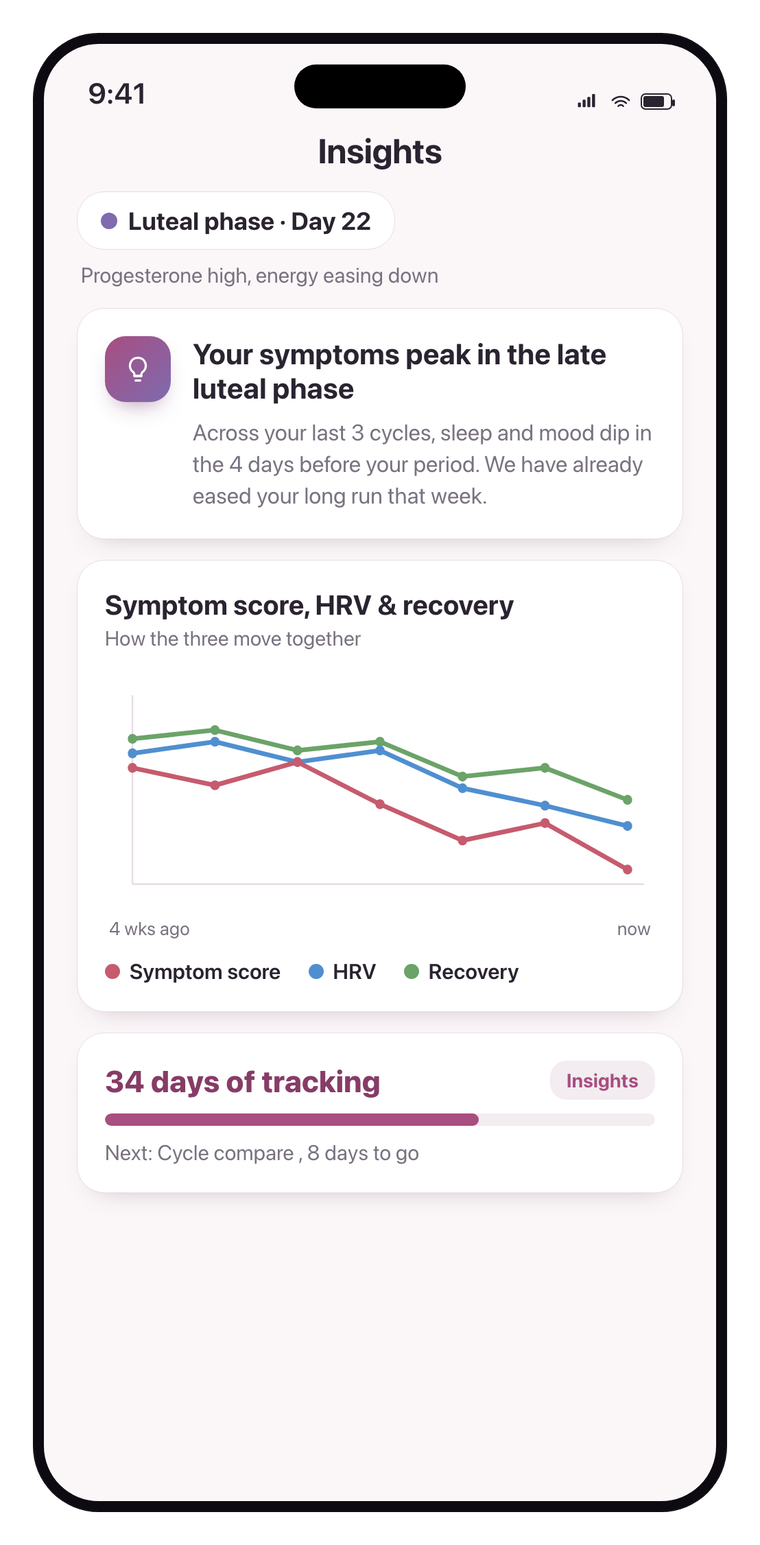
Phaes tracks your MHT (HRT) regimen, every dose change, and a short check-in every two weeks, then shows your symptom score before and after starting so you can see whether it is working by your 3-month review. MHT (HRT) tracking is free. Prefer not to sign up? The free MHT (HRT) tracker runs in your browser with no account. Comparing options? See the best MHT (HRT) tracker apps.
Frequently asked questions
How long does MHT (HRT) take to work?
Most women notice some improvement within 2 to 4 weeks, usually starting with hot flashes and night sweats. The full effect of a given dose usually takes about 3 months, which is why doctors commonly suggest trying a treatment for 3 months before reviewing it.
What are the first signs that MHT (HRT) is working?
Fewer or milder hot flashes and night sweats are usually the first sign, often followed by better sleep. Mood, energy, and brain fog tend to improve more gradually over the following weeks.
Why do I feel worse in the first weeks of MHT (HRT)?
Early side effects such as breast tenderness, bloating, headaches, or spotting can appear before the benefits do. They are common and often settle within the first 3 months. If they persist, a change of dose, type, or delivery method usually helps. Speak to your clinician rather than stopping on your own.
How long does testosterone take to work for low libido in menopause?
Testosterone is usually given 3 to 6 months to show a benefit for low sexual desire, and is commonly reviewed at around 3 months. If there is no improvement by about 6 months, guidelines generally suggest stopping it.
What should I do if MHT (HRT) is not working after 3 months?
Book a review rather than giving up. The usual fixes are a dose change, a different delivery method such as a patch or gel, or a different progestogen. Your clinician may also check for other causes, such as thyroid problems or low iron. A record of your symptoms and dose changes makes that review much more useful.
Keep reading
- When to start MHT (HRT)
- MHT (HRT) side effects
- Training in your first 3 months of MHT (HRT)
- Best MHT (HRT) tracker apps
- MHT (HRT) and weight