Free 2-week email challenge: tell hormonal static from a real signal before you decide anything.
No cost, no card. Unsubscribe any time.
Is wanting to run away a perimenopause symptom?
It is not on most symptom lists, but it is one of the most common things women describe. The urge usually shows up as a cluster: feeling trapped, flat, or numb, irritable with the people closest to you, and a strong pull toward escape, from a marriage, a job, a house, or simply from being needed. The UK's NHS lists low mood, anxiety, and mood swings among the core symptoms of perimenopause, and large studies, including the US SWAN study, have found the risk of depression rises during the menopause transition, even in women who never had it before.
So the feeling is real, and it is common. What it does not tell you, on its own, is whether your life is wrong or whether your hormones are making it feel that way. Often it is some of both.
Why perimenopause makes you want to escape
- Swinging estrogen. Estrogen helps steady serotonin and dopamine, the chemistry of mood and motivation. In perimenopause it lurches rather than glides, and on the low swings, life can feel flat and the exits look brighter.
- Broken sleep. Night sweats and 3am wake-ups leave a brain that reads everything as more threatening and less fixable. See why you cannot sleep.
- Peak load. Kids, ageing parents, a career at full stretch, and the invisible to-do list all tend to land in the same decade. Much of the escape fantasy is really a wish for one day without being needed.
- Less patience for old compromises. Many women find they can no longer tolerate things they swallowed for years. Some of that is hormonal irritability. Some of it is a real message.
Is it perimenopause or is it my marriage?
The two get tangled constantly. In a 2022 UK survey of about a thousand divorced women, run by the Family Law Menopause Project with Newson Health, 73% said menopause played a part in their marriage breaking down. That is not proof hormones end marriages. It shows how often women end up making the biggest decisions of their lives in the middle of a hormonal transition nobody explained to them.
Three questions help you separate static from signal:
- Was it there before? A problem that predates the hormonal changes is more likely to be real.
- Does it move? If the urge rises after bad nights, on overloaded days, or in the days before a period, and fades on good weeks, hormones and sleep are driving a lot of it.
- Would it still bother you on your best day? The things that survive your best-rested, calmest week are the ones worth acting on.
You cannot answer those from inside one bad afternoon. You can answer them with a few weeks of data, which is why the most useful thing you can do right now is track it. More on the relationship side in is perimenopause ruining my marriage.
What to do before you decide anything
Track the urge for two cycles
Every evening, rate the urge to run from 0 to 10 and note your sleep and, if you still have periods, your cycle day. After a few weeks you will see whether it follows a pattern or sits at the same level no matter what. That one habit turns a frightening feeling into information.
Protect sleep first
Sleep is the biggest lever on mood you have. A cooler room, the phone out of the bedroom, and treating night sweats change how your whole life looks the next morning.
Run, just not away
That restless, get-me-out feeling is your stress response asking for action. Twenty minutes of easy movement on your own, a walk, a jog, something heavy to lift, lets it finish. Keep it easy: grinding yourself down adds stress rather than draining it. A perimenopause workout plan is built around that balance.
Talk to a clinician, and maybe a therapist
Bring your mood to your doctor, including whether MHT (HRT) is right for you. Bodies like The Menopause Society recognize that hormone therapy can help perimenopausal mood symptoms for many women. A therapist, alone or as a couple, is worth as much as any hormone for the part that is real. See how to prepare for the appointment.
If wanting to run away ever becomes wanting to disappear, or you have any thoughts of not being here, please talk to someone today. In the US, call or text 988 at any time. In the UK, call Samaritans on 116 123. If you are unsafe at home, that is a reason to get support now, not a symptom to wait out. Phaes is informational, not medical advice.
How Phaes helps
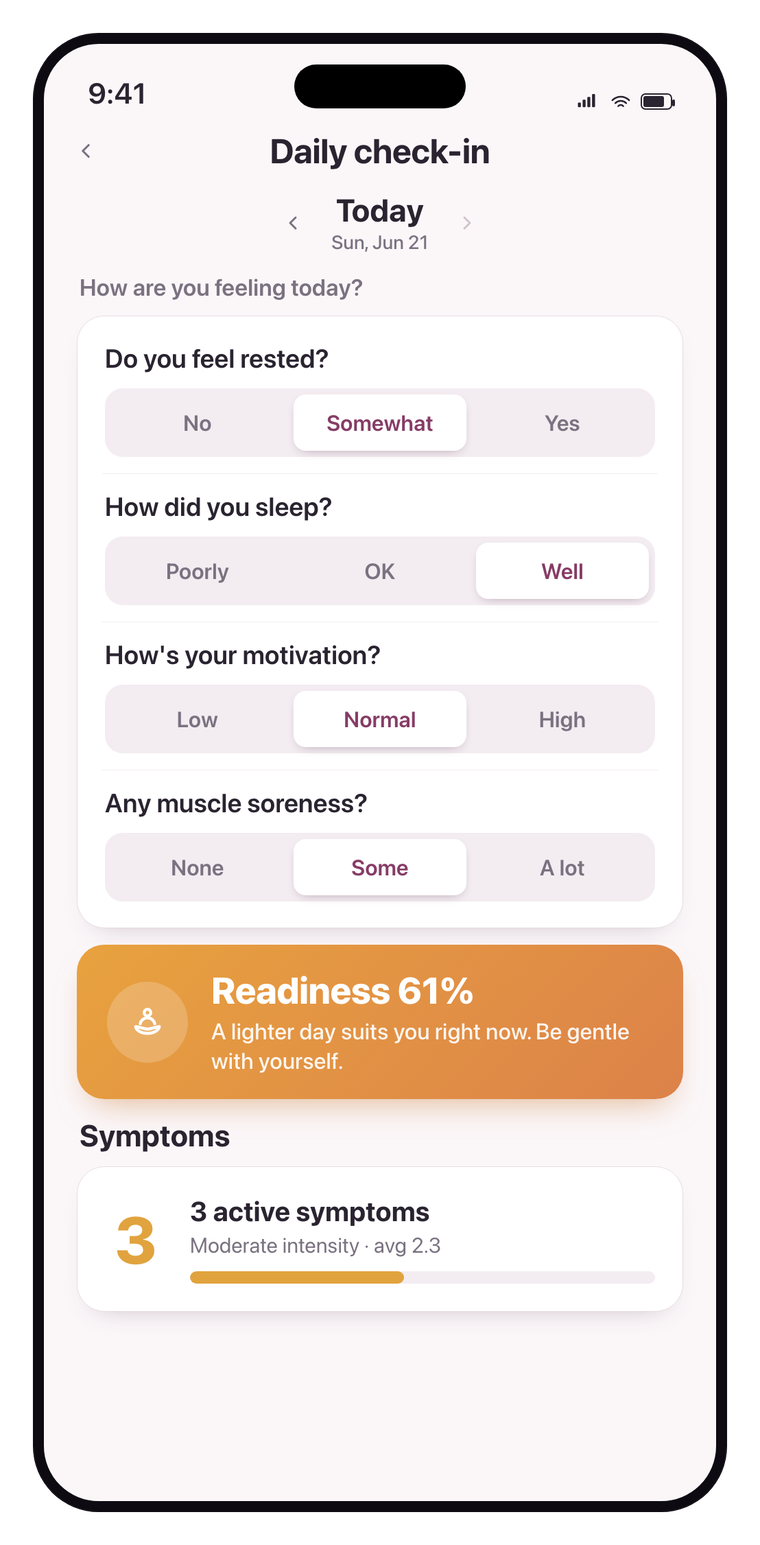
Phaes takes your side by giving you the evidence. A short daily check-in tracks your mood alongside your sleep, your cycle, and your symptoms, so you can see whether the urge to run clusters before your period, after bad nights, or never lets up. Inside the app, the free 21-day Don't Decide Yet challenge walks you through it one small step a day. Then you decide with a clear head, whatever you decide. See the perimenopause app.
Not ready to decide? Join Don't Decide Yet, free.
No cost, no card. Unsubscribe any time.
Frequently asked questions
Is it normal to want to run away during perimenopause?
It is very common. Many women in perimenopause describe feeling trapped, numb, or desperate to escape their marriage, job, or daily life. Swinging estrogen, broken sleep, and peak life load all push mood down, and the risk of low mood and depression rises during the menopause transition. The feeling is real, but it is not automatically a verdict on your life.
How do I know if it is perimenopause or an unhappy marriage?
Track it for a few weeks. If the urge to leave rises after bad sleep, on overloaded days, or before a period, and fades on good weeks, hormones are driving much of it. If it was there before the hormonal changes and still bothers you on your best, calmest days, it is more likely a real problem. It is often both, which is why couples or individual therapy helps alongside treating symptoms.
Does menopause cause divorce?
Not on its own, but it is often part of the story. In a 2022 UK survey of about a thousand divorced women, 73% said menopause played a part in their marriage breaking down. That measures what women experienced, not cause and effect, but it shows how often big decisions get made in the middle of an unexplained hormonal transition.
Should I make big decisions during perimenopause?
You can, but it helps to get symptoms like sleep loss and low mood treated first, and to track how you feel for a couple of months. Decisions made on a good-sleep week, with data, are usually ones you trust more later. If you are unsafe, do not wait: get support now.
How does Phaes help?
Phaes lines your daily mood up against your sleep, cycle, and symptoms so you can see the pattern behind the urge to run. There is a free two-week email challenge and a free 21-day in-app challenge, both called Don't Decide Yet, built around that tracking.