Quick answer: Walking is excellent for heart health, mood, and recovery, and it is the ideal easy day. But on its own it is not enough to protect muscle and bone through menopause, because it does not load them heavily enough. Keep walking most days, and add heavy strength training at least twice a week plus one short sprint interval session, which can be done on a bike or a hill if running is not for you.
Walking is the most popular exercise for women in menopause, and for good reason: it is free, gentle, good for mood, and easy to fit in. The question is whether it is enough on its own. For heart health and general activity, often yes. For muscle and bone, the two things menopause erodes fastest, no. Here is what walking does well and what to add.
The short answer: walking is the easy day, not the whole plan
Walking is enough for some goals and not for others. A daily brisk walk supports heart health, mood, blood sugar, and sleep, and it is the perfect easy day between harder sessions. What it cannot do is load muscle and bone heavily enough to protect them through menopause. For that you need heavy lifting and some short, hard effort.
The reason is simple. Muscle and bone adapt to what challenges them. Walking is a load your body handles thousands of times a day, so after the first few weeks it stops asking for much adaptation. That is exactly what makes it a great recovery activity, and exactly why it falls short as your only training.
What walking does well
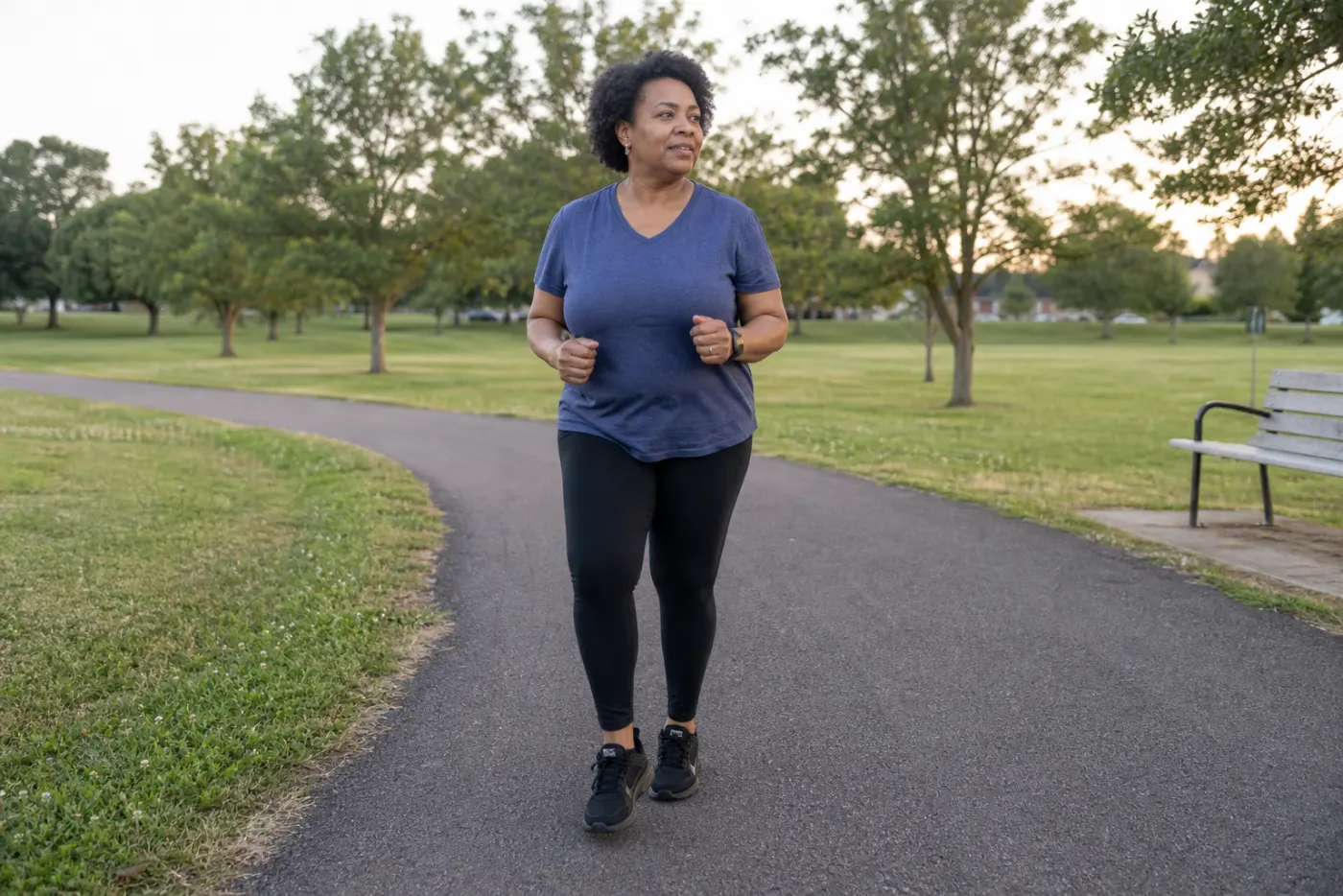
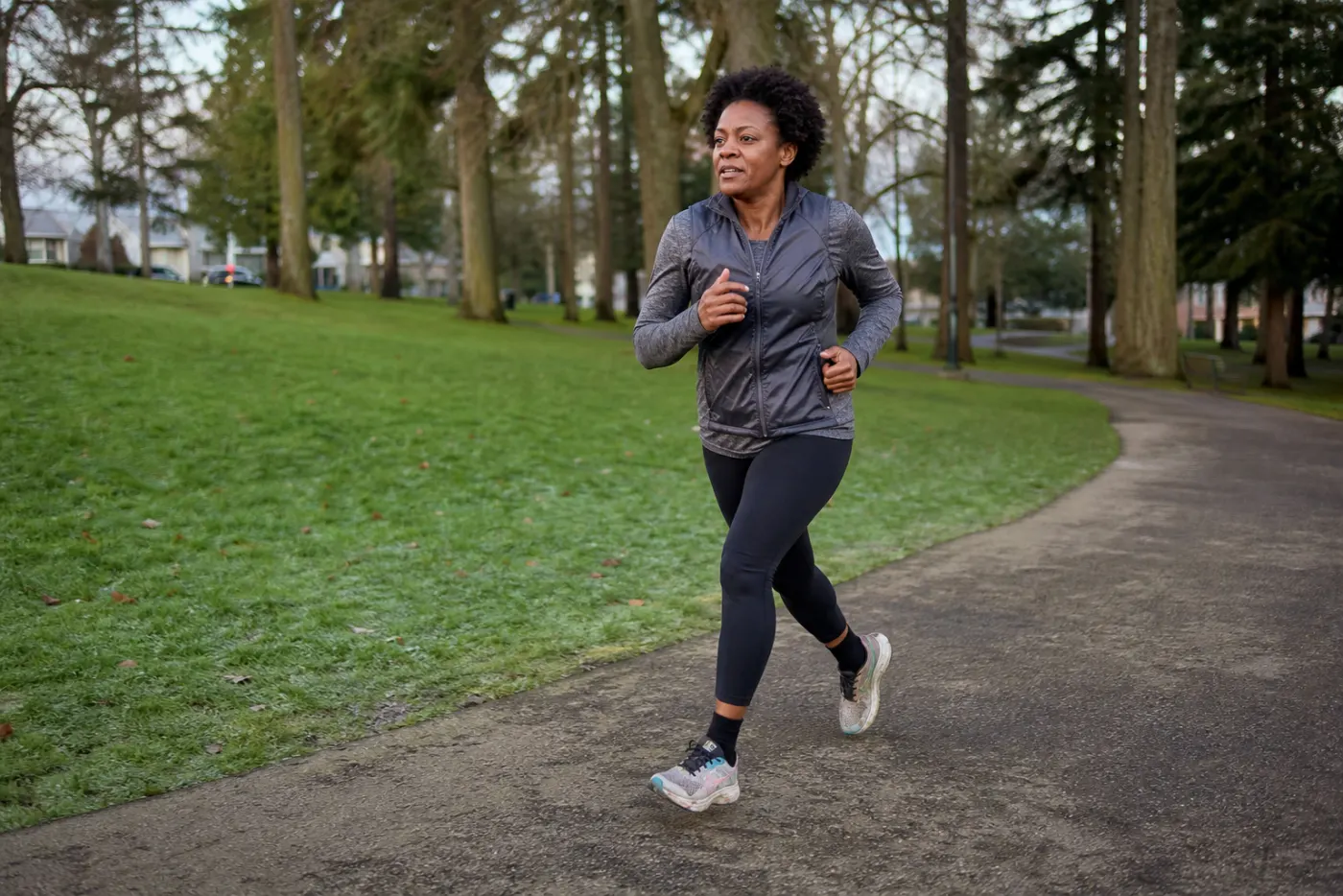
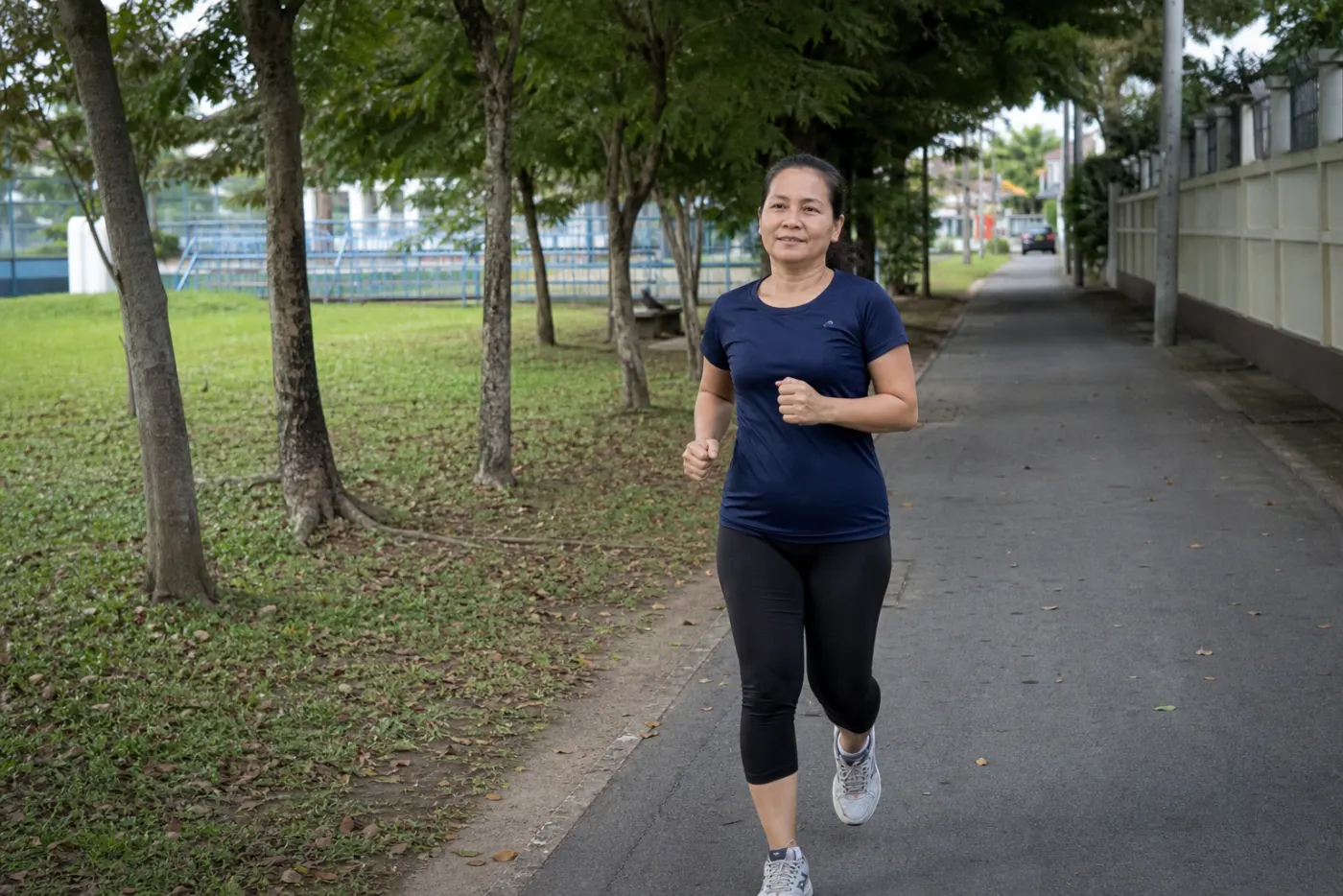
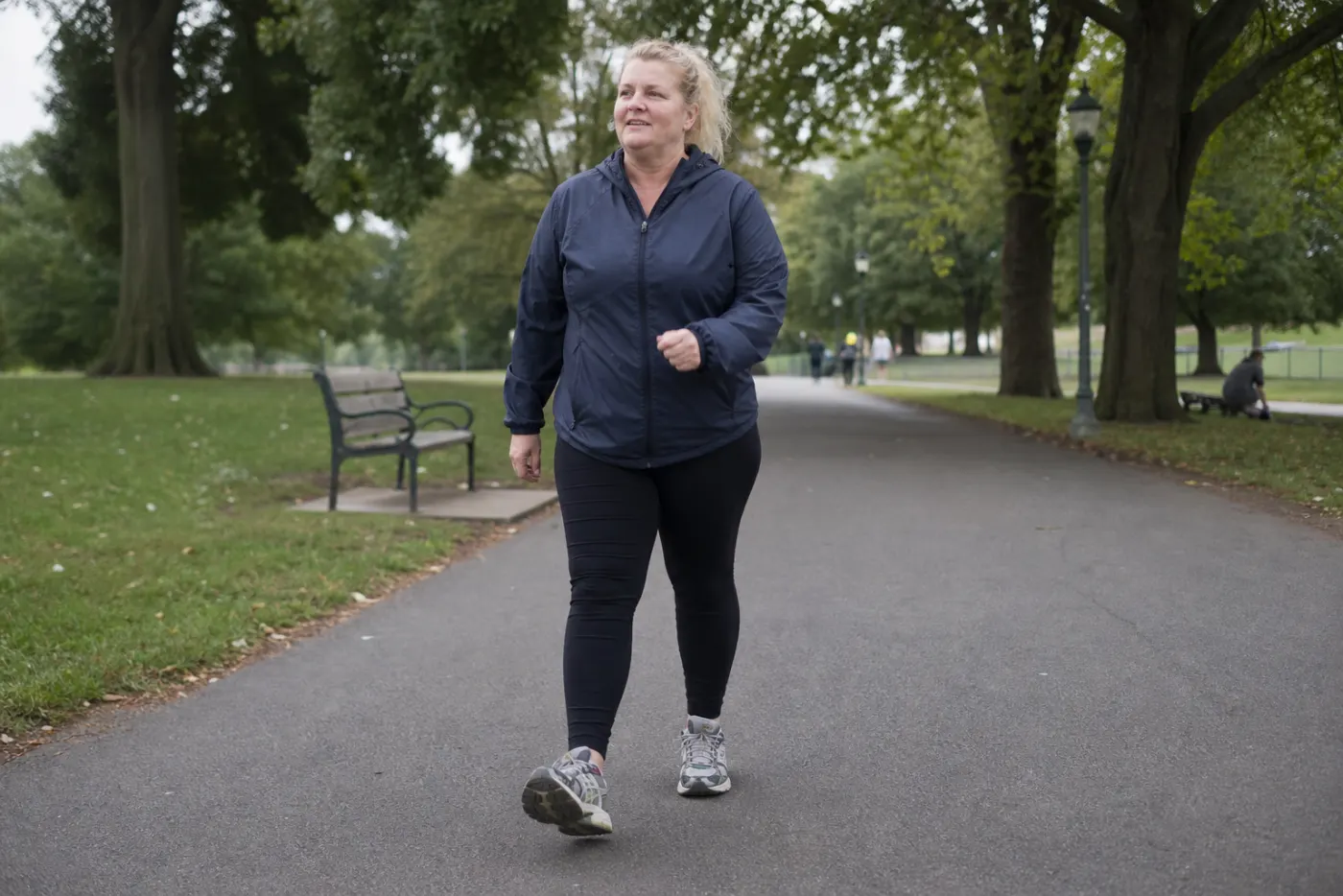
Walking is one of the best things you can do for general health. Regular walkers have lower risk of heart disease, type 2 diabetes, and early death, and walking helps mood, sleep, and joint stiffness. In menopause it is also the ideal active recovery between sprint sessions and heavy lifting days.
The step evidence is encouraging. A 2022 meta-analysis of 15 cohorts (Paluch and colleagues, Lancet Public Health), covering more than 47,000 adults, found that mortality risk kept falling as daily steps rose, leveling off at about 6,000 to 8,000 steps a day in adults over 60 and 8,000 to 10,000 in younger adults.
In the Phaes method, walking is one of three ideal easy-day options, alongside a very easy run and yoga. Easy days must be easy, and a walk is the easiest way to make sure they are.
Where walking falls short
Walking does little for muscle strength or bone density on its own, and those are the two things that decline fastest around menopause. Falling estrogen speeds up bone loss, and muscle declines with age unless it is challenged. A walk is aerobic exercise. It does not provide the heavy load or impact that muscle and bone respond to.
The bone evidence is clear. A 2013 meta-analysis of walking trials (Ma and colleagues, Menopause) found walking alone had no significant effect on spine bone density in perimenopausal and postmenopausal women, with a benefit at the hip only in programs of six months or longer. UK consensus guidance, Strong, Steady and Straight (2022), recommends muscle strengthening and impact exercise for bone, not walking alone.
The World Health Organization’s guidelines say the same in general terms: 150 to 300 minutes of moderate aerobic activity a week, plus muscle-strengthening activity on two or more days. Walking can cover the first part. It cannot cover the second.
What to add: lift heavy
The most important addition is heavy strength training, at least twice a week. Beginners start with 3 sets of 8 reps, two sessions a week, with one upper-body day and one lower-body day and core in both. Heavy means the last reps of each set are genuinely hard. That is what builds muscle and challenges bone.
If you have never lifted, a beginner block looks like this:
- Day 1, upper body: one exercise each for biceps, triceps, shoulders, chest, and back, plus one core exercise. 3x8, 30 seconds rest.
- Day 2, lower body: one exercise each for glutes, lower back, hamstrings, quads, hips, adductors, abductors, and calves, plus one core exercise. 3x8, 30 seconds rest.
Start with weights you can lift with good form and add a little each week. Our guide to how often women over 40 should lift covers frequency and progression in more detail.
What to add: one short, hard session
The second addition is one sprint interval session a week: a handful of 20 second all-out efforts with 90 seconds of very easy recovery. You do not need to be a runner. A stationary bike works well, and fast uphill walking is a gentler first step. It takes under 25 minutes, including warm-up.
- Warm-up 10 min very easy pedaling or walking Z1
- Main set 2 x 15 s, building to 5 x (20 s all-out, 1:30 very easy) Z5
- Cool-down 5 min very easy Z1
Once a week, at least 3 days from any other sprint session.
All-out means as hard as you can go for those 20 seconds: on a bike, firm resistance and fast legs; on a hill, the fastest walk or run you can manage. Start with two efforts and add one a week. The full guide to sprint interval training covers every level.
Getting more from your walks
You do not have to change your walks much to get more from them. Keep most of them easy and conversational, since they are your recovery. Then add small upgrades that cost little: some hills, a few short bursts of impact, and good shoes. These do not replace lifting, but they make walking a better foundation.
- Keep easy walks easy. You should be able to talk in full sentences. A walk that leaves you breathless is no longer recovery.
- Use hills. Uphill walking works the glutes and calves harder than flat ground and raises your heart rate without impact.
- Add a little impact. If your joints and pelvic floor allow, a few sets of small hops, skips, or heel drops during a walk add the kind of loading bone responds to. Build up slowly over weeks.
- Count the week, not the day. A busy day with 3,000 steps is fine if the week as a whole is active.
A week that keeps walking at the center
A good menopause week can still be built around walking. Walk on most days, lift on two of them, add one short sprint session, and keep one day fully off. That keeps the habit you already enjoy and adds the two things walking cannot provide.
| Day | Session |
|---|---|
| Monday | Lift: upper body (3x8), then a walk |
| Tuesday | Sprint intervals on a bike or hill, then an easy walk |
| Wednesday | Brisk walk |
| Thursday | Lift: lower body (3x8) |
| Friday | Walk or yoga |
| Saturday | Long walk |
| Sunday | Full rest |
Every fourth week, take a reset week: keep walking, skip the sprints, and lift about 30 percent lighter, with sleep as the priority. For bone specifically, our page on exercise for bone density in menopause covers impact work such as small jumps.
Where Phaes fits
Phaes treats walking as a real easy day, not a skipped workout, and builds heavy lifting and one short sprint session around it at your level. It reads your cycle if you have one, your symptoms, and your daily check-in, and on a rough day it swaps the hard session for a walk.
The bottom line
Walking is not enough on its own in menopause, but it is the perfect foundation. Keep walking most days for heart health, mood, and recovery. Add heavy lifting at least twice a week and one short sprint session, on a bike or hill if you prefer, and take one full rest day. That combination protects the muscle and bone that walking alone cannot.
Frequently asked questions
Is walking enough exercise for a woman over 50?
Walking covers the aerobic part of the guidelines if you do enough of it at a brisk pace, but it does not cover strength. The World Health Organization recommends muscle-strengthening activity on two or more days a week as well. For women in menopause, heavy lifting is the part walking cannot replace.
Does walking help with menopause belly fat?
Walking burns energy and helps overall health, but no exercise burns fat from one chosen area. Coaches see better body composition change in menopause when walking is combined with heavy lifting, one hard interval session a week, enough protein, and good sleep, rather than with more walking alone.
How many steps a day should I walk in menopause?
A 2022 analysis of 15 studies found the mortality benefit of daily steps leveled off at about 6,000 to 8,000 steps a day in adults over 60, and 8,000 to 10,000 in younger adults. More steps are fine, but past that point, adding strength training does more for you than adding steps.
Is walking good for bone density after menopause?
Walking alone has only a small effect. A 2013 meta-analysis found no significant effect on spine bone density, with some benefit at the hip only after six months or more. Bone responds better to heavy lifting and impact such as jumps, which is why UK guidance recommends both.
Can I do sprint intervals if I do not run?
Yes. A stationary bike works well, and most of the sprint research was done on bikes. Fast uphill walking is a gentler starting point if you are new to hard effort. The structure stays the same: short all-out efforts with 90 seconds of very easy recovery between them.