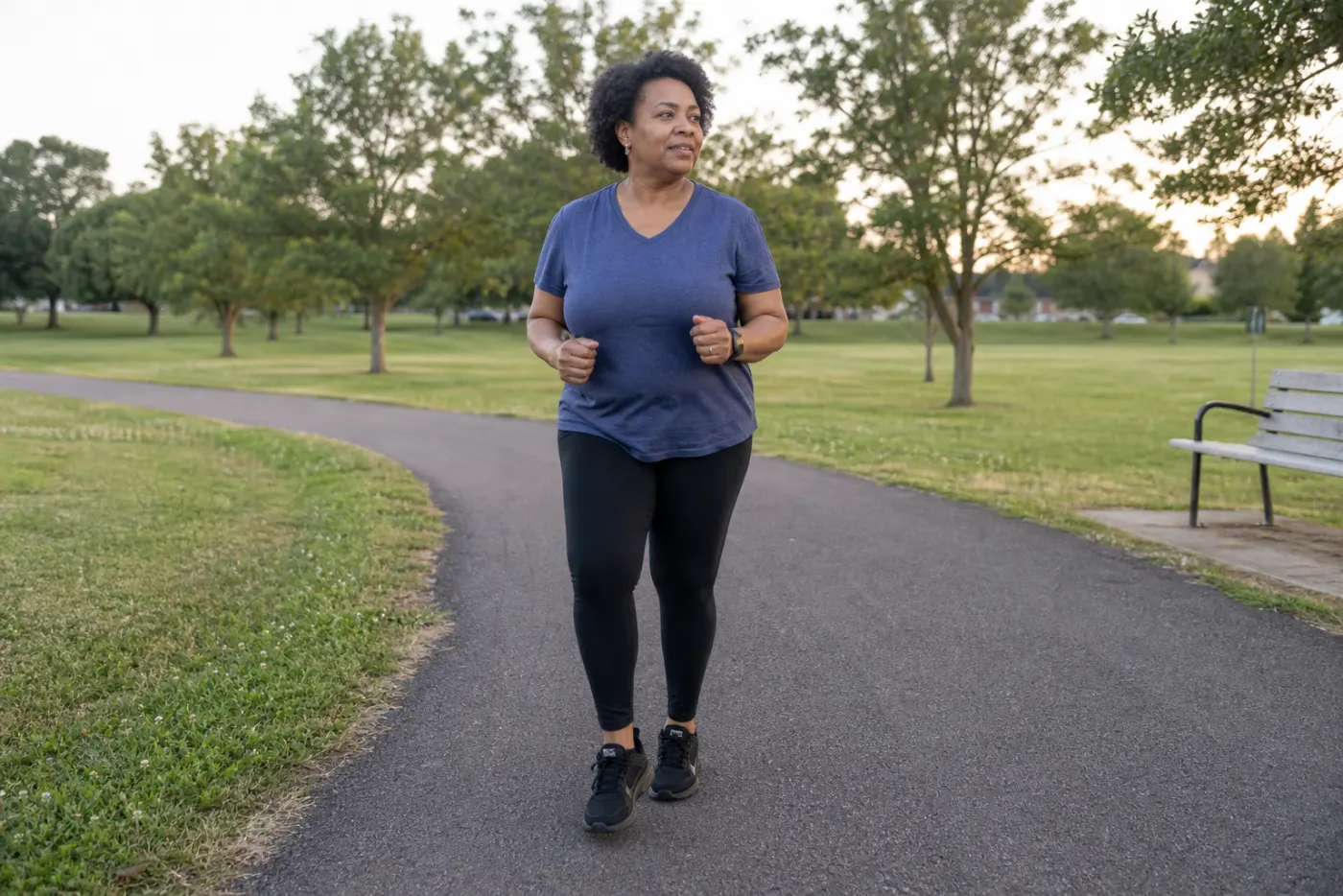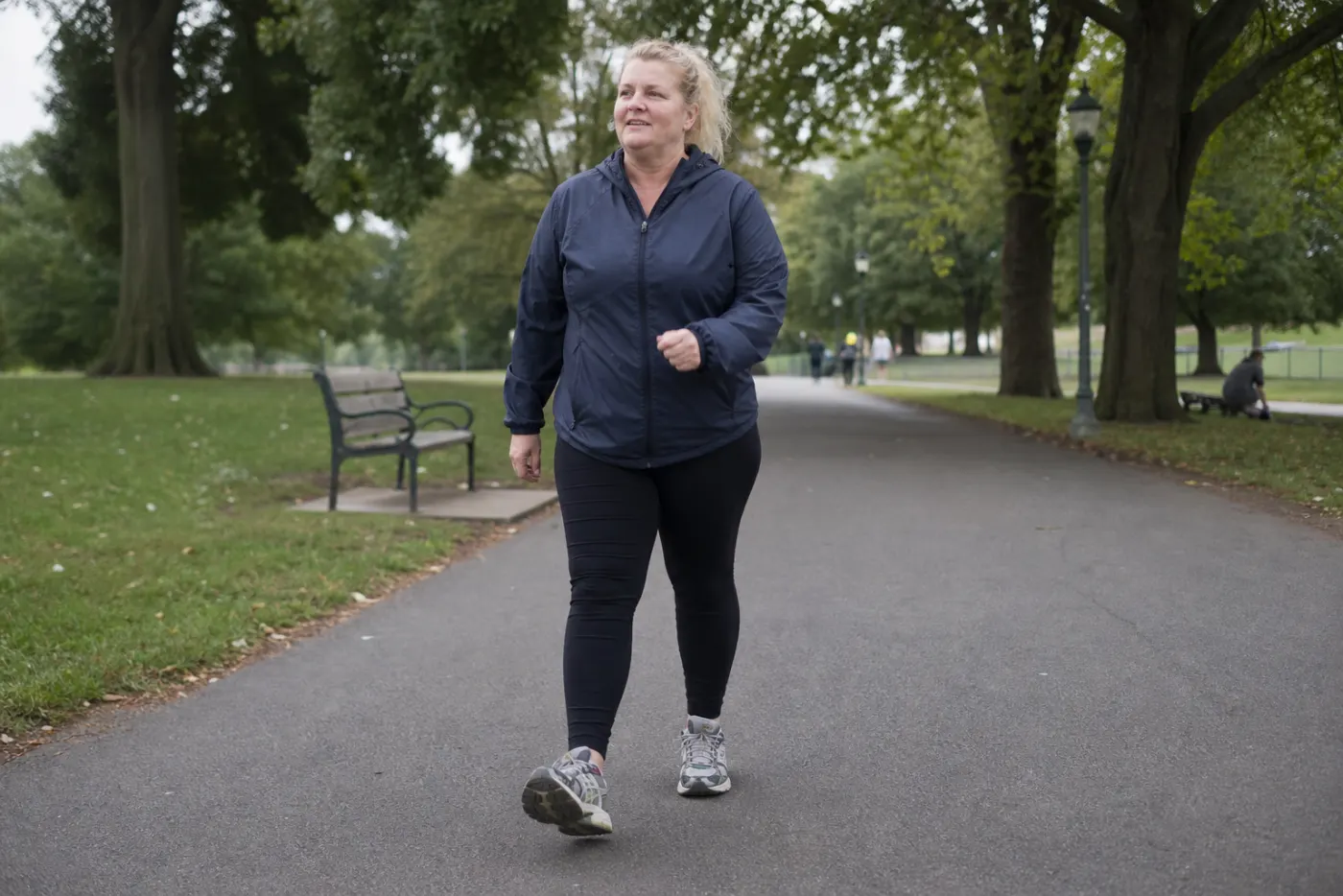
Quick answer: Easy runs should feel genuinely easy: Zone 1 to 2, where you can talk in full sentences and breathe through your nose most of the time. For many runners over 40 that is one to three minutes per mile slower than race pace, and sometimes includes walk breaks. If you finish an easy run tired, it was not easy. On some days, a walk or yoga is the better easy session.
Ask most runners over 40 whether their easy runs are easy, and they will say yes. Ask them to hold a conversation halfway through, and many cannot. Easy runs that creep into a moderate effort are one of the most common training mistakes, and perimenopause makes them easier to make. Here is how easy is easy, and how to keep it there.
The short answer: easier than you think
An easy run should feel genuinely easy from start to finish: Zone 1 to 2, full sentences, mostly nose breathing, and finishing feeling like you could go again. For many runners over 40 that means slowing down by one to three minutes per mile from race pace, and sometimes walking. If you finish tired, it was not an easy run.
Easy days have one job: active recovery. They keep you moving, build aerobic base, and let your body absorb the hard work from your sprint session and lifting. An easy run that is really a moderate run does neither job well. It adds fatigue without adding the stimulus of a hard session.
Slowing down can feel like losing fitness, especially if your easy pace has already drifted with age. It is the opposite. Easy days that are truly easy are what let you show up fresh for the sprints and the heavy lifts, which is where fitness is built.
How to tell if your easy run is easy
The simplest test is talking. If you can speak in full sentences without gasping, you are in the easy zone. Heart rate helps as a guardrail, roughly 50 to 70 percent of max, but it drifts with heat and sleep. Effort on a 1 to 10 scale should sit at 2 to 4.
| Zone | How it feels | Talk test | Use it for |
|---|---|---|---|
| 1 | Very easy, could go all day | Chatting freely | Walks, recovery runs, warm-ups, sprint recoveries |
| 2 | Easy, relaxed | Full sentences | Most easy runs |
| 3 | Moderate, focused | Short phrases | Occasional race-specific work |
| 4 | Hard | A few words | Tempo and threshold work |
| 5 | All-out | No talking | Sprint intervals |
If your zones came from 220 minus age, they are probably set too high for you, which makes the top of “easy” a moderate effort. Our guide to heart rate zones in perimenopause gives a better starting point.
Why most easy days end up too hard
Easy runs creep up for three reasons: habit, ego, and pace targets. Many runners settle into one comfortable-but-hard pace for every run. Watches and apps reward speed. And in perimenopause, heat, broken sleep, and hot flashes make the same pace cost more, so last year’s easy pace is this year’s moderate run.
Elite endurance athletes do the opposite. In a widely cited review, Seiler, 2010 (International Journal of Sports Physiology and Performance) found that successful endurance athletes across sports do around 80 percent of their training at low intensity, with the hard work concentrated in a small number of sessions. A 2014 trial by Stöggl and Sperlich (Frontiers in Physiology) found that a polarized program, mostly very easy with a little very hard, improved key endurance measures more than threshold-heavy training in well-trained athletes.
What the method uses instead of the middle
For women in perimenopause and menopause, the Phaes method keeps the hard work to one sprint interval session a week and heavy lifting, and makes everything else truly easy. It cuts the Zone 3 and 4 middle: long runs at a steady-hard pace and repeated tempo intervals. If you still have regular cycles, occasional tempo work can stay in your plan.
The coaching rationale is that too many long slow runs and Zone 3 and 4 intervals tire you out without triggering much muscle growth, and that with hormonal change, the body responds better to short, very hard efforts plus plenty of recovery. That is a coaching view rather than settled physiology, but it is consistent with the polarized evidence above. The hard session is covered in sprint interval training for women over 40.
A truly easy run
A truly easy run starts slower than feels necessary, stays conversational, and ends before you feel tired. Use walk breaks freely, especially on hills or hot days. Thirty to forty-five minutes is plenty for most easy days; longer easy runs belong to the one long run of the week.
- Warm-up 5 min brisk walk Z1
- Main set 30 to 45 min very easy running, walk breaks welcome, full sentences throughout Z1 to Z2
- Cool-down 5 min walk Z1
If you finish tired, it was too hard. Slow down next time.
Practical ways to keep it easy:
- Run with someone slower, or call a friend while you run.
- Hide pace on your watch screen and show only time or heart rate.
- Walk the hills. Uphill is where easy runs usually turn moderate.
- Start slower than feels right. The first ten minutes set the tone.
Walks and yoga count as easy days
An easy day does not have to be a run. A brisk walk, a very easy bike ride, or a yoga session does the same recovery job, with less impact. On days after poor sleep, during a symptom flare, or when your legs are heavy from lifting, a walk or yoga is often the better choice than any run.
In the Phaes method, walks and yoga are first-class easy days, not missed workouts. They are especially useful in reset weeks, every fourth week, when all intensity comes out and sleep is the priority. If running is your main love, keep two or three easy runs in the week and use walks and yoga for the rest.
When easy keeps feeling hard
If easy runs feel hard for more than a couple of weeks, look beyond fitness. Poor sleep, heat, under-fueling, low iron, stress, and illness are common causes in midlife women. Slowing down further is the right short-term fix, but persistent fatigue or breathlessness deserves a check with your doctor.
Common culprits to check:
- Sleep and night sweats. Several bad nights raise heart rate at any pace.
- Fueling. Too little food, especially carbohydrate around running, makes every run feel harder.
- Iron. Low ferritin is common in women who run and can make easy pace feel like hard work.
- Too much intensity elsewhere. Two or three hard sessions a week leave easy days carrying fatigue.
Our page on why running is getting slower in perimenopause covers these in more depth, and Zone 2 training for women over 40 covers the easy zone itself.
Where Phaes fits
Phaes plans your easy days as truly easy, with walks and yoga as real options, and keeps one full rest day each week. It reads your cycle, symptoms, and daily check-in, and after a rough night or on a flare day it can turn an easy run into a walk so the day still counts as recovery.
The bottom line
Easy runs should feel easy: Zone 1 to 2, full sentences, finishing fresh. For most runners over 40 that is slower than they think, and walk breaks are fine. Keep the hard work for one sprint session and your lifting, let walks and yoga count as easy days, and take one full rest day.
Frequently asked questions
How slow should my easy run pace be?
Slow enough that you could hold a full conversation. For many runners that is roughly one to three minutes per mile slower than their 5K race pace, but pace is a poor guide on hot days or after bad sleep. Use the talk test or a heart rate cap instead, and accept that easy pace varies from day to day.
What heart rate should easy runs be?
Roughly Zone 1 to 2, which for most people is about 50 to 70 percent of max heart rate. Set zones from a women-specific formula or a field test, not 220 minus age, which overestimates max heart rate in most women and pushes easy zones too high. On hot days, let effort overrule the number.
Is it OK to walk during an easy run?
Yes. Walk breaks are a smart way to keep an easy run easy, especially on hills, in heat, or after poor sleep. A run with walk breaks that stays in Zone 1 to 2 does its job better than a continuous run that drifts into a moderate effort.
Why do my easy runs feel hard in perimenopause?
Heat, broken sleep, hot flashes, and stress all raise heart rate for the same pace, so an easy pace can feel moderate. That is why effort, not pace, should set your easy days. If easy runs feel hard for weeks, check sleep, iron, and fueling with your doctor.
How many easy days should I have a week?
Most days. In the Phaes method, the week has one sprint session, heavy lifting on two to four days depending on level, one full rest day, and everything else easy: very easy runs, walks, or yoga. Easy days are active recovery, which is what lets the hard sessions work.