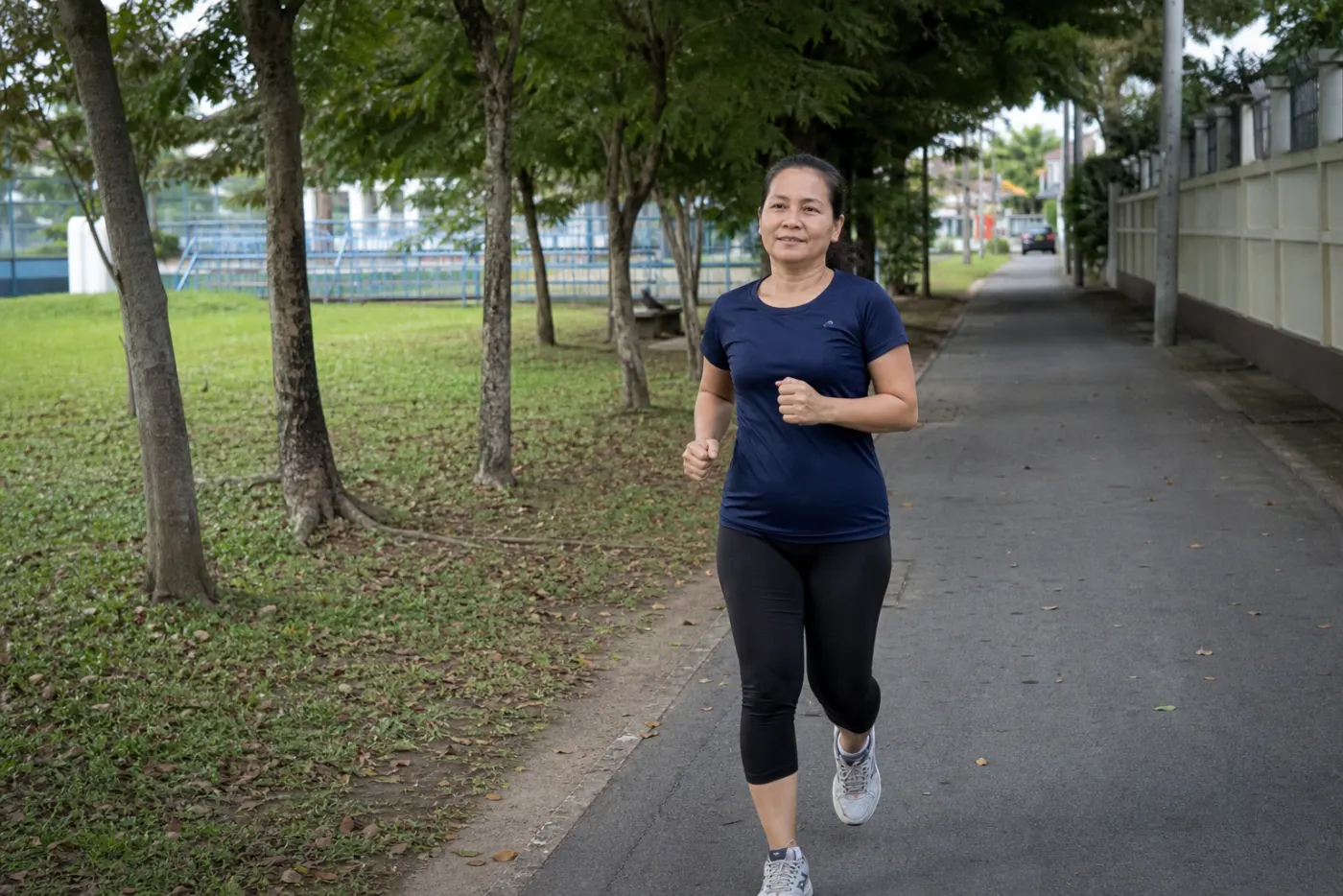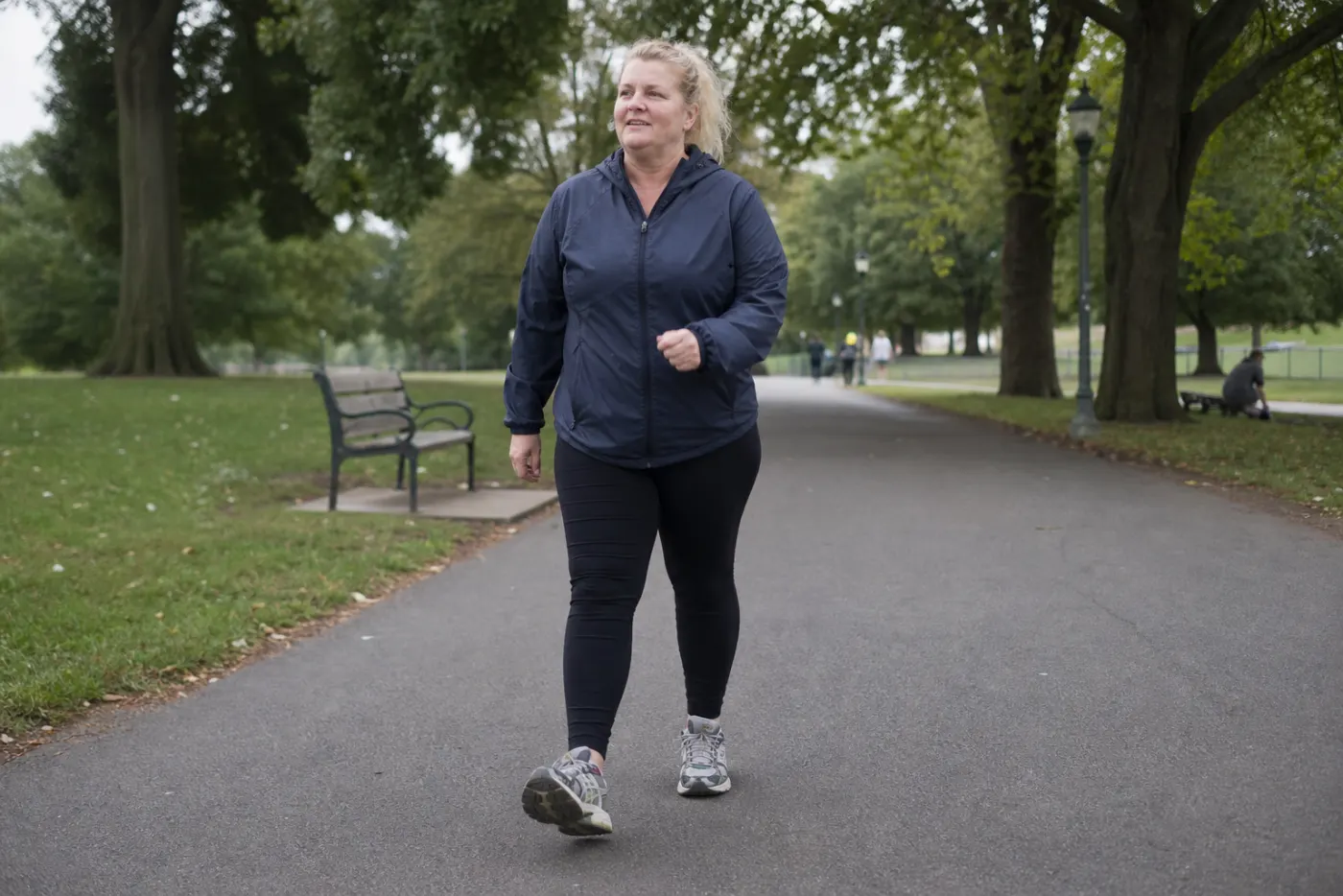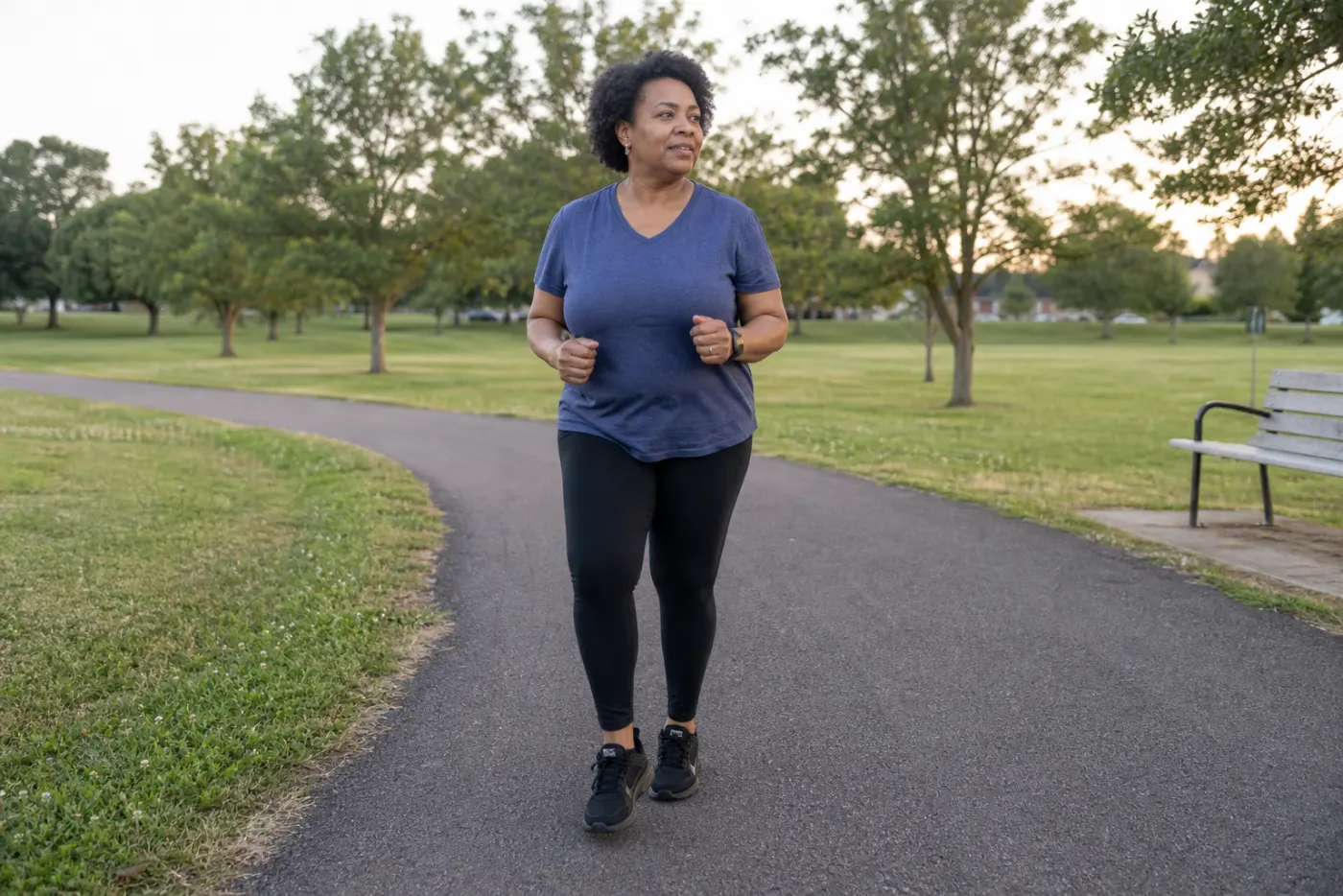
Quick answer: Start with walk/run intervals three times a week, such as 1 minute of easy running and 2 minutes of walking, repeated for 20 to 30 minutes, and keep every run easy enough to talk. Add a little more running each week. Lift weights twice a week from the start with 3 sets of 8. Only after 4 weeks of consistent running, add one short beginner sprint session a week.
Plenty of women take up running for the first time in their 40s or 50s, often looking for something that helps with mood, sleep, or the sense that their body is changing without their permission. It is a good choice. This guide is for true beginners: how to start with walk/run, how to build up, when to add your first sprint session, and why lifting belongs in the plan from week one.
The short answer: start with walk/run, keep it easy
Start with three walk/run sessions a week, such as 1 minute of easy running and 2 minutes of walking, repeated for 20 to 30 minutes. Keep every run easy enough to talk in full sentences. Add a little more running each week, lift weights twice a week from the start, and take one full rest day.
If you used to run and are coming back after a long break, your path is slightly different, and our page on running over 40 is written for you. This guide assumes you are starting from scratch, or close to it.
Before you start
Most healthy women can start a walk/run plan without a medical check. Talk to your doctor first if you have a heart condition, chest pain or dizziness with exertion, uncontrolled blood pressure, or have been inactive for a long time. Get decent running shoes and a supportive sports bra. That is all the kit you need.
Two other things are worth a thought before your first run:
- Your pelvic floor. Leaking or heaviness when running is common in perimenopause, especially after children. It is treatable, and a pelvic health physiotherapist can help. Our page on the pelvic floor and running explains what to do.
- Your expectations. The first few weeks feel awkward for everyone. That is normal and it passes.
Weeks 1 to 4: build the habit
For the first month, the goal is consistency, not speed. Run three times a week on non-consecutive days with walk/run intervals, and keep every running segment easy. Gradually swap walking for running. If a week feels too hard, repeat it. Nothing here should leave you exhausted.
- Warm-up 5 min brisk walk Z1
- Main set 8 x (1 min easy run, 2 min walk) Z1 to Z2
- Cool-down 5 min walk Z1
Easy enough to talk in full sentences the whole time.
A sample progression, three times a week:
| Week | Main set | Total running |
|---|---|---|
| 1 | 8 x (1 min run, 2 min walk) | 8 min |
| 2 | 7 x (2 min run, 2 min walk) | 14 min |
| 3 | 6 x (3 min run, 1:30 walk) | 18 min |
| 4 | 5 x (4 min run, 1 min walk) | 20 min |
This is similar to the NHS Couch to 5K plan, which uses three walk/run sessions a week over nine weeks. Either is fine. What matters is three easy sessions a week, every week.
Easy means easier than you think. If you cannot talk, slow down or walk more. Our guide to how easy easy runs should be explains why that matters.
Lift from the start
Strength training belongs in your plan from the first week, not later. Two sessions a week of 3 sets of 8, one upper-body day and one lower-body day, with core in both, strengthens the muscles and tendons that running loads and helps protect bone. It is one of the best ways to avoid the injuries that stop new runners.
The beginner split in the Phaes method:
- Upper day: one exercise each for biceps, triceps, shoulders, chest, and back, plus core. 3x8 with 30 seconds rest.
- Lower day: one exercise each for glutes, lower back, hamstrings, quads, hips, adductors, abductors, and calves, plus core. 3x8 with 30 seconds rest.
This matches the World Health Organization’s guidelines, which recommend muscle-strengthening activity on two or more days a week for all adults, on top of aerobic exercise. Choose weights that make the last couple of reps of each set hard but clean, and add a little weight as it gets easier. Put lifting on non-running days or after an easy run. Calves and single-leg work matter most for runners, because that is where running injuries in midlife tend to start.
Week 5 onward: add your first sprint session
After about 4 weeks of consistent running, you can add one short sprint session a week. It replaces one of your easy runs rather than adding a fourth. Start with 2 sprints of 15 seconds, all-out, with 1:30 of very easy recovery, after a 10 minute easy warm-up. If nothing hurts, build over the following weeks to 5 sprints of 20 seconds.
- Warm-up 10 min very easy Z1
- Main set 2 x (15 s all-out, 1:30 very easy) Z5
- Cool-down 5 min very easy Z1
Build toward 5 x 20 s over the weeks. Keep sprint sessions at least 3 days apart.
Run the first couple of sessions at about 80 to 90 percent effort before going truly all-out, and use a gentle uphill if you want to go easy on your hamstrings. For the full method, see sprint interval training for women over 40.
A beginner week
A good beginner week has three easy runs or two easy runs and one sprint session, two strength sessions, optional walks or yoga, and one full rest day. Space the runs so you never run two days in a row at first. That rhythm builds fitness steadily while leaving room for recovery, which takes longer in perimenopause than it did at 30.
| Day | Weeks 1 to 4 | Week 5 onward |
|---|---|---|
| Monday | Lift: upper body | Lift: upper body |
| Tuesday | Walk/run | Short run with beginner sprints |
| Wednesday | Walk or yoga | Walk or yoga |
| Thursday | Walk/run | Easy run |
| Friday | Lift: lower body | Lift: lower body |
| Saturday | Walk/run | Easy run |
| Sunday | Full rest | Full rest |
Common problems and fixes
Most early problems come from doing too much too soon or running too hard. Aching shins, sore knees, and constant tiredness usually mean slow down, walk more, or repeat a week. In perimenopause, poor sleep and joint stiffness can make some days harder for no obvious reason. Those days are for walking, not pushing.
- Shin or knee pain: repeat the previous week, and check your shoes. Pain that is sharp or worsens during a run needs a physiotherapist.
- Out of breath on every run: you are running too fast. Slow to a pace that feels almost silly.
- Hot and red-faced: run earlier or later in the day, and dress lighter than you think.
- A bad night: walk instead, and pick the plan back up tomorrow.
Where Phaes fits
Phaes builds a beginner plan around walk/run and easy running, adds strength from week one, and keeps one full rest day each week. It reads your cycle if you have one, your symptoms, and your daily check-in, and on a rough day it turns a run into a walk so the habit keeps going.
The bottom line
Start with three easy walk/run sessions a week, lift twice a week with 3x8 from the beginning, and take a full rest day. Build the running a little each week, and after about 4 weeks of consistency, add one short beginner sprint session. Keep everything else easy, and let bad nights become walks.
Frequently asked questions
Is it too late to start running at 45 or 50?
No. Women start running in their 40s, 50s, and beyond, and many find it helps mood, sleep, and fitness through perimenopause. The keys are starting gently with walk/run intervals, keeping runs easy, building up gradually, and lifting weights alongside running to protect muscles, tendons, and bones.
How often should a beginner run in perimenopause?
Three times a week, on non-consecutive days, is a good start. Walk or do yoga on other days if you like, lift twice a week, and keep one day for full rest. More running too soon is the most common reason beginners get hurt.
Should I start with Couch to 5K?
It is a good option. The NHS Couch to 5K plan uses three walk/run sessions a week over nine weeks, which matches how most beginners should start. Repeat any week that feels too hard, keep the running easy, and add two strength sessions a week alongside it.
When can a new runner add speed work?
After about 4 weeks of consistent, easy running, you can add one short beginner sprint session a week: 2 to 5 sprints of 20 seconds with 1:30 very easy between, after a 10 minute warm-up. Start with two sprints and build slowly. Keep everything else easy.
Why do my knees hurt when I start running?
New runners often feel some aching as joints and tendons adapt, and perimenopause can add joint stiffness. Mild aching that eases as you warm up is common. Pain that is sharp, gets worse during a run, or lasts into the next day is a sign to back off and get it checked by a physiotherapist or doctor.