Quick answer: Eat the holiday food and enjoy it. In perimenopause, a few habits make the season feel better: put a solid portion of protein on every plate, including breakfast, eat sweets with or after a meal rather than on an empty stomach, keep the big rich meal and the last drink a few hours before bed, and notice which foods and drinks set off your hot flashes. Never skip meals or train extra to make up for a feast.
From the first weekend of November to New Year’s Day, food is everywhere: office treats, a neighbor’s cookie tin, three dinners in one week, and a fridge full of leftovers. In perimenopause, the season can also bring worse sleep, more hot flashes and a lot of mixed messages about what you should and should not eat. Here is a calmer way through it.
The short answer: eat the food, anchor every meal
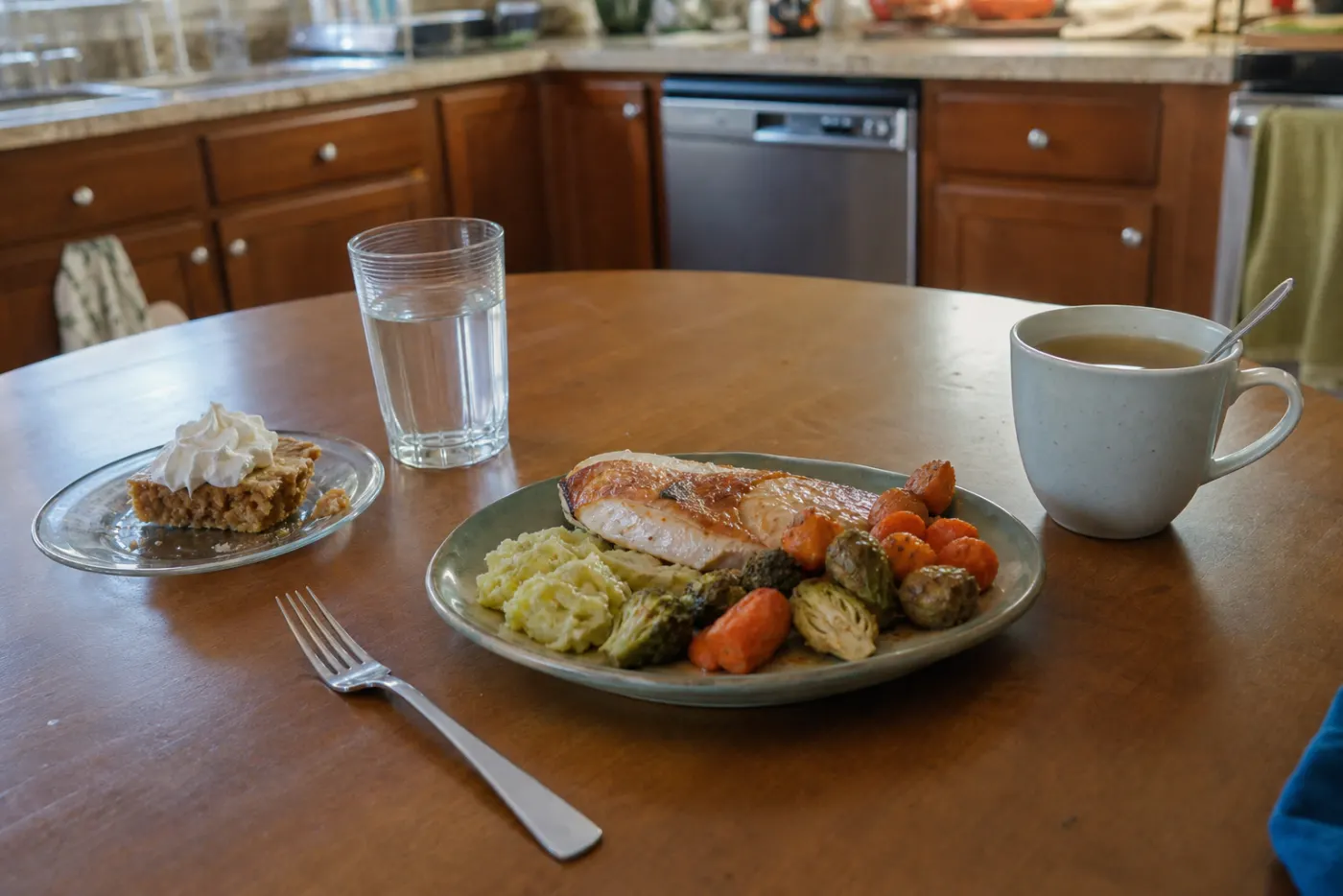
Enjoy the holiday food. Then build a few anchors around it: protein on every plate, breakfast included; sweets with or after a meal; the big rich dinner and the last drink a few hours before bed; and a mental note of what sets off your hot flashes. Never skip meals or add exercise to make up for a feast. That is the whole plan.
There is nothing here about avoiding food groups, counting anything or earning dessert. The goal is to feel like yourself through December: steady energy, sleep that holds, training that keeps going, and fewer nights spent kicking off the covers at 3am.
Protein at every meal matters more now
Muscle gets harder to build and keep after 40, and women in perimenopause need a bit more protein per meal to get the same muscle-building response. Holiday dinners usually have plenty. The gaps are breakfast and the grazing days, when meals turn into crackers, cheese and chocolate. Plan protein for those two and the rest takes care of itself.
How you spread protein seems to matter as well as the total. In a small crossover study by Mamerow and colleagues, 2014 (Journal of Nutrition), eight healthy adults ate the same daily protein either evenly across three meals or mostly at dinner. Muscle protein synthesis over 24 hours was 25 percent higher with the even split. The study was tiny and the participants were in their 30s, but it fits a wider view: the PROT-AGE expert group (Bauer and colleagues, 2013) recommends more protein for older adults than the standard allowance, and more again for those who exercise, and our protein guide suggests roughly 25 to 40 grams at each main meal for active women over 40.
Easy holiday protein, no recipes needed:
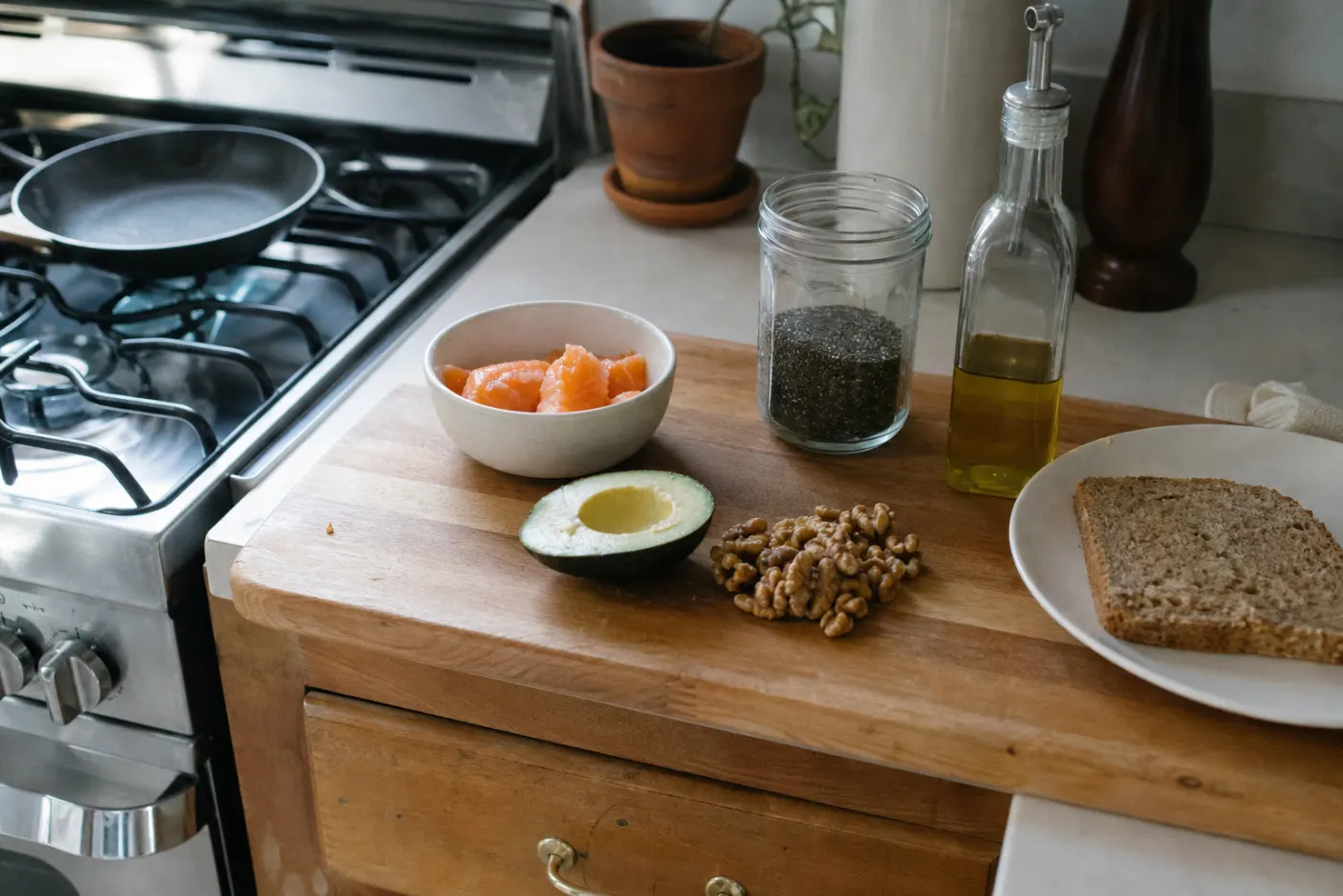
- Breakfast: eggs, Greek yogurt, cottage cheese, leftover turkey or ham on toast, or a protein shake if mornings are chaos.
- Grazing days: put a real protein on the board, like sliced meat, smoked fish, shrimp, beans or hummus, not just crackers and dips.
- After a lift: a proper meal or snack with protein within a few hours. Our protein calculator gives you a daily range.
Sweets, blood sugar and sleep
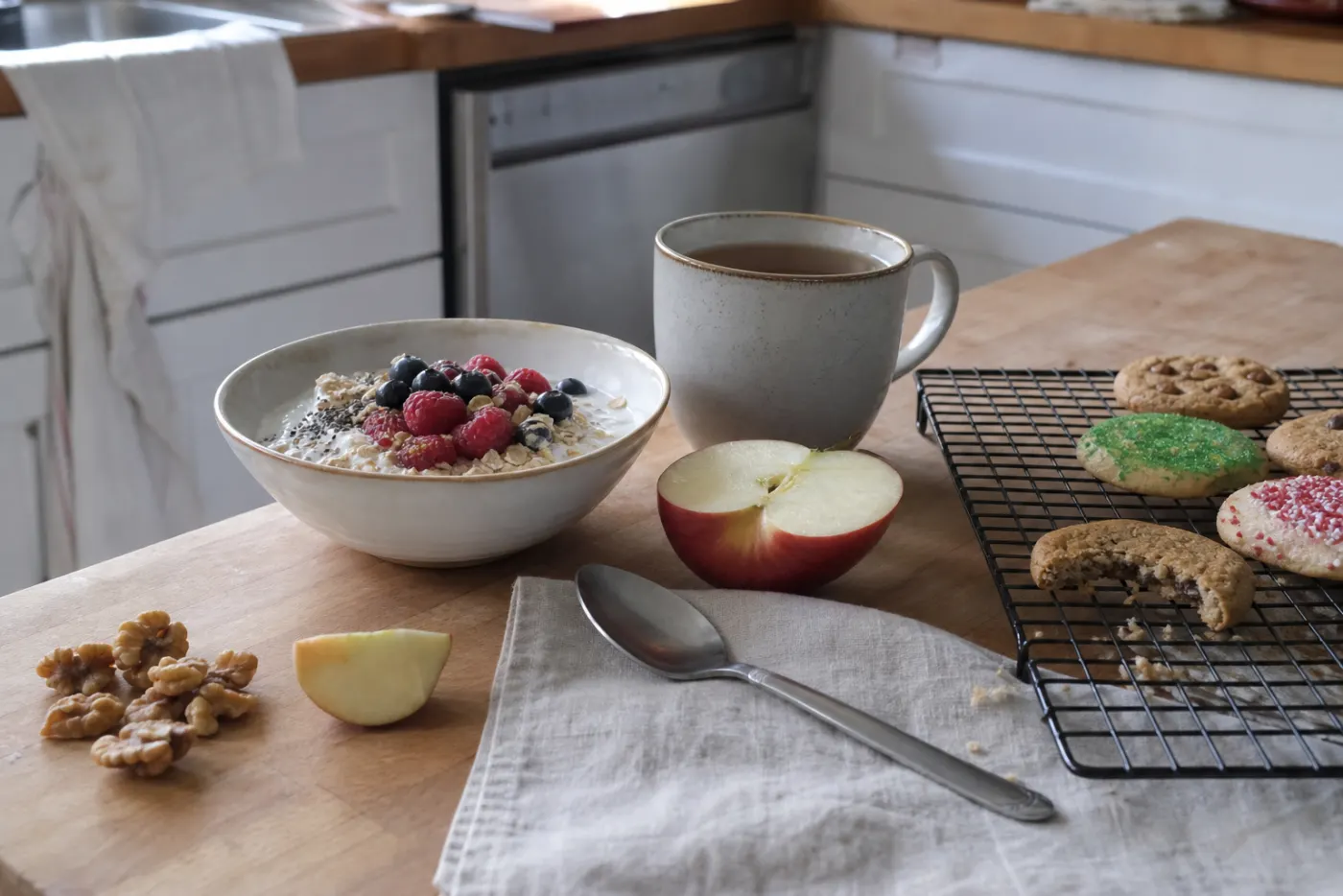
Sweets are part of the season, so the question is how, not whether. Eating them with or after a meal, rather than alone on an empty stomach, tends to soften the rise and fall in blood sugar that can leave you hungrier later. Keeping dessert well before bed, rather than as a late snack, may also be kinder to sleep.
The sleep link has some support. In the Women’s Health Initiative, Gangwisch and colleagues, 2020 (American Journal of Clinical Nutrition) followed more than 50,000 postmenopausal women. Diets with a higher glycemic index, more added sugar and more refined grains were linked to higher odds of developing insomnia. Diets with more fiber, whole fruit and vegetables were linked to lower odds.
If you notice that late sweets or a big late dinner leave you wide awake at 3am, that is worth knowing about yourself. Our page on why you can’t sleep covers the other usual suspects.
Hot flash triggers at the table
Many women say that alcohol, spicy food, hot drinks, a heavy meal or a warm, crowded room brings on a hot flash. The research on any single food is thin, so your own pattern counts most. Holiday meals stack several suspects at once: a heated dining room, red wine, a hot spiced drink and a big plate, all within an hour.
Diet as a whole may matter more than single foods. In an Australian cohort of 6,040 women followed for nine years, Herber-Gast and Mishra, 2013 (American Journal of Clinical Nutrition) found that a diet high in fat and sugar was linked to a 23 percent higher risk of hot flashes and night sweats, while fruit-rich and Mediterranean-style diets were linked to about 20 percent lower risk. Again, that is an association from food questionnaires, not proof.
Practical moves for party season:
- Sit away from the oven and the fire, and dress in layers you can shed.
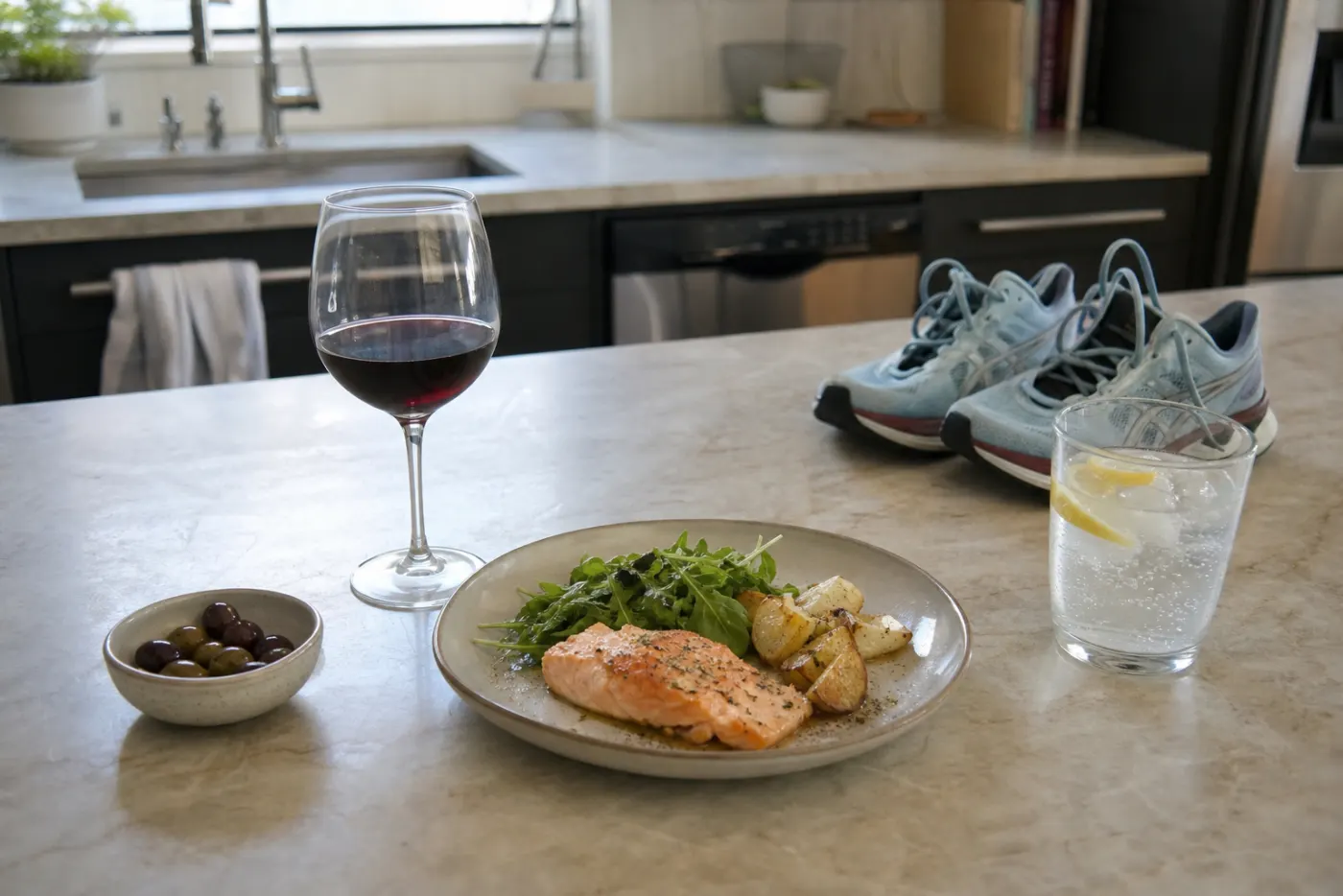
- Alternate drinks with cold water, and keep the last drink a few hours before bed, since alcohol also breaks up sleep.
- Notice what comes before a flash. A quick phone note for two weeks usually shows a pattern.
If flashes are wrecking your nights, read our guide to night sweats and training, and talk to your doctor: MHT (HRT) and several non-hormone medicines treat hot flashes well.
Do not compensate
The most harmful holiday habit is not the second slice of pie. It is the plan to make up for it: skipping breakfast, saving up all day for a party, or adding a long punishing workout the morning after. In perimenopause, compensating usually backfires, with worse sleep, bigger hunger swings and training on an empty tank.
Under-eating also has real costs for women who train. Chronically eating too little for what you do can disrupt hormones, thin bones and drain energy, and in midlife it is easy to mistake for perimenopause itself. Our guide to under-fueling and your hormones covers the signs.
A simple plan for each kind of holiday day
Holiday weeks are not all the same. Some days are normal, some are one big dinner, and some are grazing from noon to midnight. A small plan for each type of day keeps protein, fiber and sleep in place without making food a project. Use this as a loose guide, not a set of rules.
| Day type | Protein anchor | Sweets and drinks | Sleep protector |
|---|---|---|---|
| Normal workday | Protein at all three meals | Treats after lunch, not mid-afternoon on their own | Normal dinner time |
| Big holiday dinner | Normal breakfast and lunch with protein, no saving up | Dessert with the meal; water between drinks | Finish eating and drinking a few hours before bed |
| Grazing day | Put a real protein on the board | Fruit and nuts next to the chocolate | A short walk after the main eating |
| Travel day | Pack something with protein | Water first, then coffee | Keep your usual wake time |
| Training day | Protein within a few hours of lifting | Treats are fine; skip nothing | Lighter drinks the night before a hard session |
Where Phaes fits
Phaes does not count calories or give you a meal plan. Its daily check-in asks about sleep, stress, symptoms, energy, alcohol and protein, and it uses those answers to adjust that day’s training. You can log hot flashes and other symptoms, and Insights looks for patterns over time, such as how your sleep and symptoms move together. You also get a short daily nutrition tip.
The bottom line
Holiday eating in perimenopause does not need rules, guilt or compensation. Put protein on every plate, especially at breakfast. Eat sweets with meals and keep dessert and the last drink well before bed. Watch for your own hot flash triggers, and keep fruit and vegetables in the mix. Then eat normally the next day, train as planned, and enjoy the season.
Frequently asked questions
How much protein should I eat at holiday meals?
Aim for a palm-sized or larger portion of protein at each main meal, roughly 25 to 40 grams, which is what our protein guide suggests for active women over 40. Holiday dinners usually cover it. Breakfast and the grazing days in between are where protein tends to go missing, so plan those.
Can holiday food make hot flashes worse?
Some women find that alcohol, spicy dishes, hot drinks, a heavy meal or a warm, crowded room bring on a flash. The research on single foods is thin and mixed, so your own pattern matters more than any list. A simple note on your phone of what you ate and drank before a flash will show your triggers within a couple of weeks.
Do sweets affect sleep in perimenopause?
They may. A large study of postmenopausal women linked diets high in refined carbohydrates and added sugar to more insomnia, and diets rich in fiber, fruit and vegetables to less. It was observational, so it does not prove cause. Having dessert with dinner, not as a late snack on its own, is a reasonable middle ground.
Should I eat less the day before or after a big holiday meal?
No. Skipping meals to save up or make up tends to backfire: you arrive starving, eat past comfortable, sleep worse and train on empty. Eat your normal meals on the days around a feast, with protein at each one. Your body handles one big dinner fine.
Is it OK to have holiday treats while strength training?
Yes. Treats do not undo strength training. What supports your lifting is enough total food and protein, spread through the day, plus sleep. Under-eating to offset treats is far more likely to stall your progress than the treats themselves.