Quick answer: Most active women over 40 do well with about 20 to 35 percent of their calories from fat, mostly unsaturated: olive oil, nuts, seeds, avocado, and oily fish. Pair fat with enough protein at every meal. Fat keeps meals satisfying, carries vitamins A, D, E, and K, and helps you eat enough to recover from training. Keep saturated fat modest, and do not expect any single fat or supplement to fix hot flashes.
Protein gets most of the attention in midlife nutrition, and rightly so. But the Phaes method asks for two things at every meal: protein and healthy fats. This guide covers why fat matters for active women over 40, how much to aim for, which sources to favor, and where the claims about fat and hormones run ahead of the evidence.
Why the method stresses fats and protein
The Phaes method pairs protein with healthy fats because together they make meals filling, support the energy intake training needs, and give you nutrients you cannot get otherwise. Fat carries vitamins A, D, E, and K, and supplies essential fatty acids your body cannot make. Women who cut fat hard often end up under-eating without realizing it.
That last point is the coaching view behind the emphasis. Many women in their 40s grew up with low-fat dieting. Coaches see a common pattern: training goes up, fat intake stays low, and energy, sleep, and recovery suffer. Fat is the most energy-dense macronutrient, so including enough of it is one of the easiest ways to close that gap without huge meals. If you suspect you are not eating enough, our guide to under-fueling and your hormones covers the signs.
You may also hear that eating fat “supports hormones”. It is true that your body makes steroid hormones from cholesterol, but eating more fat does not raise estrogen or reverse perimenopause. The useful version of the claim is simpler: eating enough, including enough fat, supports normal body function and recovery.
How much fat to eat
A sensible target for most active women over 40 is 20 to 35 percent of daily calories from fat, mostly unsaturated. For a 2,000 calorie day, that is roughly 44 to 78 grams. In practice, that looks like a portion of fat at each meal, such as a tablespoon of olive oil, a small handful of nuts, or half an avocado.
The 20 to 35 percent range comes from the National Academies and is used in the Dietary Guidelines for Americans, which also advise keeping saturated fat under 10 percent of calories. UK guidance from the NHS puts it in grams: women should eat no more than 20 grams of saturated fat a day and replace some saturated fat with unsaturated fat.
| Calories a day | 20% from fat | 35% from fat |
|---|---|---|
| 1,800 | 40 g | 70 g |
| 2,000 | 44 g | 78 g |
| 2,200 | 49 g | 86 g |
| 2,400 | 53 g | 93 g |
You do not need to count grams forever. A week of rough tracking is enough to see whether you sit near the bottom, middle, or top of the range, and whether protein is keeping up. Use our protein calculator for that side, since protein usually needs more attention than fat.
Which fats to favor
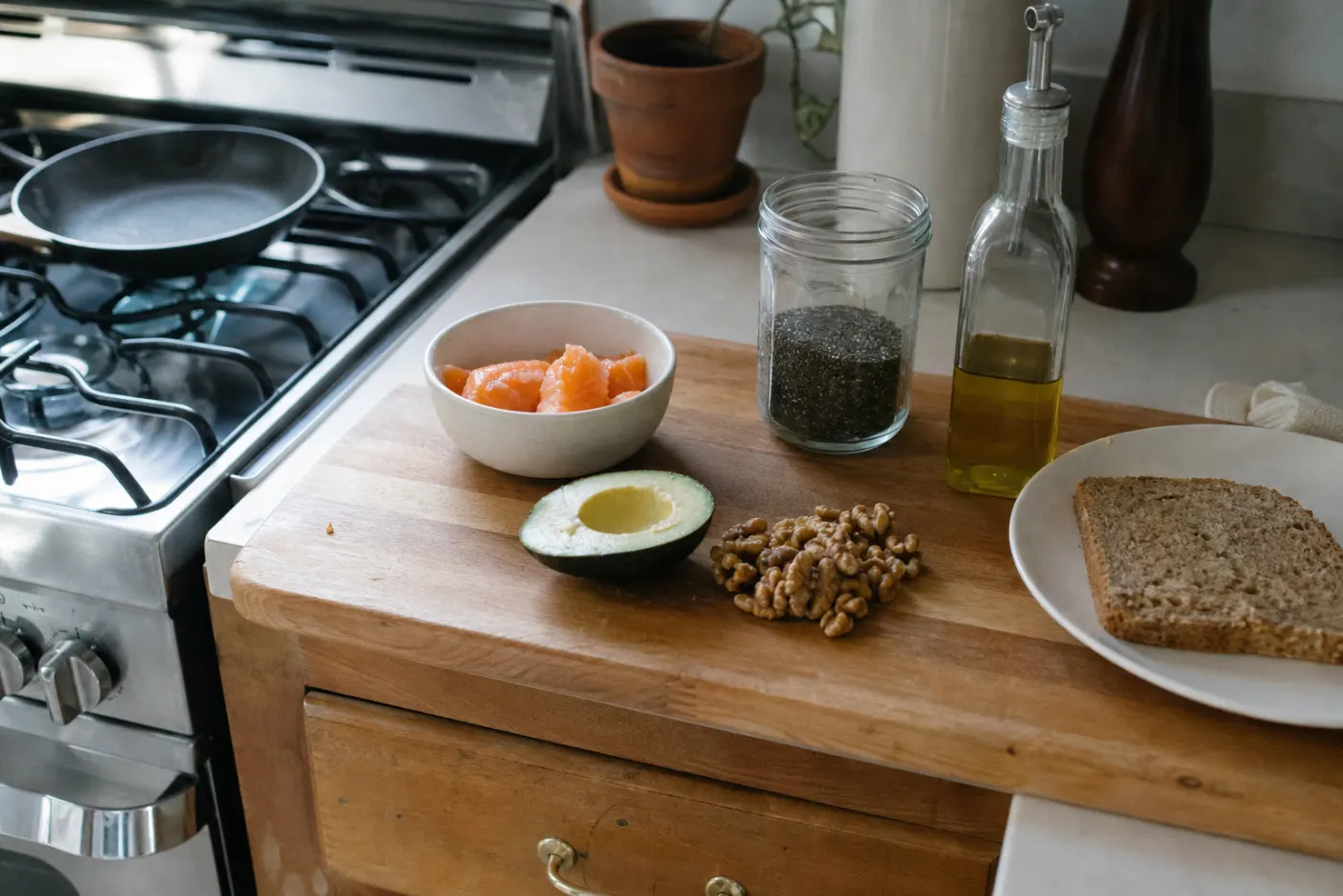
Favor unsaturated fats: olive and rapeseed oil, nuts, seeds, nut butters, avocado, and oily fish. Keep saturated fat modest by limiting butter, fatty processed meats, pastries, and fried food, and avoid industrial trans fats. Whole foods that bring fat along with protein, such as fish, eggs, yogurt, and nuts, do double duty.
| Type | Good sources | Guidance |
|---|---|---|
| Monounsaturated | Olive oil, rapeseed oil, avocado, almonds | Use freely as your main cooking and dressing fats |
| Polyunsaturated omega-3 | Salmon, sardines, mackerel, walnuts, flax, chia | Oily fish once or twice a week |
| Polyunsaturated omega-6 | Sunflower oil, most nuts and seeds | Fine as part of a varied diet |
| Saturated | Butter, cheese, fatty meat, coconut oil, pastries | Keep modest; women up to 20 g a day in UK guidance |
| Trans | Some fried and packaged foods | Avoid where you can |
The NHS advises at least 2 portions of fish a week, including 1 of oily fish.
What omega-3s can and cannot do
Omega-3 fats from oily fish are worth eating, and there is some evidence that they support muscle in older adults. But a well-designed trial found omega-3 supplements did not ease hot flashes, sleep, or mood in midlife women. Eat oily fish for overall health and muscle support, not as a symptom treatment.
The muscle finding comes from a 2015 trial by Smith and colleagues (American Journal of Clinical Nutrition). Sixty healthy adults aged 60 to 85 took fish oil or a corn oil placebo for six months. Compared with placebo, the fish oil group gained about 3.6 percent in thigh muscle volume, 2.3 kg of handgrip strength, and about 4 percent in one-rep max strength.
The hot flash finding comes from the MsFLASH network. In a 12-week randomized trial (Cohen and colleagues, Menopause, 2014), omega-3 supplements reduced hot flashes no more than placebo, with a difference of 0.3 hot flashes a day that was not significant.
Building fat into training days
On training days, put most of your fat in the meals away from hard sessions and keep the meal right before a sprint or HIIT session lighter, since fat slows digestion. After training, a meal with protein, carbohydrate, and some fat covers repair and refueling. On easy days, regular balanced meals are all you need.
Some simple combinations that bring protein and healthy fat together:
- Breakfast: Greek yogurt with walnuts, berries, and oats; or eggs on wholegrain toast with avocado.
- Lunch: a salad with salmon or chickpeas, olive oil dressing, and seeds.
- Dinner: oily fish or chicken with vegetables roasted in olive oil, and potatoes or rice on training days.
- Snack: a handful of nuts with fruit, or hummus with crackers.
If weight gain is the concern that drove you to cut fat, cutting it further is rarely the answer. Our page on why you might be gaining weight covers the bigger factors, from sleep to muscle loss.
When to get personal advice
Most women can follow the general guidance above. Get personal advice from a doctor or registered dietitian if you have high cholesterol, heart disease, diabetes, a gallbladder problem, or a history of disordered eating, or if you take blood thinners and are considering fish oil supplements. They can tailor fat and saturated fat targets to your health.
Raised cholesterol is common after menopause, when the protective effect of estrogen on blood lipids fades, so a routine cholesterol check in your late 40s or 50s is worth asking about. Food choices are one part of managing it, and your clinician can tell you whether anything else is needed.
Where Phaes fits
Phaes reads your cycle, symptoms, and daily check-ins, and adjusts your training plan from them. Its daily nutrition tips are written for your life stage. It does not count your calories or prescribe a diet; it keeps the nutrition advice simple and pointed at what your training needs.
The bottom line
Aim for about 20 to 35 percent of calories from fat, mostly unsaturated, and pair it with enough protein at every meal. Favor olive oil, nuts, seeds, avocado, and oily fish; keep saturated fat modest. Eat oily fish for muscle and heart health, but do not count on omega-3 supplements to fix hot flashes.
Frequently asked questions
How much fat should a woman over 40 eat per day?
A common range is 20 to 35 percent of daily calories from fat, which is the range used in US dietary guidance. For a woman eating 2,000 calories a day, that is roughly 44 to 78 grams. Active women who train hard often sit in the middle of that range, with most of it from unsaturated fats.
Do healthy fats help with perimenopause symptoms?
Not directly, as far as the evidence shows. A large randomized trial of omega-3 supplements found no improvement in hot flashes, sleep, or mood compared with placebo. Healthy fats help indirectly, by making meals satisfying, supporting adequate energy intake, and replacing saturated fat for heart health, which matters more after menopause.
Is a low-fat diet bad in perimenopause?
Very low-fat diets can make it hard to eat enough for training and to absorb fat-soluble vitamins, and they often leave meals less filling. Coaches see under-fueling show up in women who cut fat hard while training more. You do not need a high-fat diet either. Aim for a moderate amount, mostly from unsaturated sources.
Should I take omega-3 supplements after 40?
Eating oily fish once or twice a week is the simplest way to get omega-3. Supplements are a reasonable option if you do not eat fish, but they are not proven to ease hot flashes. If you take blood thinners or have a medical condition, check with your doctor or pharmacist before starting one.
Is saturated fat bad for women in menopause?
Heart disease risk rises after menopause, so keeping saturated fat modest is sensible. UK guidance suggests women eat no more than 20 grams of saturated fat a day. Swapping butter, fatty processed meat, and pastries for olive oil, nuts, seeds, and oily fish is the most useful change for most women.