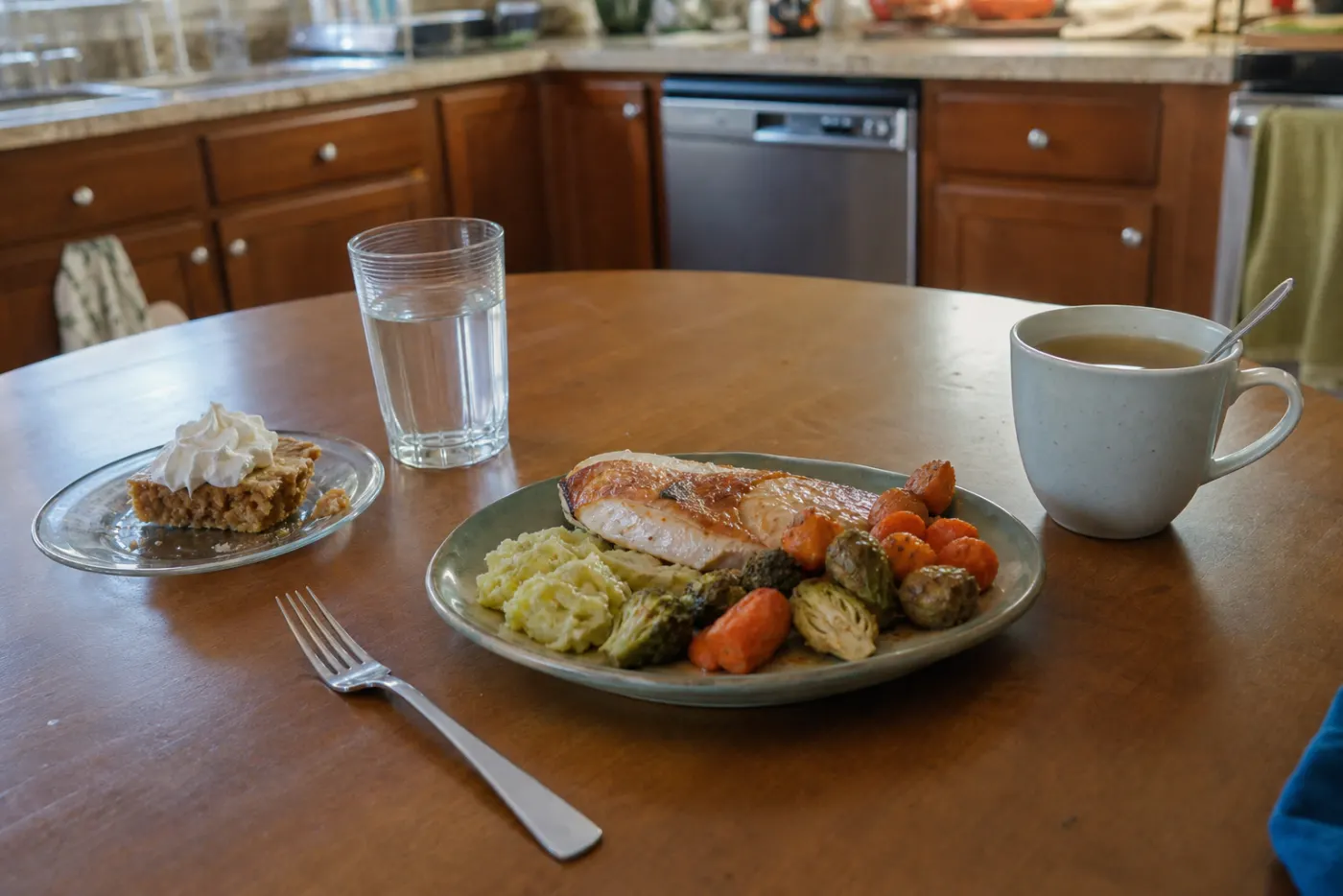
Quick answer: Sugar cravings in perimenopause usually have a cause you can work with: short or broken sleep, stress, the days before a period, and long gaps between meals or meals low in protein. Sleep loss in particular raises hunger and the pull toward sweet, high-calorie food. What helps is protein and fiber at every meal, not going too long without eating, protecting sleep, and planning sweets you enjoy instead of banning them.
It is 3:30 in the afternoon, there is a tin of holiday cookies in the kitchen, and you are on your fourth. You used to be able to walk past them. Many women notice their sweet tooth changes in perimenopause, and the holidays put sugar in every room. This is not a willpower problem. Cravings usually have causes, and most of them can be worked with.
The short answer: cravings usually have a cause
In perimenopause, the usual drivers of sugar cravings are short or broken sleep, stress, the days before a period, and long gaps between meals or meals low in protein. Perimenopause often brings more of all four at once. Fix what you can of those, put protein and fiber in every meal, and plan the sweets you love rather than banning them.
That approach works better than a sugar detox for a simple reason. A ban does nothing about the tired, stressed, underfed afternoon that produced the craving. It only adds guilt when the craving wins, which it usually does by the second week of December.
Sleep loss: the biggest driver
Short sleep is one of the most reliable ways to make sweet food harder to resist. It shifts appetite hormones toward hunger and changes how the brain values food. Perimenopause is hard on sleep, with night sweats, 3am waking and anxiety, so if cravings arrived at the same time as bad nights, that is probably not a coincidence.
In a crossover study by Spiegel and colleagues, 2004 (Annals of Internal Medicine), two nights of restricted sleep lowered the fullness hormone leptin by 18 percent and raised the hunger hormone ghrelin by 28 percent. Appetite for sweet, salty and starchy, calorie-dense foods rose by 33 to 45 percent. A brain imaging study by Greer and colleagues, 2013 (Nature Communications) found that after a night without sleep, the brain regions that weigh up choices went quieter while reward responses grew, and the desire for high-calorie foods rose.
Both studies were small and in younger adults, the first only in men, so the numbers will not map neatly onto a 48-year-old woman. The direction fits what many women notice, though: a bad night leads to a sugary day. Our page on why you can’t sleep covers the perimenopause sleep problems worth fixing first.
Stress and the sweet tooth
Stress pushes many people toward sweet food, and some respond more strongly than others. A long, demanding day leaves you depleted, and sugar is the fastest comfort in the house. Perimenopause can lower your tolerance for stress at exactly the age when work, kids and parents peak, and December adds hosting, travel and money on top.
In a lab study by Epel and colleagues, 2001 (Psychoneuroendocrinology), 59 premenopausal women did a stressful task on one day and a calm one on another. Women whose cortisol rose most under stress ate more on the stress day, and ate more sweet food on both days. Rising bad mood also predicted more eating. It was a small lab study, but it suggests that some of us are wired to reach for sweets under pressure.
Practical moves: build a short walk, a few minutes of quiet or a call with a friend into the hardest part of the day, and keep easy protein snacks around for the evenings when cooking feels impossible.
Your cycle, while you still have one
If you still have periods, cravings often rise in the days before one. Reviews suggest women eat more and crave carbohydrate and fat more often in the second half of the cycle, after ovulation. In perimenopause, cycles get irregular and PMS can feel stronger, so the craving days can arrive with less warning than they used to.
A review by Davidsen and colleagues, 2007 (International Journal of Obesity) pulled together studies on the menstrual cycle and appetite. In the luteal phase, the stretch after ovulation, women tended to eat more, spend slightly more energy and report more frequent cravings, especially for carbohydrate- and fat-rich foods. The studies were mostly in younger women with regular cycles.
Your body uses a little more energy in that phase, so eating a bit more is reasonable. Logging cravings alongside your cycle for a couple of months shows whether yours follow the pattern.
Protein, fiber and blood sugar
Meals built around protein and fiber keep you full longer and smooth the rise and fall in blood sugar after eating, and that fall seems to matter for hunger. Afternoon cravings often trace back to a light lunch or a sweet breakfast. After menopause, blood sugar responses to the same meal also tend to run a little higher, which makes steady meals more useful.
In a study of 1,070 people wearing glucose monitors, Wyatt and colleagues, 2021 (Nature Metabolism) found that people whose blood sugar dipped further two to three hours after a meal felt hungrier, ate again sooner and ate more over the day. A related analysis by Bermingham and colleagues, 2022 (eBioMedicine) found postmenopausal women had higher blood sugar responses after meals, higher sugar intake and worse sleep than premenopausal women. Both studies involved researchers linked to a nutrition testing company and were observational, so treat them as supporting evidence, not proof.
| Craving pattern | Likely driver | What to try |
|---|---|---|
| Mid-afternoon slump and cookies | Light, low-protein lunch | Add protein and fiber to lunch |
| Sweets all day after a bad night | Short sleep | Regular meals, protein at breakfast, an early night |
| Evening grazing after a hard day | Stress, under-eating | A proper dinner, then a planned dessert |
| Raiding the cupboard the week before a period | Cycle | Eat a little more, with protein |
| Hungry all the time on training days | Not enough food overall | Eat more, especially around training |
Our protein guide has a practical target for each meal. If cravings come with heavy training and light eating, read about under-fueling and your hormones, since constant hunger can be your body asking for more fuel.
Holiday sweets without the all-or-nothing
The all-or-nothing approach, no sugar until the cookies break you, tends to end in eating far more than you wanted and feeling worse about it. A planned, enjoyable amount of the sweets you actually love, eaten with meals, keeps the holidays fun without the swing between restriction and overeating.
Alcohol also lowers your guard around food and costs you sleep, which feeds the next day’s cravings. Our guide to alcohol and training in perimenopause has ideas for drinking less without missing out. For the rest of the season’s meals, see our guide to holiday eating in perimenopause.
Where Phaes fits
Phaes does not count calories, give meal plans or tell you to cut sugar. Its daily check-in asks about sleep, stress, symptoms, energy, alcohol and protein, and adjusts that day’s training. Insights can show how sleep and symptoms track together over time, and if you still have a cycle, it compares the same cycle day across months. A daily nutrition tip adds one small idea at a time.
The bottom line
Sugar cravings in perimenopause are mostly driven by short sleep, stress, your cycle and meals that are too light or too far apart. Protect sleep, put protein and fiber on every plate, eat enough on training days, and plan the sweets you love instead of banning them. If cravings come with thirst, tiredness or weight loss, get your blood sugar checked.
Frequently asked questions
Why do I crave sugar so much in perimenopause?
The usual drivers are poor sleep, stress, hormonal swings in the days before a period, and going too long without a proper meal. Perimenopause tends to bring more of all four at once. Night sweats break up sleep, and short sleep reliably increases appetite, especially for sweet and starchy food.
Does lack of sleep cause sugar cravings?
It appears to. In a small lab study, two nights of short sleep raised hunger and appetite for sweet, starchy, calorie-dense food by 33 to 45 percent. A brain imaging study found sleep loss dulled the brain areas that weigh choices and amplified the reward response to high-calorie food. Both studies were small and in younger adults.
Do sugar cravings get worse before a period?
For many women, yes. Research reviews suggest women eat more and crave carbohydrate and fat more often in the second half of the cycle, after ovulation, than in the first. In perimenopause, cycles become irregular and PMS can feel stronger, so the craving days may be harder to predict.
What should I eat when I have a sugar craving?
Have the sweet thing if you want it, ideally with or after a meal rather than on an empty stomach. If the craving comes every afternoon, look at lunch: adding protein and fiber, and eating enough, usually helps more than willpower. A snack with protein, like yogurt with fruit, often settles it.
Should I cut out sugar completely in perimenopause?
There is no need, and for many women a total ban backfires into a cycle of restriction and overeating. A better approach is to eat sweets you really enjoy, with meals, and to fix the drivers: sleep, stress, long gaps and low-protein meals. Most women find the cravings ease when those are steady.
Could constant sugar cravings be a sign of something else?
Sometimes. Cravings with strong thirst, frequent urination, tiredness or unexplained weight loss should be checked for blood sugar problems. Cravings in someone who trains a lot and eats little can mean under-fueling. If eating feels out of control, talk to a doctor.