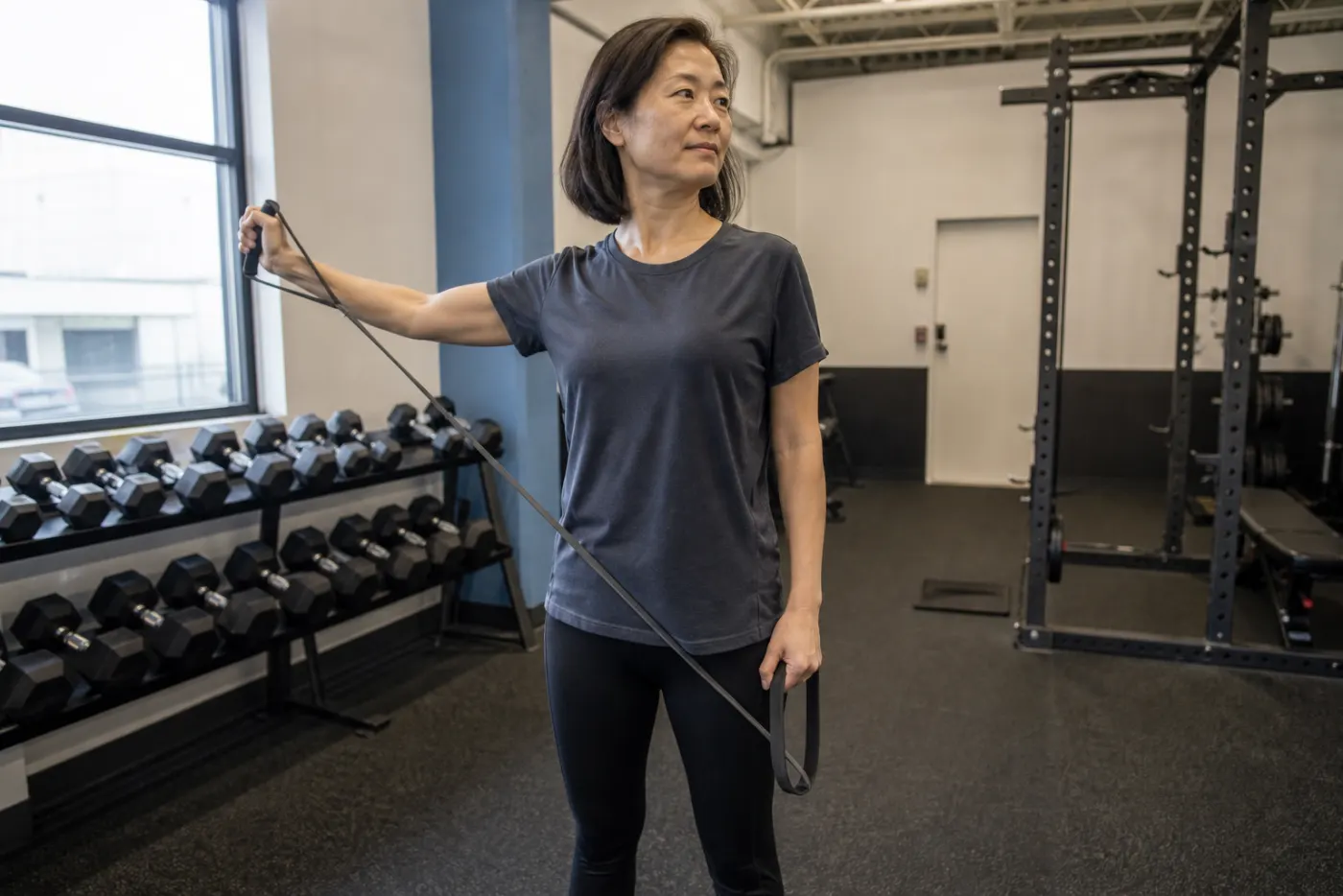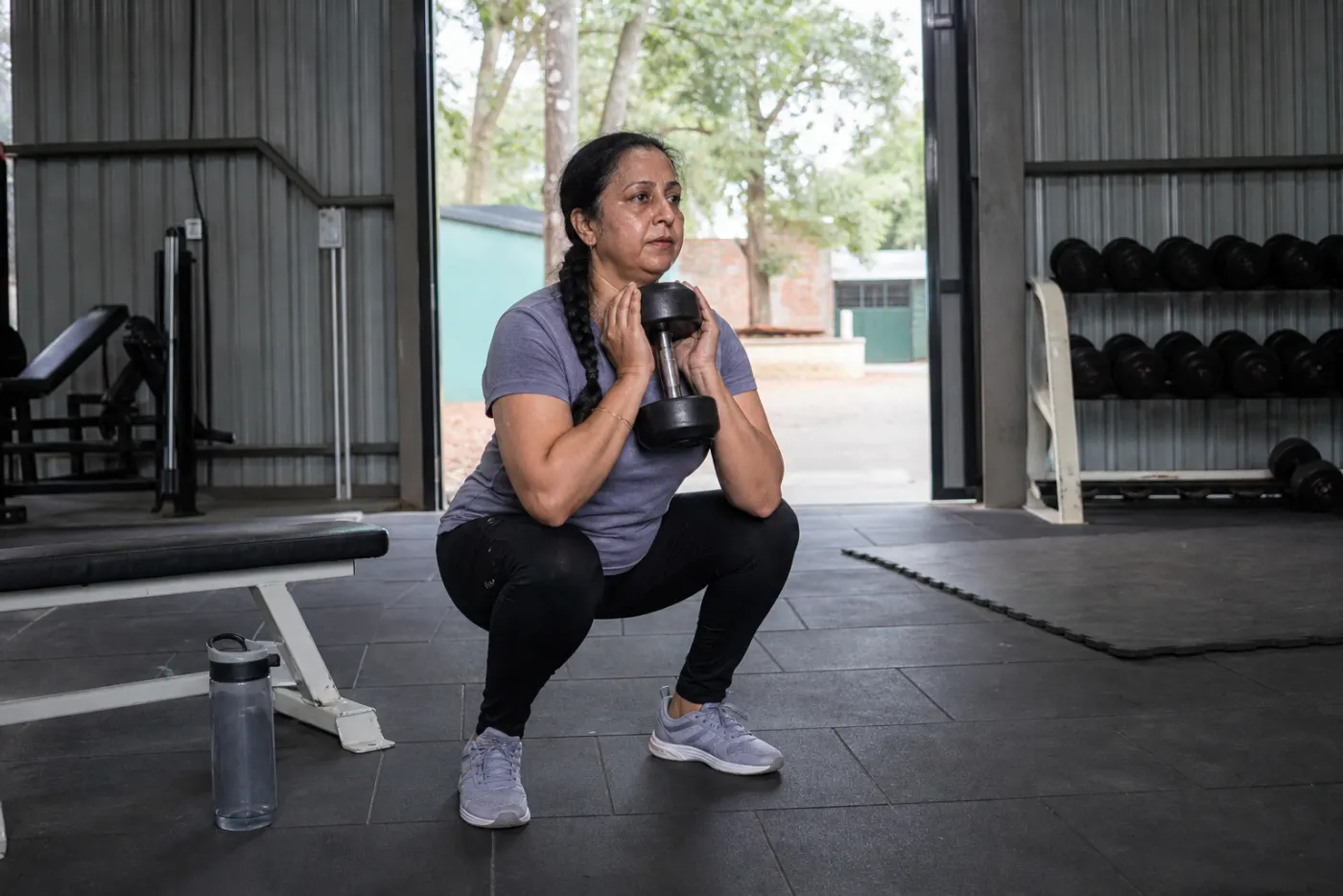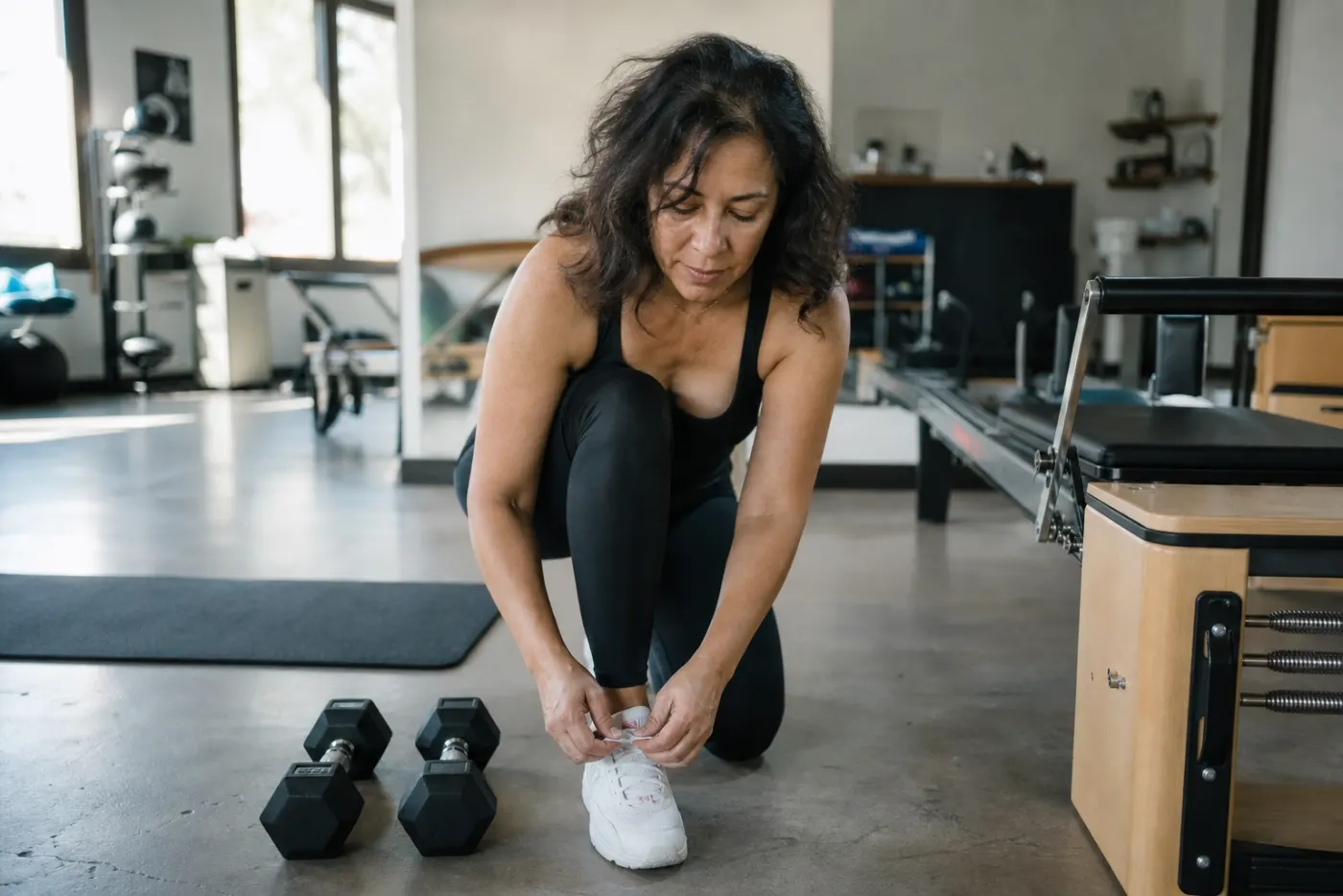
Quick answer: If you can only choose one, choose weights. Heavy lifting is what builds muscle and challenges bone in menopause, and Pilates has not been shown to improve bone density. Pilates is still valuable: it trains core control, posture, mobility, and the pelvic floor, and it makes an excellent easy-day session. The best plan for most women is heavy lifting two to four times a week, with Pilates on easy days if you enjoy it.
Pilates is one of the most popular ways for women in menopause to exercise, and lifting heavy is the advice you see everywhere. So which one? The honest answer is that they do different jobs. Heavy weights build muscle and bone. Pilates builds control, posture, and mobility. If you can only pick one, pick weights. If you can fit both, they work well together.
The short answer: weights first, Pilates as a complement
Heavy lifting is the better choice for the two things menopause erodes fastest, muscle and bone, and Pilates has not been shown to improve bone density. Pilates is still worth doing for core control, posture, mobility, and the pelvic floor, and as an easy-day session. Most women do best with heavy lifting two to four times a week and Pilates on easy days.
This is not a criticism of Pilates. A good Pilates class builds body awareness and control that many lifters lack. It is a matter of matching the tool to the goal. You would not use a heavy squat to improve your spinal mobility, and you should not expect a mat class to load your bones the way a heavy deadlift does.
What each one actually does
Heavy lifting loads muscles close to their limit, which builds strength and lean muscle and puts the kind of strain on bone that it responds to. Pilates uses bodyweight, springs, and light resistance for controlled movement, which builds core endurance, coordination, posture, and flexibility. Both help balance. Only one reliably makes you much stronger.
| Goal | Heavy lifting | Pilates |
|---|---|---|
| Maximal strength | Strong effect | Small effect |
| Lean muscle | Strong effect | Small to moderate, mostly in beginners |
| Bone density | Good evidence, especially with impact | No significant effect found so far |
| Core control and posture | Moderate | Strong |
| Mobility and flexibility | Small to moderate | Strong |
| Balance | Moderate | Moderate |
| Recovery-friendly easy day | No | Yes |
The key word for both muscle and bone is load. Muscles and bones adapt to what challenges them, and a challenge has to grow over time. Pilates can be very hard work, but the hard part is usually endurance and control rather than heavy load, so it plateaus as a strength stimulus once the movements are familiar.
What the evidence says about bone
Heavy lifting has the stronger evidence for bone. In the LIFTMOR trial, postmenopausal women with low bone mass who did heavy lifting and impact work twice a week improved spine bone density, while a low-intensity group lost density. A meta-analysis of Pilates trials found no significant effect on bone density, though the trials were few and small.
In LIFTMOR (Watson and colleagues, Journal of Bone and Mineral Research, 2018), spine bone density rose about 2.9 percent over eight months in the heavy-lifting group and fell about 1.2 percent in the low-intensity comparison group. A 2022 meta-analysis of Pilates and bone density (de Oliveira and colleagues, Journal of Geriatric Physical Therapy) pooled three randomized trials in postmenopausal women and found no significant effect at the spine, total hip, or femoral neck.
UK consensus guidance on exercise for osteoporosis, Strong, Steady and Straight (Brooke-Wavell and colleagues, 2022), recommends progressive resistance training and impact exercise for bone, with balance work to reduce falls. Pilates can fit the balance and posture parts of that picture. See our page on exercise for bone density in menopause.
Why lifting heavy matters in menopause
In the Phaes method, heavy is what challenges the body, and that challenge is what builds lean muscle and bone. The level table sets the dose: beginners lift 3x8 twice a week, intermediates 5x5 three times, and advanced lifters 5x3 four times, with one exercise per body part and core every session.
Lift heavy, by level
- 2 sessions a week
- 30 s rest
- Upper day, lower day
- 3 sessions a week
- 2 min rest
- Add weight on the last set
- 4 sessions a week
- 3 min rest
- 1 rep in reserve on the last set
Heavy lifting does not make women bulky; it builds lean, dense muscle, slowly. Start with weights you can lift with good form and add a little at a time. Our guide to how often women over 40 should lift covers frequency, and the 5x5 workout covers the intermediate step.
Where Pilates fits best
Pilates fits best on easy days and as your core work. A mat or reformer class on a non-lifting day gives you active recovery that also builds control, posture, and mobility. It is especially useful if you have back pain, pelvic floor symptoms, or stiffness that makes heavy lifts awkward, since better control often makes lifting safer and more comfortable.
Practical ways to combine them:
- Pilates as the easy day. In the method, easy days are a walk, a very easy run, or yoga. A gentle Pilates class does the same job.
- Pilates moves as your core exercise. Every lifting session includes one core exercise; a dead bug, side plank, or Pilates hundred all count.
- Keep hard classes away from heavy legs. A tough reformer class the day before heavy lower-body lifting leaves your core too tired to brace well.
- Count it honestly. A hard Pilates class is a training session, not rest. Keep one full rest day a week.
If you see a pelvic health physiotherapist, they may prescribe Pilates-style work. That is a good reason to keep it in your week. Our page on strength training for menopausal women covers the wider strength picture.
If you love Pilates and dread the gym
Enjoyment matters, because the plan you stick with beats the perfect plan you abandon. If you love Pilates, keep it, and add two short heavy lifting sessions a week. Twenty to thirty minutes, a handful of big movements, and weights that feel genuinely hard by the last reps is enough to start.
A home setup with a pair of adjustable dumbbells or kettlebells covers most beginner exercises. Many Pilates studios now also run strength classes with heavier weights, which can be an easier bridge than a gym.
Where Phaes fits
Phaes builds your heavy lifting at your level and treats walks, very easy runs, and yoga as real easy days. It reads your cycle, symptoms, and daily check-in and lightens sessions on rough days. If Pilates is part of your week, you can use it on those easy days and keep the lifting days for load.
The bottom line
Choose weights if you can only pick one: heavy lifting builds the muscle and bone that menopause erodes, and Pilates has not been shown to improve bone density. Keep Pilates for core control, posture, mobility, and easy days. Most women do best with both, lifting heavy two to four times a week at their level and using Pilates in between.
Frequently asked questions
Is Pilates enough strength training in menopause?
For most women, no. Pilates builds endurance and control, but it rarely loads muscles heavily enough to build significant strength or to challenge bone. Guidelines on bone health recommend progressive resistance training and impact. Pilates is a good complement to heavy lifting, not a replacement for it.
Does Pilates build bone density?
The evidence so far says no. A 2022 meta-analysis found no significant effect of Pilates on bone density at the spine or hip in postmenopausal women, though only three trials were included and most were low quality. Heavy lifting and impact work have much stronger evidence for bone.
Can Pilates help with menopause belly?
Pilates strengthens the deep core and can improve posture, which can change how your midsection looks and feels. But no exercise burns fat from one chosen area. Changes in body composition in menopause come from overall training, especially heavy lifting, plus protein, sleep, and energy balance.
Is reformer Pilates as good as lifting weights?
Reformer Pilates adds spring resistance and can be harder than mat work, but the loads are still light to moderate compared with heavy lifting. It is a useful strength-endurance and control session. For building maximal strength and loading bone, progressively heavier weights remain the better tool.
How should I combine Pilates and weights?
Lift heavy on your strength days, at your level, and use Pilates on easy days or as your core work. Avoid a hard Pilates class right before heavy lower-body lifting, since a tired core makes heavy lifts harder to do well. One full rest day a week still applies.