Quick answer: Frozen shoulder is a painful, stiff shoulder caused by the joint capsule becoming inflamed and tight. It is most common in women aged 40 to 60, and a link with menopause is suspected but not proven. You can keep training: lower-body lifting, core work, running, and the unaffected arm are usually fine. Shoulder work should follow your physiotherapist's plan. See a doctor for shoulder pain and stiffness that does not go away.
You reach for the seatbelt and a sharp pain stops you. Over a few weeks, your shoulder gets stiffer, nights get worse, and overhead presses are out of the question. Frozen shoulder is common in women in their 40s and 50s, and it often arrives without an obvious injury. This guide covers what it is, what is known about the menopause link, and how to keep training while it heals.
What frozen shoulder is
Frozen shoulder, or adhesive capsulitis, is a condition in which the tissue around the shoulder joint becomes inflamed, then thickens and tightens. That causes pain, often worse at night, and stiffness that limits movement in every direction. It usually settles eventually, but it can take months or longer, and it tends to move through three overlapping phases.
- Freezing: pain builds, especially at night and at the end of range.
- Frozen: pain eases somewhat, but stiffness dominates. Reaching behind your back or overhead becomes hard.
- Thawing: movement gradually returns over months.
The NHS guide to frozen shoulder describes the main symptoms as pain that can disturb sleep and stiffness that makes the shoulder hard to move, and notes it can take months or years to get better, with pain and stiffness usually going away eventually. It lists injury or surgery that stops you moving your arm, and diabetes, as known causes.
What we know about the menopause link
Frozen shoulder is most common in women aged roughly 40 to 60, which overlaps with perimenopause, and many researchers suspect falling estrogen plays a part. But the evidence is thin. Studies so far are small or observational, and none show that menopause causes frozen shoulder. Diabetes and thyroid problems are better established risk factors.
Three studies give a sense of where things stand:
- A 2018 study by Yoon and colleagues (Menopause) looked at shoulder pain in 197 perimenopausal and 113 premenopausal women. Adhesive capsulitis was the most common diagnosis in both groups (35.4 and 31.8 percent), and the difference was not significant. Shoulder synovitis was much more common in the perimenopausal group.
- A 2026 pilot study by Reinke and colleagues (Climacteric) found frozen shoulder in 7.65 percent of menopausal women not using hormone therapy and 3.95 percent of those using it. The difference was not statistically significant, and the authors called for larger studies.
- A 2018 study of 2,190 patients by Kingston and colleagues (Journal of Shoulder and Elbow Surgery) found frozen shoulder was associated with diabetes and obesity, among other factors.
How to keep training with a frozen shoulder
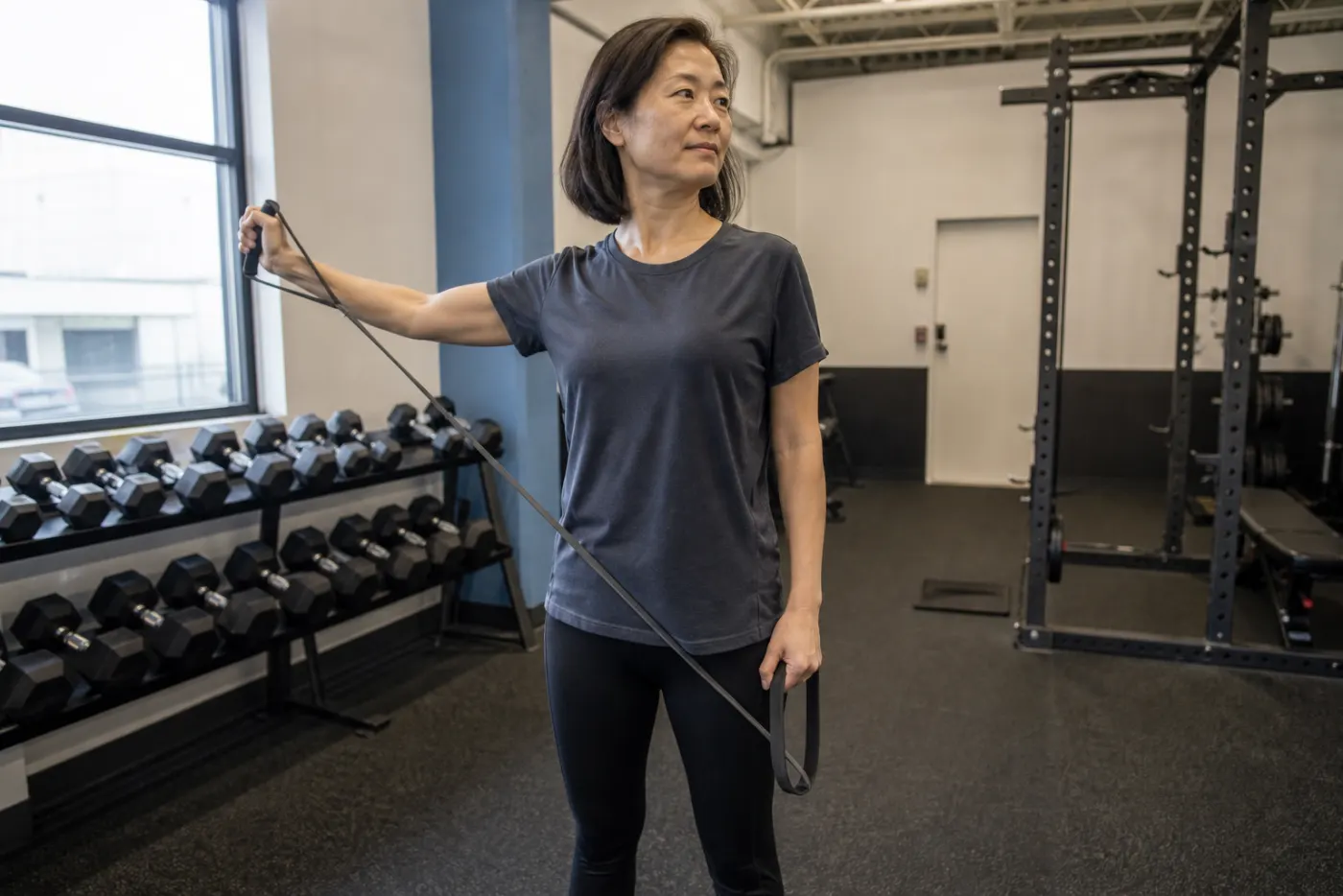
Keep training everything you can. Lower-body lifting, core work, running, and single-arm work with the unaffected side are usually fine. For the affected shoulder, follow your physiotherapist’s exercises and stay in a range that is tolerable. Avoid inventing your own heavy shoulder work, which can make the pain worse.
That last point comes straight from the NHS, which advises keeping the shoulder moving gently but not making up your own strenuous exercises, since gym equipment can make the pain worse. Moving gently helps; forcing it does not.
A useful guide during training is the next morning. Mild discomfort during an exercise that settles quickly is usually acceptable. Pain that is sharp during the movement, or a shoulder that is noticeably worse and stiffer the next day, means that exercise or that range was too much for now. Night pain getting worse is another sign to scale back.
| Training area | Usually fine | Modify or pause |
|---|---|---|
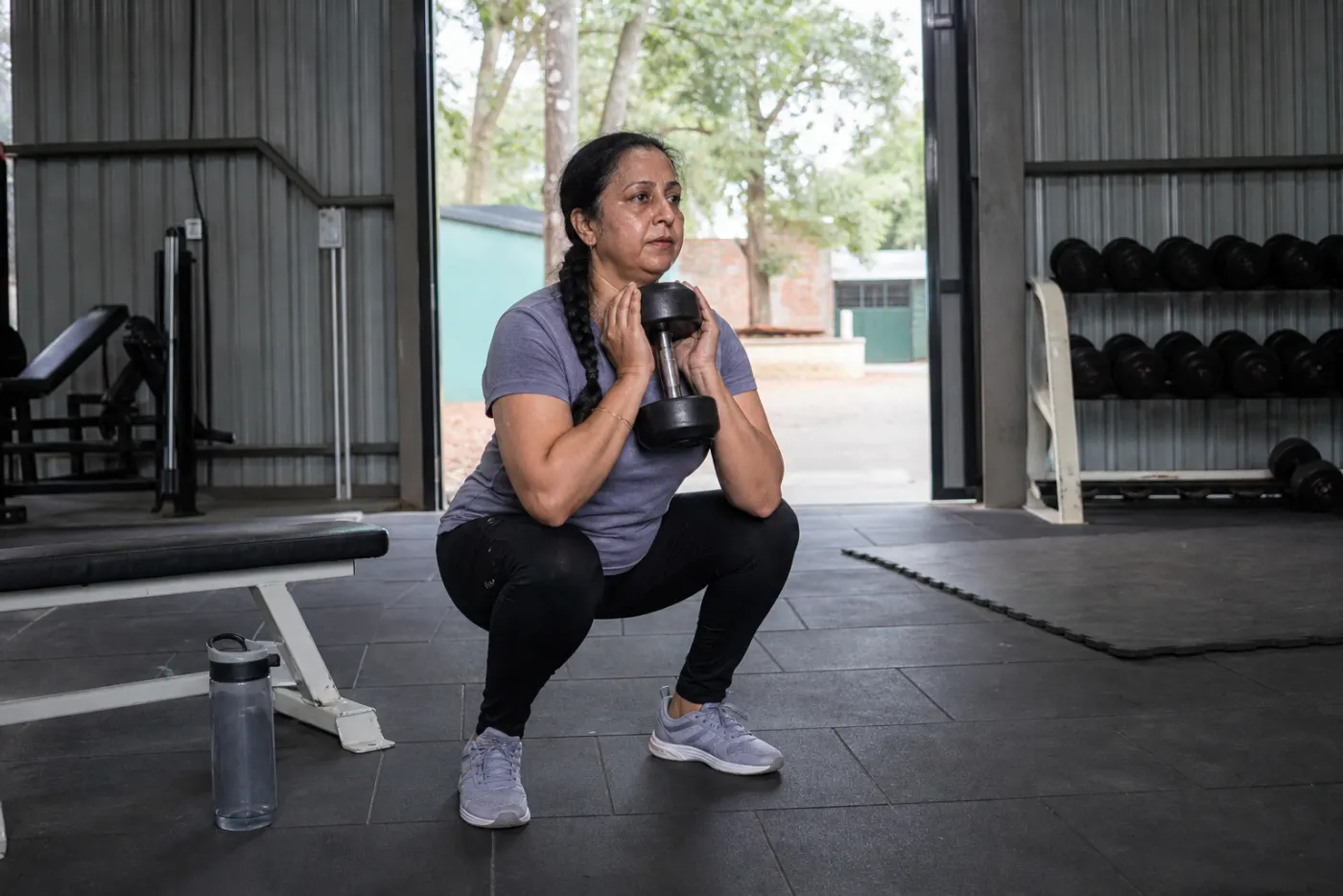
| Lower body | Squats with a goblet or belt hold you can manage, leg press, hip thrust, step-ups, Romanian deadlift with a trap bar or dumbbells at your sides | Back squats if you cannot reach the bar |
| Upper body, unaffected side | Single-arm rows, presses, curls | Anything that braces with the affected arm |
| Upper body, affected side | Your physio’s range-of-motion and strengthening exercises | Overhead pressing, bench press, pull-ups, heavy rows |
| Core | Dead bugs, side planks if comfortable, Pallof press on the good side | Planks or push-ups if they hurt |
| Running | Easy runs with a relaxed arm | Hard arm drive in sprints; consider a bike |
Most lower-body strength work does not need your shoulder at all. For the lower-body day in the method, glutes, hamstrings, hips, calves, adductors, abductors, and quads can all be trained with machines, a belt squat, or dumbbells held at your sides. Your legs and bones can keep getting stronger while the shoulder heals, and staying active helps sleep and mood through a condition that can drag on for months.
Adjusting your sessions by level
Whatever your level, keep the scheme and change the exercises. Beginners can keep the lower-body day as written and swap the upper day for one-arm and physio work. Intermediates and advanced lifters can keep their lower-body and arm days, and turn the chest, back, and shoulder day into a single-arm and rehab session.
Lifting around a frozen shoulder
- Lower day as written
- Upper day: good arm plus physio work
- 30 s rest
- Lower and arm days as able
- Chest, back, shoulder day becomes rehab
- 2 min rest
- Lower-body days as written
- Upper days: good side plus rehab
- 3 min rest
Sprint sessions can continue if running feels fine, or move to a stationary bike, where the arms stay still. HIIT moves such as push-ups and mountain climbers need swapping for lower-body options like squat jumps or step-ups. For how the lifting levels work, see the 5x5 workout for women over 40.
When to see a doctor or physio
See a doctor or physiotherapist if shoulder pain and stiffness do not go away, or if pain makes it hard to move your arm. A clinician can confirm the diagnosis, since other shoulder problems, such as rotator cuff tears or arthritis, can look similar and need different care, and discuss pain relief and injection options.
Physiotherapy usually runs for at least several weeks and includes stretching, strengthening, and posture work. If you have diabetes or a thyroid condition, mention it, since both affect frozen shoulder. Joint aches elsewhere are also common in perimenopause; see our page on perimenopause joint pain, and our guide to why injuries increase in perimenopause.
Where Phaes fits
Phaes builds strength days from your level, with one exercise per body part and core every session. It reads your symptoms and daily check-in, including joint pain, and lightens the plan on bad days. It does not diagnose or treat shoulder problems; your physio leads that part.
The bottom line
Frozen shoulder is common in women aged 40 to 60, and a menopause link is suspected but not proven. Keep training: lower body, core, running, and the unaffected arm. Let your physiotherapist set the shoulder work, avoid inventing heavy shoulder exercises, and see a doctor if pain and stiffness do not go away.
Frequently asked questions
Is frozen shoulder caused by menopause?
Not proven. Frozen shoulder is most common in women aged 40 to 60, which overlaps with perimenopause, and researchers suspect falling estrogen plays a role. But studies so far are small or observational. Diabetes, thyroid problems, and a period of not moving the arm after injury or surgery are better established risk factors.
Can I lift weights with a frozen shoulder?
Yes, for most of your body. Lower-body lifting, core work, and single-arm exercises with the unaffected side are usually fine. For the affected shoulder, follow your physiotherapist's exercises and work in a range that is tolerable. The NHS advises against making up your own strenuous shoulder exercises, since gym equipment can make the pain worse.
Can I still run with a frozen shoulder?
Usually yes. Running does not load the shoulder much, though arm swing can be uncomfortable. Keep the affected arm relaxed and close to your body, and shorten the swing if it hurts. Sprints with a hard arm drive may need to wait, or move to a bike where the arms stay still.
How long does frozen shoulder last?
It often lasts months, and can take a year or more to settle fully. It tends to move through a painful phase, a stiff phase, and a gradual thawing phase. Pain and stiffness usually go away eventually, and physiotherapy and pain relief can help a lot along the way.
Can MHT (HRT) help frozen shoulder?
It is not known. One small pilot study found fewer frozen shoulder diagnoses in women using hormone therapy, but the difference was not statistically significant, and the authors called for larger studies. MHT (HRT) is not a recognized treatment for frozen shoulder. Discuss treatment options with your doctor or physiotherapist.