Phaes vs Flo, at a glance
| Phaes | Flo | |
|---|---|---|
| Adaptive plan: race, fitness, or strength | – | |
| Your cycle changes today’s workout | – | |
| Daily check-in drives training | – | |
| Heavy strength for bone and muscle | – | |
| Free cycle and symptom tracking | ||
| Validated perimenopause symptom score | – | |
| Large medically reviewed content library | Focused |
Flo and Phaes are good at different things
Flo is one of the most polished cycle trackers in the world, and its perimenopause score is a real, validated way to see how hard your symptoms are hitting. If what you want is to understand your cycle and log how you feel, Flo does that well, and Phaes is not trying to out-log it.
Phaes answers a different question. Once you know what your cycle and recovery are doing, what should you actually do in training this week? Phaes is a women-specific running and strength coach, so your cycle is not a chart you read, it is an input that changes the plan. And the plan is not generic: it follows how real run and strength coaches program women through their cycle, perimenopause, and menopause.
What Phaes adds on top of tracking
A plan that moves with your cycle and your recovery
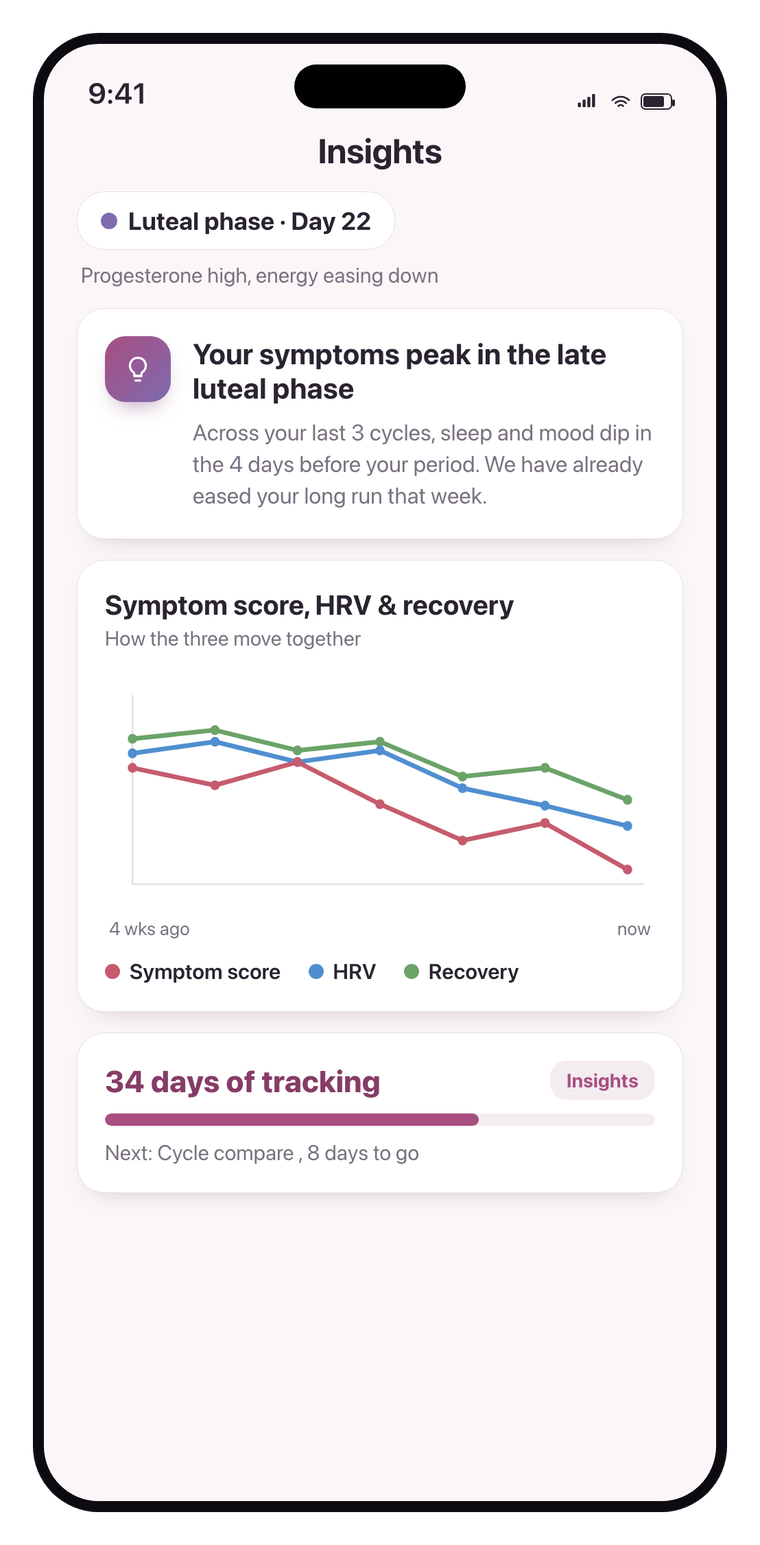
A short daily check-in (sleep, energy, soreness, symptoms, cycle phase) feeds straight into your training. Hard sessions land when you recover well; the plan eases off when the same load would cost you more. See how cycle-based training works.
Strength programmed alongside the running
Phaes builds heavy resistance work into the same plan as your runs, with day-level locking so neither gets dropped. That matters more through perimenopause and menopause, when protecting bone and muscle is as important as the mileage.
Plenty of women keep both: Flo for the symptom picture, Phaes for the training that responds to it. They are not mutually exclusive, they just do different jobs.
Frequently asked questions
Is Phaes a replacement for Flo?
It depends on what you want. For pure cycle and symptom tracking and Flo’s validated perimenopause score, Flo is excellent. Phaes is a coach: it takes your cycle and recovery and builds an adaptive running and strength plan around them. Many women use both.
Does Phaes track my cycle and symptoms like Flo does?
Yes, and that part is free: cycle tracking, symptom logging, MHT (HRT) tracking, and body composition are all free in Phaes. What sets it apart is that the same daily check-in drives a real training plan, not just a chart.
How much does Phaes cost?
The app and all tracking are free. Phaes Insights, which adds your daily read and your trends, is $3.99 per month or $29.99 per year. Phaes Coach adds the adaptive training plan and a coach that adjusts it week to week at $9.99 per month or $69.99 per year, with a free first week.