The priorities shift, and that is fine
Running in your 50s is less about chasing your 30-year-old splits and more about staying strong, durable, and consistent for decades. For most women this is around or after menopause, when estrogen has dropped and protecting bone density and muscle mass becomes the headline, not the footnote.
What a good plan does for runners over 50
Puts heavy strength at the center
This is the single highest-return thing you can do. Heavy resistance training protects bone and muscle, supports your running, and keeps you resilient. Phaes programs it alongside your runs, not as an optional extra. See strength training for menopausal women.
Respects recovery
Connective tissue is more vulnerable and recovery windows are longer, so overreaching turns into injury faster. Phaes enforces a load guard at the engine level and spaces hard work around your daily check-in.
Keeps adapting, even with no cycle
Cycle-based periodization no longer applies after menopause, but the same care for recovery and load matters more. The daily check-in still drives the plan. See the menopause running plan.
Goals are still on the table
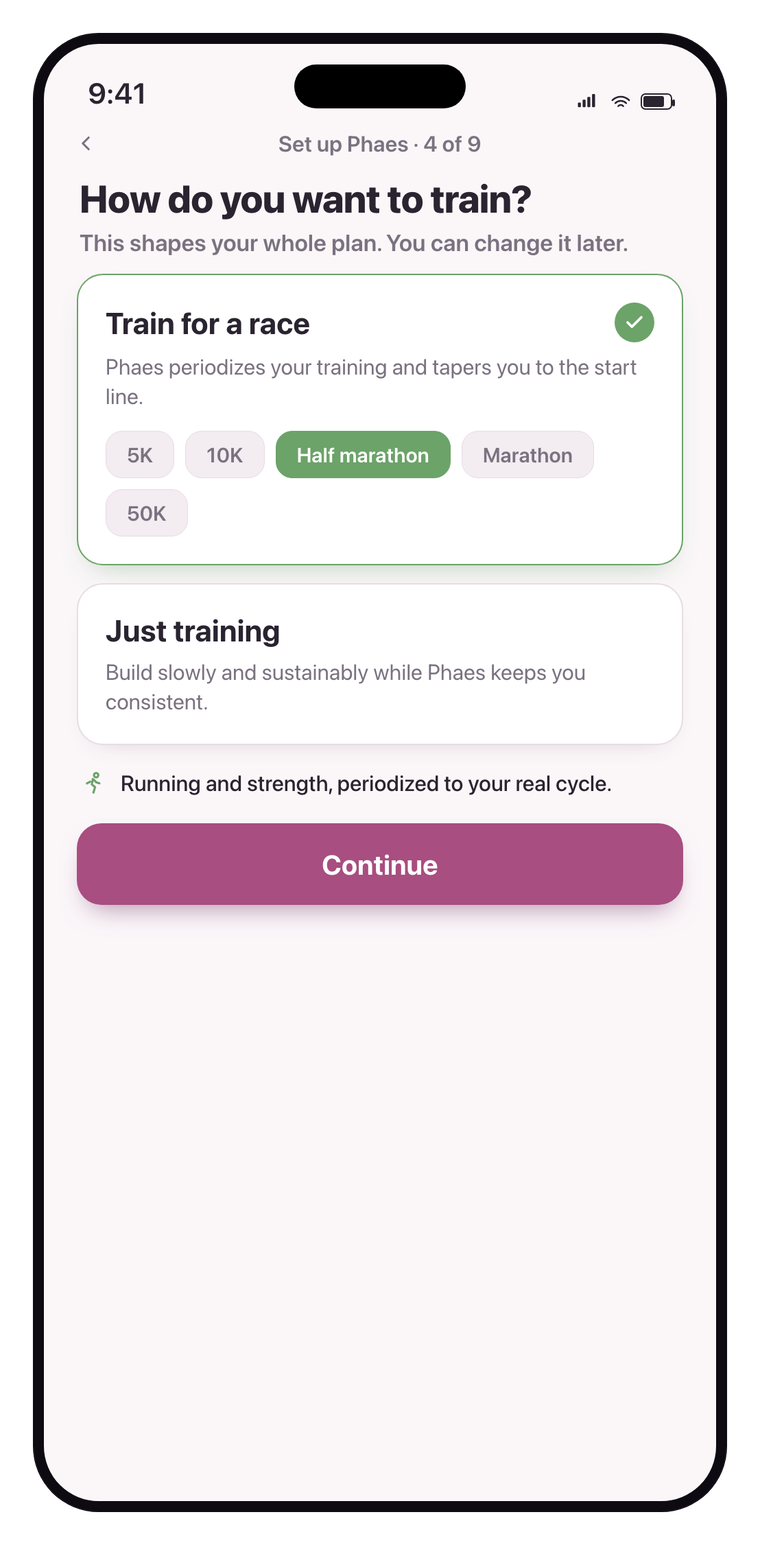
A 10K, a half, a marathon, or simply running pain-free for another twenty years. Phaes builds a conservative, strength-led plan toward whatever you are after, and adapts it to how you feel.
Frequently asked questions
Is it safe to start or keep running over 50?
For most people, yes, and it is one of the best things you can do for long-term health. The key is pairing it with heavy strength work and respecting recovery. Phaes builds a conservative, strength-led plan and adapts it to how you feel.
How important is strength training for runners over 50?
Very. Heavy resistance training is the most evidence-backed way to protect bone density and muscle mass after menopause, and it supports your running. Phaes programs it as a core part of the plan, with day-level locking so it gets done.